
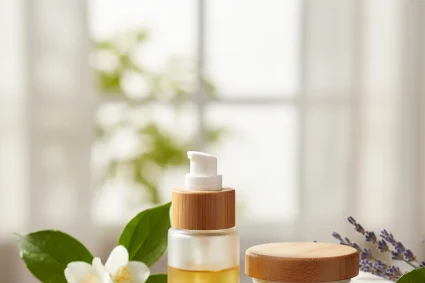


Is Wellness Beauty Actually Worth It? My Honest 2026 Rant After Wasting $3,000

🔗 Affiliate Disclosure
I am a lifestyle blogger, not a doctor or dermatologist. The following reflects my personal experience with wellness beauty products and supplements. Always consult with a healthcare professional before starting new supplements or changing your health routine.
🔗 Affiliate Disclosure
This post contains affiliate links. If you click a link and make a purchase, I may receive a small commission at no extra cost to you. I only recommend products I have actually tried (and usually yelled about).
Quick Summary: Wellness beauty isn’t just a serum; it’s the intersection of internal health and external aesthetics. After spending $3,000+ over three years, I found that 80% of products are marketing fluff. The real “glow” comes from gut health, sleep, and specific bioactive ingredients, not “clean” labels. Skip the $90 “vibes” oils and focus on evidence-based supplements and barrier repair.
Can we talk about how much misinformation exists about wellness beauty? I am sitting here in my kitchen, staring at a bottle of “Moon-Infused Face Oil” that cost me $84.50 at a boutique in Chelsea last month, and I am absolutely livid. It smells like a wet basement and has done exactly nothing for my skin except give me three cystic chin pimples that my 5-year-old keeps pointing at.
I’ve been a lifestyle blogger for three years and a mom for five. I’ve seen every trend from “slugging” to “internal deodorant.” But the 2026 obsession with “wellness beauty” has reached a level of absurdity that I can’t ignore anymore. Everyone is selling you a “full-picture glow,” but nobody is telling you that half these supplements just give you expensive urine and the “clean” makeup expires in three weeks. I’m done. Let’s peel back the curtain on what’s actually happening in the industry right now.
What Exactly Is Wellness Beauty? (The Non-Marketing Version)
📖 Definition
Wellness beauty is a whole approach to aesthetics that merges traditional skincare and makeup with internal health practices like gut health optimization, stress management, and “clean” ingredient standards to achieve a glow that starts from within.
In theory, it’s a beautiful concept. It’s the idea that your skin is a mirror of your internal health. If your gut is a mess or your cortisol is through the roof because your toddler decided to paint the cat, no amount of $200 cream is going to fix those dark circles. According to a 2025 report by Global Wellness Institute, the “beauty from within” sector has grown 18% annually because we’re finally realizing that topicals have limits.
However, the industry has hijacked this. Now, “wellness beauty” is used as a catch-all term to charge you double for products that claim to be “vibrationally aligned” or “toxin-free” without any actual data to back it up. I’m all for looking better by feeling better, but we need to stop buying into the “magic” and start looking at the science. To be honest, I spent most of 2024 falling for every “wellness” ad on my feed, and my bank account is still recovering.
The “Clean Beauty” Scam That Cost Me $412.18
Last March, I decided to “purge” my vanity. I was convinced by a very polished influencer that my “toxic” foundation was the reason I felt sluggish. I went to the Sephora on 5th Avenue and dropped exactly $412.18 on a full “clean” wellness beauty routine. I felt so superior walking out of there with my recyclable paper bag.
Fast forward three weeks: my “preservative-free” cream started smelling like old salad dressing. My “natural” mascara ran down my face the second I broke a sweat at the park. My sister-in-law, Sarah, literally asked me if I was tired because the “clean” concealer had zero staying power and was settling into lines I didn’t even know I had.
⚠️ Warning: “Clean” does not mean “better.” Many wellness beauty brands remove effective synthetic preservatives (like parabens) and replace them with essential oils that are massive skin irritants.
The reality? A 2024 study published in the Journal of Clinical and Aesthetic Dermatology found that “natural” ingredients are actually more likely to cause contact dermatitis than many lab-stable synthetics. I learned this the hard way when a “wellness-focused” botanical serum gave me a rash that lasted through my daughter’s entire birthday party. I looked like a lobster in every single photo. If you want to dive deeper into my failures, check out these 7 Wellness Skin Care Lessons I Learned After Wasting $1,500.
Supplements: The $1,200 Reality Check
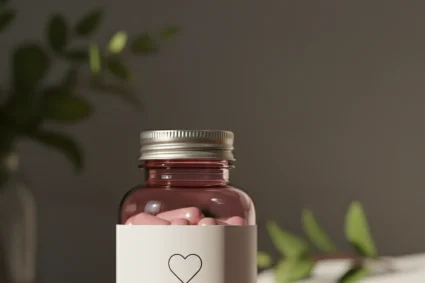
If you’ve been following the wellness beauty trend, you know it’s not just about what you put on your face, but what you put in your body. I went down the rabbit hole of “beauty ingestibles.” Collagen powders, “skin-clearing” probiotics, and hair growth gummies. At one point, I was taking 12 different pills a morning.
I was spending about $110 a month on a specific subscription of “glow vitamins.” Did I see a difference? Maybe my nails grew a little faster? But my skin looked exactly the same. When I finally took the bottles to my dermatologist, she laughed. She told me that most of the collagen I was drinking was being broken down into basic amino acids by my stomach acid long before it ever reached my skin.
The only thing that actually moved the needle was focusing on gut health. I realized my “wellness” routine was ignoring the fact that I was living on coffee and leftover chicken nuggets. I’ve written about this before when I questioned is Love Wellness Vitamin actually worth it in my 2026 review. Spoiler: some of it is great, most of it is just fancy packaging.
The Problem with the “Wellness” Aesthetic
There is this “wellness girlie” aesthetic that is frankly exhausting. It’s the $120 yoga set, the $15 green juice, and the “no-makeup” makeup that actually takes 45 minutes to apply. I tried to be that person. I really did. I bought a $23.47 rose quartz gua sha tool at a CVS in Los Angeles while traveling, and I used it religiously for six nights. On the seventh night, I dropped it on the bathroom tile, and it shattered into a million pieces–much like my patience for this lifestyle.
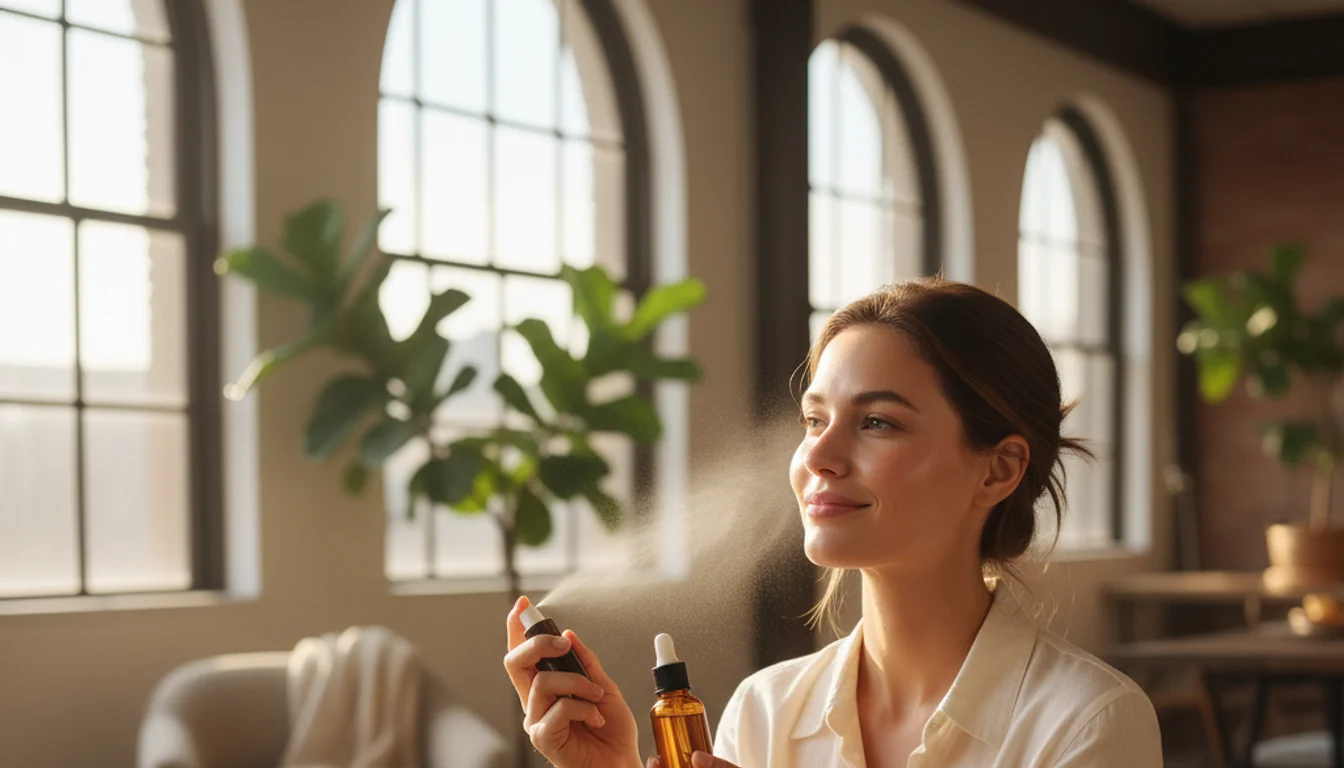
Wellness beauty shouldn’t be a performance. If your “self-care” routine is making you stressed because it’s too expensive or too time-consuming, it’s not wellness. It’s just another chore on your to-do list.
What Actually Works: My 2026 “No-BS” Essentials
After three years of being a guinea pig, I’ve stripped my wellness beauty routine down to the things that actually have data behind them. I’m done with the “vibes.” I want results. If it doesn’t have a clinical trial or at least a very logical physiological mechanism, I’m not buying it.
💡 Pro Tip Stop buying “multivitamins for skin.” Buy individual ingredients like Zinc or Vitamin D3 based on actual blood work. It’s cheaper and more effective.
1. Barrier Repair over “Detox”
The “wellness” world loves the word “detox.” Your skin doesn’t need to detox; it has a liver and kidneys for that. What your skin needs is a healthy moisture barrier. I stopped using 15% glycolic acid peels and started using ceramides and fatty acids. My skin stopped being red and started actually glowing.
2. Magnesium for Stress-Related Aging
If there is one “wellness” supplement that changed my skin, it was Magnesium Glycinate. Why? Because it helped me sleep. According to a 2024 Harvard Health blog post, chronic sleep deprivation increases cortisol, which breaks down collagen. No cream can compete with 8 hours of sleep. I buy the $18.50 bottle at the grocery store, and it works better than any “nighttime beauty elixir” I’ve tried.
3. LED Therapy (The One Expensive Thing Worth It)
I hated admitting this because the masks look like something out of a horror movie, but Red Light Therapy is legit. I use a mask for 10 minutes while I’m hiding from my kids in the pantry. It’s the only thing that has noticeably reduced the redness around my nose. It’s an investment, but compared to the $3,000 I wasted on bunk serums, it’s a steal.
The Cost Analysis: Wellness vs. Realness
Let’s look at the math. We are being sold a lifestyle that is financially unsustainable for the average person. I was spending $300 a month on “wellness” items that I thought were necessary. Now, I spend about $60.
💰 Cost Analysis
$340.00
$65.00
To be honest, I feel better now than I did when I was drinking charcoal lattes and using “energetically charged” face mists. My skin is clearer because I’m not constantly trying new “clean” products that disrupt my pH. My stress is lower because I’m not worried about my “toxic load” every time I use a conventional lipstick.
I feel like I was sold a bill of goods. The wellness beauty industry preys on the “burnt-out mom” demographic (me!) by promising that a product can fix a lifestyle problem. It can’t. If you’re exhausted, you don’t need a “wellness serum”; you need a nap and maybe someone to fold the laundry.
How to Spot Wellness Beauty Marketing Garbage
Before you drop $50 on a bottle of “Liquid Sunlight” or whatever they’re calling it this week, ask yourself these three things. I wish I had someone to yell this at me two years ago when I was standing in a boutique in Austin, Texas, about to buy “frequency-adjusted” toner for $68.00.
- Is “Clean” the only selling point? If a brand spends more time telling you what isn’t in the bottle than what is, run. “Free from” marketing is usually a distraction from a mediocre formula.
- Is there a specific bioactive percentage? If it says “contains Vitamin C” but doesn’t list the percentage (like 10% or 15%), it’s probably just “fairy dusted” – meaning there’s just enough in there to put it on the label, but not enough to actually do anything.
- Are the reviews “too” perfect? In 2026, many brands use AI-generated reviews. Look for the 3-star and 4-star reviews. That’s where the truth lives.
My Biggest Mistake: The “Glow” Oil Obsession
I spent $89.54 on a specific Vintner’s Daughter dupe because I wanted that “wellness glow.” I used it every night for a week. I woke up on day eight with a face full of whiteheads. I learned that my skin hates heavy botanical oils, no matter how “organic” or “wellness-focused” they are. I was so embarrassed that I tried to hide it with more “clean” concealer, which just made it look like I had oatmeal on my face. Never again.
The Final Verdict
Wellness beauty has become a multi-billion dollar industry by selling us the idea that we are “toxic” and need “healing.” It’s a brilliant marketing ploy that combines our desire to be healthy with our vanity. But let’s be real: most of it is just expensive packaging and clever wording.
I’m not saying give up on your health. I’m saying stop expecting a $90 bottle of “spirit-cleansing” face mist to do the work that a good diet and a decent night’s sleep should be doing. I’ve been there, I’ve wasted the $3,000, and I’ve got the half-empty bottles of “magic” dust to prove it.
✅ Key Takeaways
- Gut health and sleep are 80% of the “wellness” glow. – “Clean” marketing is often a cover for unstable or irritating formulas. – Focus on evidence-based ingredients like ceramides and magnesium. – Stop buying into the “toxic” fear-mongering; your liver is doing its job. – Red light therapy is one of the few high-tech “wellness” tools actually worth the money.
I’m done with the 12-step “inner glow” rituals. I’m going back to basics. I’m going to wash my face, take my magnesium, and try to get to bed before midnight. If that doesn’t make me a “wellness goddess,” then I guess I’ll just be a regular person with a few extra bucks in my pocket. Whatever. Do what you want. I tried.