


Wall Art Lessons I Learned the Hard Way (After Wasting $1,200)

🔗 Affiliate Disclosure
This post contains my honest recommendations for wall art and decor. If you click a link and make a purchase, I may earn a small commission at no extra cost to you.
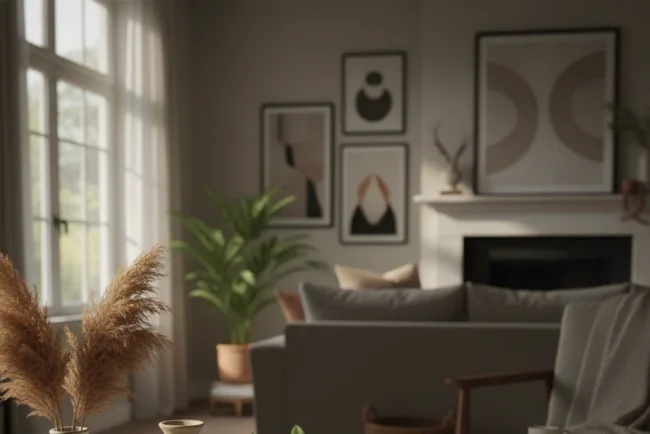
Wall art is any decorative element—from paintings and prints to tapestries and sculptures—designed to be displayed on a vertical surface to enhance a room’s aesthetic and emotional atmosphere. In 2026, it serves as the “soul” of home design, reflecting personal identity while solving common interior challenges like scale, color balance, and even room acoustics. Choosing the right piece is about finding a balance between your personal story and the physical constraints of your living space.
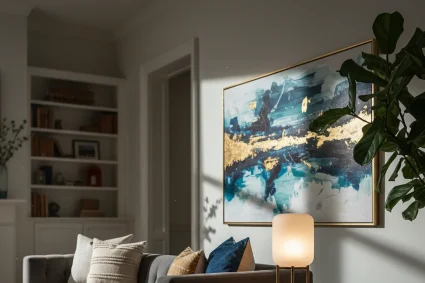
I remember standing in my daughter’s nursery back in 2021, staring at a $400 oversized abstract canvas I’d just “invested” in. I thought it would be the focal point of the room. Instead, it looked like a giant, blurry blueberry that swallowed the entire wall. It was too big, the colors felt cold, and honestly? I hated it. That was the first of many expensive mistakes that eventually taught me how to actually curate a home that feels like me, not a showroom.
Whether you’re staring at a blank wall in a new apartment or trying to refresh a living room that’s felt “off” for years, I’ve been there. I’ve wasted the money, made the extra holes in the drywall, and felt the frustration of art that just doesn’t fit. Let’s make sure you don’t do the same.
The “Scale” Trap: Why Your Art Looks “Small” Even When It’s Not
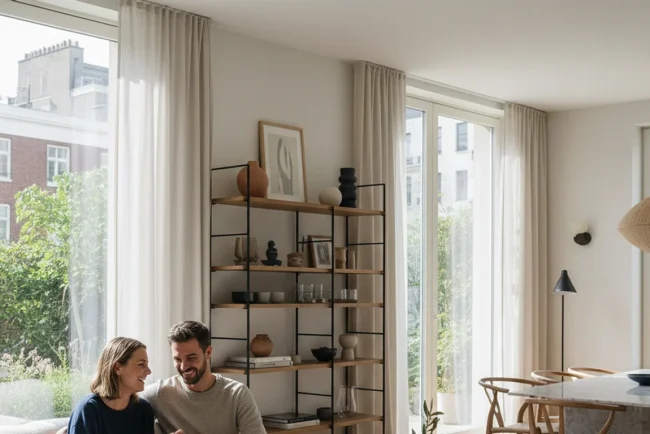
The biggest mistake I see (and the one I made with that blueberry canvas) is getting the scale wrong. Usually, people buy art that is way too small for the space. They find a cute 8x10 print, frame it, and hang it over a massive six-foot sofa. It ends up looking like a postage stamp on a billboard.
According to a 2024 report by the International Interior Design Association (IIDA), visual balance is the number one factor in perceived room comfort. If the art is too small, the room feels cluttered and unsettled. If it’s too large, it feels cramped.
💡 Pro Tip Use the “Two-Thirds Rule”: Your wall art should take up roughly two-thirds to three-quarters of the width of the furniture it’s hanging over (like a bed or sofa).

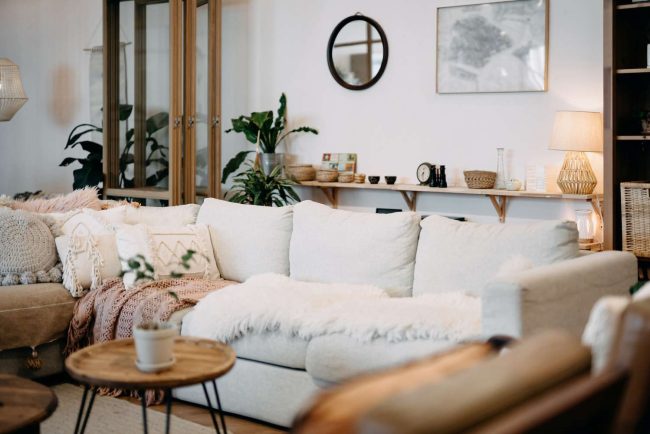
Last March, I helped my friend Jenny fix her living room. She had three tiny frames scattered across a huge wall. We took them down, spent $85 at a local Austin makers’ market on a large macramé hanging, and suddenly the whole room felt finished. It wasn’t about the price; it was about the coverage.
Choosing the Right Medium for Your Life (Not Just Your Feed)
In 2026, we have more options than ever—canvas, framed prints, metal, wood, and even digital art frames. But you have to be honest about your lifestyle. As a mom of two, I learned quickly that heavy glass frames in a high-traffic hallway are a recipe for disaster. I once had a glass frame shatter near the playroom because of a stray soccer ball. Never again.
If you’re worried about the cost of high-end materials, remember that your environment impacts your mental health. A 2024 study in the Journal of Environmental Psychology found that viewing “nature-themed” wall art for just five minutes can lower cortisol levels by up to 15%. I started prioritizing calming landscapes in my bedroom for exactly this reason, which I talk about in my guide on 7 decor lessons I learned the hard way.
How to Hang Art Without Turning Your Wall Into Swiss Cheese
I used to be terrified of the hammer. I’d eyeball the height, bang a nail in, realize it was crooked, and then do it again three inches to the left. By the time I was done, my wall looked like it had been through a war zone. I eventually learned that “eye level” is actually lower than most people think.
⚠️ Warning: Stop hanging art too high! The center of the piece should be roughly 57 to 60 inches from the floor. This is the standard gallery height used by professionals.
If you’re a renter or just indecisive, I highly recommend using command strips or picture rails. I wasted a lot of money on professional “art installers” early on, but honestly, a $15 laser level from the hardware store and some painter’s tape is all you really need. I’ve spent way too much on the wrong home and decor locations in the past, and I can tell you that the right tools make a world of difference.
The Paper Template Trick
- Trace your frames onto brown packing paper or old newspapers.
- Cut them out and tape them to the wall using painter’s tape.
- Live with the layout for 24 hours. See how the light hits them at 4 PM vs. 8 AM.
- Once you love it, nail right through the paper, then rip the paper away.
Investing vs. Filling Space: The 2026 Mindset
We’re moving away from the era of “fast decor.” You know the stuff—the mass-produced “Live, Laugh, Love” signs from big-box stores. They’re cheap, but they have zero soul. In 2026, the trend is toward intentionality. I’d rather have one blank wall for six months while I save up for a piece I love than fill it with $20 clutter I’ll throw away in a year.
💰 Cost Analysis
$45.00
$210.00
Actually, one of my favorite pieces is a $23.47 vintage map I found at a thrift store in Portland. I spent $60 on a custom frame for it, and people ask about it more than the expensive art in my dining room. It’s about the story, not the price tag. To be honest, I used to think I needed “expensive” art to be a real blogger, but that’s just not true.
The Gallery Wall: Is It Finally Dead?
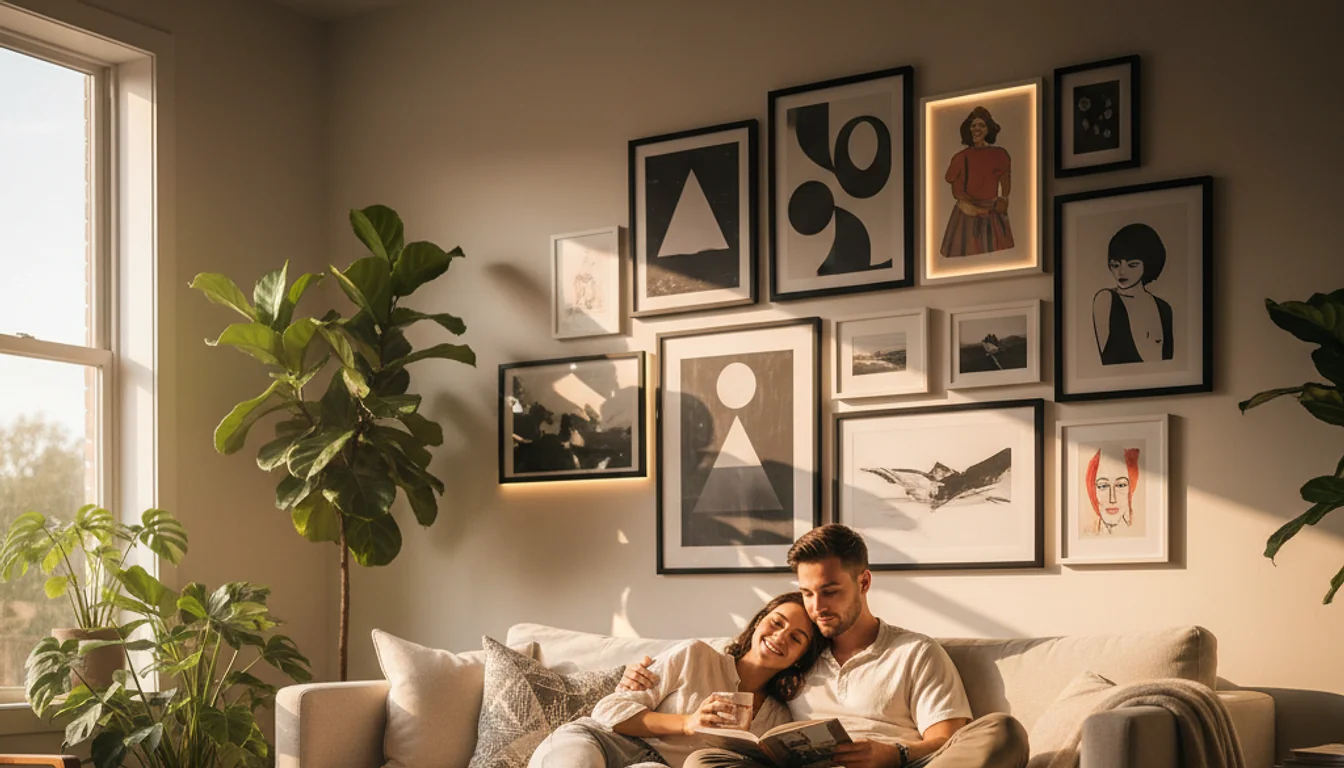
People keep asking me if gallery walls are “out” for 2026. My answer? Only the ones that look like they were bought as a “set.” A gallery wall should be a slow collection. It should have a photo from your wedding, a drawing your kid made, a postcard from that trip to Italy, and maybe a cool textured plate.
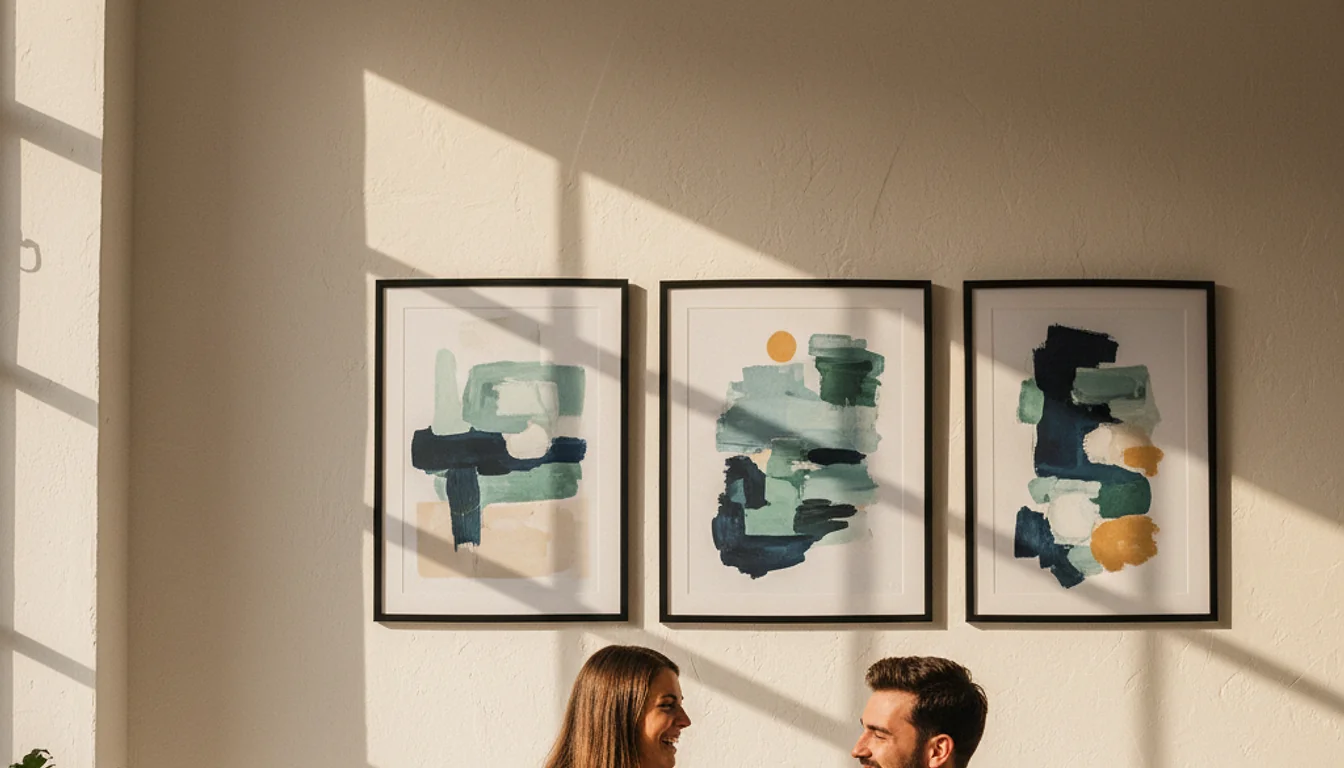
I saw a Reddit thread recently where someone called gallery walls “dust collectors,” and I laughed because… well, they aren’t wrong. If you hate cleaning, go for one large statement piece. If you love the “collected” look, just be prepared to use a microfiber duster once a week. I personally shifted my living room to a “triptych” (three matching large frames) and it cut my cleaning time in half while looking much more sophisticated.
✅ Key Takeaways
- Measure your furniture before buying art (Two-Thirds Rule). – Hang art at 57-60 inches (center point) for a professional look. – Use paper templates to test layouts before making holes. – Prioritize meaning and story over “matching” the room’s colors perfectly. – Mix textures (canvas, wood, textile) to add depth to a room.
More Stories