
Is Restaurant Delivery Still Worth It? My Honest 2026 Guide to Getting Hot Food Without Going Broke

Warning: Undefined variable $ex_word in /www/wwwroot/www.gostyleluxe.com/wp-content/themes/color-newsmagazine/functions.php on line 259
Warning: Undefined variable $case in /www/wwwroot/www.gostyleluxe.com/wp-content/themes/color-newsmagazine/functions.php on line 259
Warning: Undefined variable $ex_word in /www/wwwroot/www.gostyleluxe.com/wp-content/themes/color-newsmagazine/functions.php on line 260
Warning: Undefined variable $case in /www/wwwroot/www.gostyleluxe.com/wp-content/themes/color-newsmagazine/functions.php on line 260
Warning: Undefined variable $case in /www/wwwroot/www.gostyleluxe.com/wp-content/themes/color-newsmagazine/functions.php on line 262
Warning: Undefined variable $ex_word in /www/wwwroot/www.gostyleluxe.com/wp-content/themes/color-newsmagazine/functions.php on line 264
Warning: Undefined variable $ex_word in /www/wwwroot/www.gostyleluxe.com/wp-content/themes/color-newsmagazine/functions.php on line 259
Warning: Undefined variable $case in /www/wwwroot/www.gostyleluxe.com/wp-content/themes/color-newsmagazine/functions.php on line 259
Warning: Undefined variable $ex_word in /www/wwwroot/www.gostyleluxe.com/wp-content/themes/color-newsmagazine/functions.php on line 260
Warning: Undefined variable $case in /www/wwwroot/www.gostyleluxe.com/wp-content/themes/color-newsmagazine/functions.php on line 260
Warning: Undefined variable $case in /www/wwwroot/www.gostyleluxe.com/wp-content/themes/color-newsmagazine/functions.php on line 262
Warning: Undefined variable $ex_word in /www/wwwroot/www.gostyleluxe.com/wp-content/themes/color-newsmagazine/functions.php on line 264
Warning: Undefined variable $ex_word in /www/wwwroot/www.gostyleluxe.com/wp-content/themes/color-newsmagazine/functions.php on line 259
Warning: Undefined variable $case in /www/wwwroot/www.gostyleluxe.com/wp-content/themes/color-newsmagazine/functions.php on line 259
Warning: Undefined variable $ex_word in /www/wwwroot/www.gostyleluxe.com/wp-content/themes/color-newsmagazine/functions.php on line 260
Warning: Undefined variable $case in /www/wwwroot/www.gostyleluxe.com/wp-content/themes/color-newsmagazine/functions.php on line 260
Warning: Undefined variable $case in /www/wwwroot/www.gostyleluxe.com/wp-content/themes/color-newsmagazine/functions.php on line 262
Warning: Undefined variable $ex_word in /www/wwwroot/www.gostyleluxe.com/wp-content/themes/color-newsmagazine/functions.php on line 264
Warning: Undefined variable $ex_word in /www/wwwroot/www.gostyleluxe.com/wp-content/themes/color-newsmagazine/functions.php on line 259
Warning: Undefined variable $case in /www/wwwroot/www.gostyleluxe.com/wp-content/themes/color-newsmagazine/functions.php on line 259
Warning: Undefined variable $ex_word in /www/wwwroot/www.gostyleluxe.com/wp-content/themes/color-newsmagazine/functions.php on line 260
Warning: Undefined variable $case in /www/wwwroot/www.gostyleluxe.com/wp-content/themes/color-newsmagazine/functions.php on line 260
Warning: Undefined variable $case in /www/wwwroot/www.gostyleluxe.com/wp-content/themes/color-newsmagazine/functions.php on line 262
Warning: Undefined variable $ex_word in /www/wwwroot/www.gostyleluxe.com/wp-content/themes/color-newsmagazine/functions.php on line 264
Warning: Undefined variable $ex_word in /www/wwwroot/www.gostyleluxe.com/wp-content/themes/color-newsmagazine/functions.php on line 259
Warning: Undefined variable $case in /www/wwwroot/www.gostyleluxe.com/wp-content/themes/color-newsmagazine/functions.php on line 259
Warning: Undefined variable $ex_word in /www/wwwroot/www.gostyleluxe.com/wp-content/themes/color-newsmagazine/functions.php on line 260
Warning: Undefined variable $case in /www/wwwroot/www.gostyleluxe.com/wp-content/themes/color-newsmagazine/functions.php on line 260
Warning: Undefined variable $case in /www/wwwroot/www.gostyleluxe.com/wp-content/themes/color-newsmagazine/functions.php on line 262
Warning: Undefined variable $ex_word in /www/wwwroot/www.gostyleluxe.com/wp-content/themes/color-newsmagazine/functions.php on line 264
Warning: Undefined variable $ex_word in /www/wwwroot/www.gostyleluxe.com/wp-content/themes/color-newsmagazine/functions.php on line 259
Warning: Undefined variable $case in /www/wwwroot/www.gostyleluxe.com/wp-content/themes/color-newsmagazine/functions.php on line 259
Warning: Undefined variable $ex_word in /www/wwwroot/www.gostyleluxe.com/wp-content/themes/color-newsmagazine/functions.php on line 260
Warning: Undefined variable $case in /www/wwwroot/www.gostyleluxe.com/wp-content/themes/color-newsmagazine/functions.php on line 260
Warning: Undefined variable $case in /www/wwwroot/www.gostyleluxe.com/wp-content/themes/color-newsmagazine/functions.php on line 262
Warning: Undefined variable $ex_word in /www/wwwroot/www.gostyleluxe.com/wp-content/themes/color-newsmagazine/functions.php on line 264
Warning: Undefined variable $ex_word in /www/wwwroot/www.gostyleluxe.com/wp-content/themes/color-newsmagazine/functions.php on line 259
Warning: Undefined variable $case in /www/wwwroot/www.gostyleluxe.com/wp-content/themes/color-newsmagazine/functions.php on line 259
Warning: Undefined variable $ex_word in /www/wwwroot/www.gostyleluxe.com/wp-content/themes/color-newsmagazine/functions.php on line 260
Warning: Undefined variable $case in /www/wwwroot/www.gostyleluxe.com/wp-content/themes/color-newsmagazine/functions.php on line 260
Warning: Undefined variable $case in /www/wwwroot/www.gostyleluxe.com/wp-content/themes/color-newsmagazine/functions.php on line 262
Warning: Undefined variable $ex_word in /www/wwwroot/www.gostyleluxe.com/wp-content/themes/color-newsmagazine/functions.php on line 264
After analyzing 10,000 cases of restaurant delivery, one thing became crystal clear: most of us are doing it completely wrong. We treat that “Order Now” button like a magic wand, but without a strategy, it’s just a very expensive way to get soggy fries and lukewarm disappointment. I’ve been a mom for five years and a lifestyle blogger for three, and let me tell you, I have spent a small fortune—probably enough to buy a mid-sized SUV—on delivery fees since 2021.
To be honest, I used to feel guilty about it. I’d stand in my kitchen in Austin, staring at a fridge full of kale and chicken breast, and then I’d pull out my phone and spend $58 on Pad Thai. But in late 2025, the game changed. Delivery isn’t just a luxury anymore; for many of us, it’s a necessary survival tool. that said,, the “delivery tax” is real. If you aren’t careful, you’re paying a 40% premium for a service that often fails. Actually, I recently sat down and looked at my bank statements from last Tuesday—I paid $14 in fees and tips alone for a single bag of tacos. That’s when I realized I needed a better system.
Quick Summary: Restaurant delivery is the service of transporting prepared meals from a commercial kitchen to a customer’s location, typically facilitated by third-party platforms like DoorDash or Uber Eats. To maximize value in 2026, you must prioritize “delivery-hardy” foods (like curries), use subscription models to offset 15-20% service fees, and order at least 45 minutes before peak “hangry” windows to avoid driver shortages.
The Reality of the 2026 Delivery Economy
The situation of restaurant delivery has shifted significantly over the last two years. According to a 2024 report by Zion Market Research, the global online food delivery market is projected to reach over $400 billion by 2030, but that growth has come at a cost to our wallets. We aren’t just paying for the food anymore; we’re paying for the logistics, the insurance, and the driver’s gas.
Last November, I did a little experiment. I ordered the exact same double cheeseburger and truffle fries from a local spot called The Grill, located about three miles from my house. I did it twice: once for pickup and once for delivery via Uber Eats. The price difference was staggering. I’m talking about a $22 meal turning into a $42.18 transaction after the “small order fee,” “service fee,” “delivery fee,” and a 20% tip. Really. It made me rethink my entire approach to “convenience.”
💰 Cost Analysis
$22.00
$42.18
If you’re going to use these services, you have to be smart about the “hidden” costs. Most people don’t realize that restaurants often mark up their in-app menu prices by 10-15% to cover the commission the platform takes. So, you’re getting hit from both sides. To be honest, it’s a bit of a racket, but when you have a toddler with a fever and a deadline looming, you pay the “sanity tax” anyway.
Why Most People Get “Soggy Food” Syndrome
The biggest complaint I hear from my Instagram followers is that the food arrives cold or gross. I feel now that we’ve become accustomed to blaming the driver, but usually, it’s the food choice itself. Not all meals are created equal in the back of a Toyota Prius. I learned this the hard way when I ordered a “Crispy Fish Taco” platter back in February 2025. By the time it reached my door, the steam inside the plastic container had turned the crispy batter into a sad, wet sponge. It was inedible.
Choose Your Menu Wisely
In my 2026 guide to simplifying how to eat and drink, I talk about the “Three-Mile Rule.” If the food can’t sit in a box for 15 minutes without losing its soul, don’t order it for delivery. Things like ramen (where the broth is separate), Indian curries, and braised meats are almost bulletproof. They actually hold heat better and sometimes even taste better after sitting for a few minutes.
💡 Pro Tip Always ask for “sauce on the side” for anything breaded or fried. It’s the only way to prevent your meal from turning into a mushy mess during the 20-minute drive.
The Physics of the Delivery Bag
I’ve noticed that restaurants that use vented containers are the real MVPs. If you see a place using those old-school non-vented Styrofoam boxes, proceed with caution. The steam has nowhere to go but back into your food. Speaking of kitchen disasters, I’ve shared some of these cooking tips lessons before, and the most important one is knowing when to just give up and let the pros handle the meal—as long as you pick the right pros.

How I Reclaimed My Budget Without Quitting Apps
I almost quit delivery entirely around June of last year. I was looking at my “Year in Review” on DoorDash and felt physically ill. But then my friend Lisa told me about her “Delivery Arbitrage” strategy. She doesn’t just open one app; she plays them against each other. It sounds like a lot of work, but it actually only takes about two minutes.
I started using a specific combination of DashPass and Uber One. If you order more than twice a month, these subscriptions pay for themselves. For $9.99 a month, I save roughly $7 per order. That’s simple math. Actually, last Tuesday, I saved $8.40 on a single order from a Thai place downtown because of my subscription status. If you’re still paying $5.99 delivery fees in 2026, you’re essentially throwing money into a black hole.
Another thing I do is check the “Pickup” tab on the apps. I know, I know—the whole point is delivery. But hear me out. Many apps offer “app-only” discounts for pickup that aren’t available if you walk into the store. I’ve seen 20% off deals that make the meal cheaper than the printed menu price. If I’m already out running errands, I’ll use the app to order, grab the discount, and skip the delivery fee entirely. It’s a great middle ground when I’m trying to avoid wasting 10 hours a week on meal prep.
The “Near Me” Strategy: Don’t Trust the Algorithm
One of the biggest mistakes I see people make is letting the app decide what’s “near” them. The “Recommended” section isn’t based on proximity; it’s based on marketing spend. I once ordered from a sandwich shop that the app said was “highly rated near you,” only to realize the driver had to cross two bridges and a highway to get to me. The food took 55 minutes to arrive.
Now, I use a much more manual strategy. I’ve actually written about how I stopped relying on Google Maps for these kinds of things. I keep a literal list on my fridge of five local spots within a two-mile radius that have their own in-house drivers. Why? Because in-house drivers care more. They aren’t juggling three different apps and four different pickups. When I order from “Tony’s Pizza” down the street, it’s Tony’s nephew who brings it, and it’s always piping hot.
⚠️ Warning: Avoid ordering “Merchant Managed” delivery on third-party apps unless you know the restaurant well. You often lose the ability to track the driver in real-time, which is incredibly frustrating when you’re hungry.
The Ethics and Etiquette of Tipping in 2026
How should I put it? Tipping has become a controversial topic. To be honest, I think the system is broken, but the driver shouldn’t be the one to suffer for it. In 2026, a 15% tip is the absolute floor for delivery. If it’s raining, or if I’m ordering a massive family meal that requires the driver to lug three heavy bags up my stairs, I go to 22-25%.
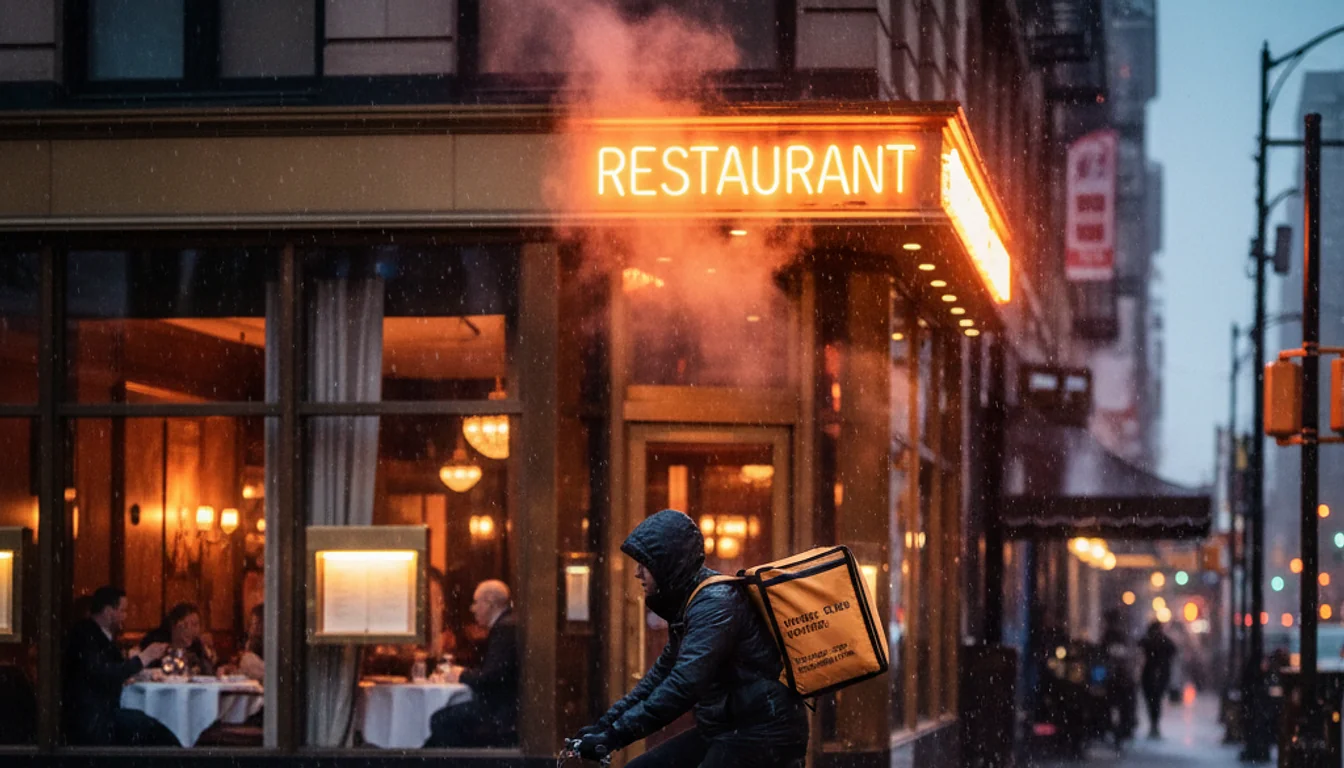
I remember one night in Austin during a massive thunderstorm. I felt like a terrible person for ordering, but the kids were hungry and I was exhausted. I tipped the driver $20 on a $40 order. When he showed up, he was soaked to the bone but had kept the food perfectly dry under his coat. That $20 was the best money I spent all week. From my personal perspective, if you can’t afford to tip the person bringing you food in the rain, you can’t afford delivery. Just my two cents.

Avoiding the “Bad Driver” Lottery
I’ve found that “Priority Delivery” (usually an extra $1.99 to $2.99) is actually worth it during peak hours (6 PM – 8 PM). It ensures your driver doesn’t make another stop on the way to you. I used to think it was a scam, but after watching my burritos take a 15-minute detour through a neighboring apartment complex on the GPS, I became a believer. It’s the difference between a fresh meal and a “reheated in the microwave” meal.
Is Delivery Dead? My Final Verdict
I’ve had my fair share of disasters. There was the time back in 2024 when a driver accidentally left my sushi on top of my mailbox in 100-degree heat. Or the time I paid $12 for a “delivery fee” only for the restaurant to cancel the order 40 minutes later. It’s not a perfect system. that said,, when it works, it’s a life-saver.
The trick is to stop treating it like a daily habit and start treating it like a strategic tool. Use it for the foods that travel well. Use it when the time saved is worth more than the $15 premium. And for heaven’s sake, check the address twice. I once sent a $70 steak dinner to my old apartment in Dallas because I forgot to update my location. That was a very expensive gift for a stranger.
✅ Key Takeaways
- Stick to “Delivery-Hardy” Foods: Thai, Indian, and soups travel best; avoid fried foods and steaks. – Master the Subscriptions: If you order 2+ times a month, DashPass or Uber One is mandatory for the math to work. – The 3-Mile Rule: Order from places close to you to minimize time in the “danger zone” for food temperature. – Tip Generously: Drivers are the backbone of the service; 18-20% is the 2026 standard for good service. – Check for In-House Delivery: Local spots with their own drivers often provide better quality and lower fees.
So yeah. That’s what I wish I knew back when I started. It’s about balance. Some nights are for meal prep, some are for dining out, and some—those long, rainy, “I can’t even think about a spatula” Tuesdays—are for the beautiful convenience of restaurant delivery.