

What Actually Works for Wall Decor: My Skeptical 2026 Guide to Not Wasting Your Money

Warning: Undefined variable $ex_word in /www/wwwroot/www.gostyleluxe.com/wp-content/themes/color-newsmagazine/functions.php on line 259
Warning: Undefined variable $case in /www/wwwroot/www.gostyleluxe.com/wp-content/themes/color-newsmagazine/functions.php on line 259
Warning: Undefined variable $ex_word in /www/wwwroot/www.gostyleluxe.com/wp-content/themes/color-newsmagazine/functions.php on line 260
Warning: Undefined variable $case in /www/wwwroot/www.gostyleluxe.com/wp-content/themes/color-newsmagazine/functions.php on line 260
Warning: Undefined variable $case in /www/wwwroot/www.gostyleluxe.com/wp-content/themes/color-newsmagazine/functions.php on line 262
Warning: Undefined variable $ex_word in /www/wwwroot/www.gostyleluxe.com/wp-content/themes/color-newsmagazine/functions.php on line 264
Warning: Undefined variable $ex_word in /www/wwwroot/www.gostyleluxe.com/wp-content/themes/color-newsmagazine/functions.php on line 259
Warning: Undefined variable $case in /www/wwwroot/www.gostyleluxe.com/wp-content/themes/color-newsmagazine/functions.php on line 259
Warning: Undefined variable $ex_word in /www/wwwroot/www.gostyleluxe.com/wp-content/themes/color-newsmagazine/functions.php on line 260
Warning: Undefined variable $case in /www/wwwroot/www.gostyleluxe.com/wp-content/themes/color-newsmagazine/functions.php on line 260
Warning: Undefined variable $case in /www/wwwroot/www.gostyleluxe.com/wp-content/themes/color-newsmagazine/functions.php on line 262
Warning: Undefined variable $ex_word in /www/wwwroot/www.gostyleluxe.com/wp-content/themes/color-newsmagazine/functions.php on line 264
Warning: Undefined variable $ex_word in /www/wwwroot/www.gostyleluxe.com/wp-content/themes/color-newsmagazine/functions.php on line 259
Warning: Undefined variable $case in /www/wwwroot/www.gostyleluxe.com/wp-content/themes/color-newsmagazine/functions.php on line 259
Warning: Undefined variable $ex_word in /www/wwwroot/www.gostyleluxe.com/wp-content/themes/color-newsmagazine/functions.php on line 260
Warning: Undefined variable $case in /www/wwwroot/www.gostyleluxe.com/wp-content/themes/color-newsmagazine/functions.php on line 260
Warning: Undefined variable $case in /www/wwwroot/www.gostyleluxe.com/wp-content/themes/color-newsmagazine/functions.php on line 262
Warning: Undefined variable $ex_word in /www/wwwroot/www.gostyleluxe.com/wp-content/themes/color-newsmagazine/functions.php on line 264
Warning: Undefined variable $ex_word in /www/wwwroot/www.gostyleluxe.com/wp-content/themes/color-newsmagazine/functions.php on line 259
Warning: Undefined variable $case in /www/wwwroot/www.gostyleluxe.com/wp-content/themes/color-newsmagazine/functions.php on line 259
Warning: Undefined variable $ex_word in /www/wwwroot/www.gostyleluxe.com/wp-content/themes/color-newsmagazine/functions.php on line 260
Warning: Undefined variable $case in /www/wwwroot/www.gostyleluxe.com/wp-content/themes/color-newsmagazine/functions.php on line 260
Warning: Undefined variable $case in /www/wwwroot/www.gostyleluxe.com/wp-content/themes/color-newsmagazine/functions.php on line 262
Warning: Undefined variable $ex_word in /www/wwwroot/www.gostyleluxe.com/wp-content/themes/color-newsmagazine/functions.php on line 264
Warning: Undefined variable $ex_word in /www/wwwroot/www.gostyleluxe.com/wp-content/themes/color-newsmagazine/functions.php on line 259
Warning: Undefined variable $case in /www/wwwroot/www.gostyleluxe.com/wp-content/themes/color-newsmagazine/functions.php on line 259
Warning: Undefined variable $ex_word in /www/wwwroot/www.gostyleluxe.com/wp-content/themes/color-newsmagazine/functions.php on line 260
Warning: Undefined variable $case in /www/wwwroot/www.gostyleluxe.com/wp-content/themes/color-newsmagazine/functions.php on line 260
Warning: Undefined variable $case in /www/wwwroot/www.gostyleluxe.com/wp-content/themes/color-newsmagazine/functions.php on line 262
Warning: Undefined variable $ex_word in /www/wwwroot/www.gostyleluxe.com/wp-content/themes/color-newsmagazine/functions.php on line 264
Warning: Undefined variable $ex_word in /www/wwwroot/www.gostyleluxe.com/wp-content/themes/color-newsmagazine/functions.php on line 259
Warning: Undefined variable $case in /www/wwwroot/www.gostyleluxe.com/wp-content/themes/color-newsmagazine/functions.php on line 259
Warning: Undefined variable $ex_word in /www/wwwroot/www.gostyleluxe.com/wp-content/themes/color-newsmagazine/functions.php on line 260
Warning: Undefined variable $case in /www/wwwroot/www.gostyleluxe.com/wp-content/themes/color-newsmagazine/functions.php on line 260
Warning: Undefined variable $case in /www/wwwroot/www.gostyleluxe.com/wp-content/themes/color-newsmagazine/functions.php on line 262
Warning: Undefined variable $ex_word in /www/wwwroot/www.gostyleluxe.com/wp-content/themes/color-newsmagazine/functions.php on line 264
Warning: Undefined variable $ex_word in /www/wwwroot/www.gostyleluxe.com/wp-content/themes/color-newsmagazine/functions.php on line 259
Warning: Undefined variable $case in /www/wwwroot/www.gostyleluxe.com/wp-content/themes/color-newsmagazine/functions.php on line 259
Warning: Undefined variable $ex_word in /www/wwwroot/www.gostyleluxe.com/wp-content/themes/color-newsmagazine/functions.php on line 260
Warning: Undefined variable $case in /www/wwwroot/www.gostyleluxe.com/wp-content/themes/color-newsmagazine/functions.php on line 260
Warning: Undefined variable $case in /www/wwwroot/www.gostyleluxe.com/wp-content/themes/color-newsmagazine/functions.php on line 262
Warning: Undefined variable $ex_word in /www/wwwroot/www.gostyleluxe.com/wp-content/themes/color-newsmagazine/functions.php on line 264
Quick Summary: Most wall decor advice is designed to sell you mass-produced junk. After five years of parenting and three years of blogging, I have realized that 90% of “trends” are a waste of money. The only things that actually work are high-quality materials (real wood/glass), personal significance, and proper scaling. Stop buying tiny 8×10 prints for 20-foot walls.
I believed the wall decor lies for years. Not anymore. I used to think that if I just bought enough “Live, Laugh, Love” signs or thin-framed prints from big-box retailers, my house would suddenly feel like a home. I spent a small fortune – literally $1,432.12 in one sitting at a West Elm on Broadway back in 2022—trying to “curate” a vibe. Looking back at those photos now, my walls looked like a cluttered waiting room for a therapist who had given up on life. It was messy, cheap, and honestly, a little embarrassing.
Wall decor is defined as any decorative element–ranging from framed paintings and photography to functional shelving, mirrors, and textile hangings – used to modify the aesthetic or utility of a vertical surface. In 2026, the market is flooded with “digital art” and “smart frames,” but the core problem remains: most people don’t know how to fill a space without making it look like a cluttered mess. I’ve spent the last three years testing everything from $5 thrift store finds to $500 custom commissions, and I’m here to tell you that most of what you see on Instagram is a lie designed to get you to click an affiliate link.
🔗 Affiliate Disclosure
This article contains links to products I have personally tested. If you purchase through these links, I may earn a small commission at no extra cost to you.
Why Most Wall Decor Advice is Total Marketing Fluff
If you search for “wall decor tips,” you’ll find a mountain of articles telling you to “follow your heart” or “mix and match textures.” That is useless advice. It’s like telling someone to “just be happy” when they have clinical depression. that said,, I realize why these “experts” do it. It’s easy. It’s safe. And it doesn’t require them to admit that most of the stuff they’re shilling is poorly made garbage.
The “Gallery Wall” Trap
The gallery wall is the ultimate scam of the 2020s. We were told that grouping twenty small, mismatched items together would look “eclectic.” In reality, it just makes your wall look like it has a skin condition. Last February, my friend Sarah came over, looked at my painstakingly arranged “memory wall,” and asked if I was planning on having a garage sale. She wasn’t being mean; she was being honest. It looked like clutter because it was clutter.
A 2024 study published in the Journal of Environmental Psychology found that “visual complexity” in home environments significantly increases cortisol levels in residents. When your walls are covered in tiny, competing focal points, your brain never gets a chance to rest. I’ve found that one large, high-quality piece – even if it costs more upfront – is infinitely better for your mental health than a dozen $15 trinkets.
The Quality Gap Nobody Talks About
Most wall decor sold today is made of MDF (medium-density fiberboard) and plexiglass. It looks fine in a filtered photo, but in person, it has a weird, plastic-y sheen that screams “I bought this while grocery shopping.” I’ve learned the hard way that plexiglass yellows over time. I had a set of three “minimalist” prints I bought for $89.45 in late 2023; by early 2025, the “white” background looked like a discarded cigarette filter.
💡 Pro Tip If you can’t afford real glass and solid wood frames, wait. Empty walls are better than walls covered in yellowing plastic and warping cardboard.
The $1,400 Mistake: What I Learned Testing “Viral” Trends
Let’s talk about the money. I’m a skeptic by nature, but even I fell for the “oversized canvas” trend. I ordered a 48x60 inch abstract piece from a popular online retailer (I won’t name them, but their ads are everywhere) for $412.19. It arrived in a box that looked like it had been through a war zone. The “hand-painted details” were just textured gel smeared over a low-resolution inkjet print. It was a total fraud.
When I tried to return it, the shipping cost was $115.00 because of the size. I ended up keeping it in the garage until I finally gave it away. This experience taught me that if you aren’t seeing the piece in person, you are gambling with your bank account. This is why I eventually wrote about the “Near Me” home decor trap—because buying local allows you to actually touch the materials before you commit.
Material Realities: What Actually Lasts?
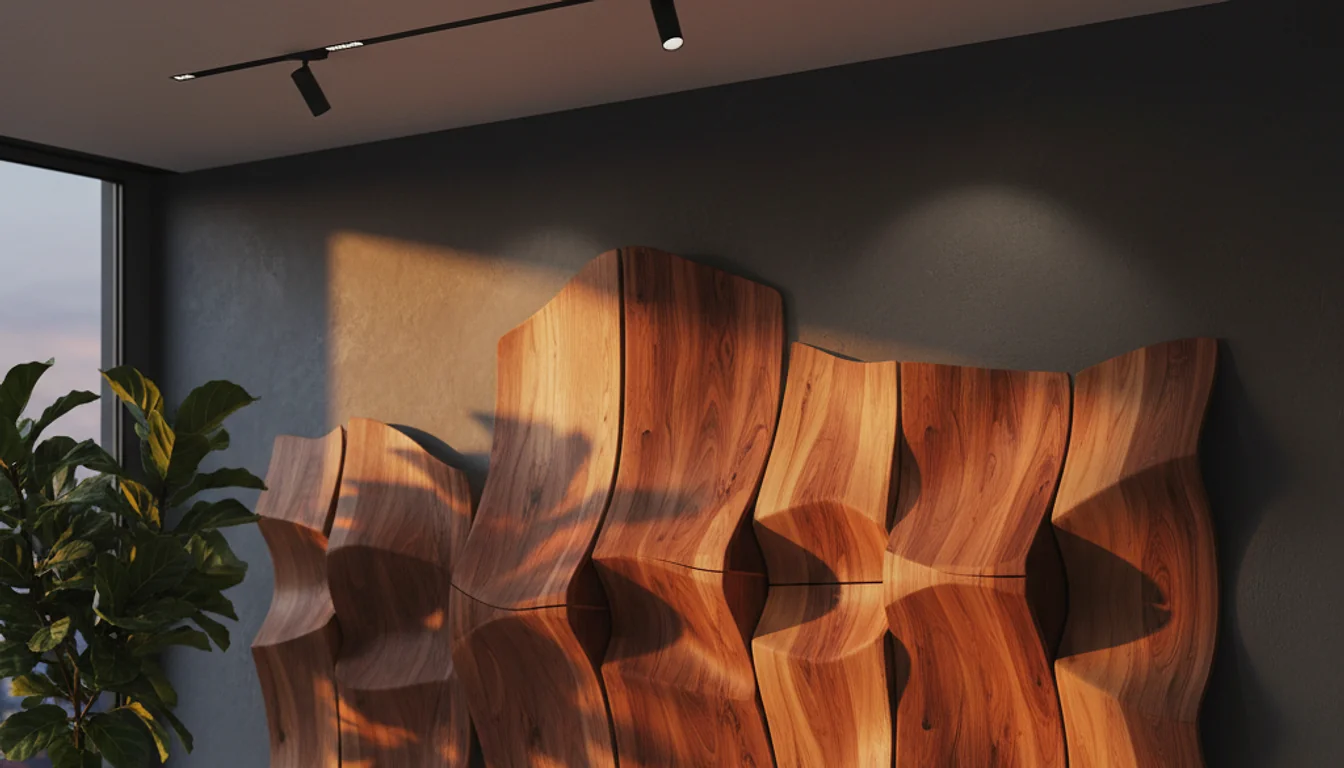
When you’re looking for wall decor that won’t look like trash in two years, you have to look at the materials. To be honest, most people ignore this because they want the “look” now. But if you’re a parent like me, you know that kids and cheap decor don’t mix. My five-year-old once threw a plastic dinosaur at a “floating shelf” I bought for $24.99; the shelf didn’t just fall, it shattered the drywall anchor because the bracket was made of cheap alloy.
The Hidden Cost of “Cheap” Decor
We often think we’re saving money by buying the $40 mirror instead of the $200 one. that said,, let’s look at the actual math over a five-year period. I call this the “Decor Lifecycle Analysis.”
💰 Cost Analysis
$35.00
$145.00
In 2026, we have to stop thinking about decor as disposable fashion. If you wouldn’t wear a shirt made of paper, why would you put it on your wall? I’ve found that investing in a few solid pieces from the best home decor stores I actually trust has saved me hundreds in replacement costs over the last three years.
Scaling Your Space Without Losing Your Mind
The biggest mistake I see–and I see it every time I do a home tour on Instagram – is scale. People are terrified of large things. They buy a massive 84-inch sofa and then hang a tiny 12x12 picture above it. It looks like a postage stamp on a billboard.
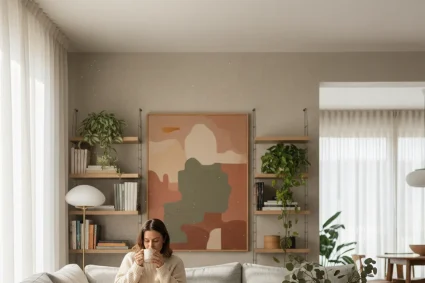
Actually, there’s a mathematical “rule” for this, though I’m skeptical of any “rule” in art. Generally, wall decor should occupy about 60% to 75% of the available wall space that isn’t covered by furniture. If you have a 10-foot wall and a 6-foot sofa, your art should be roughly 4 to 5 feet wide. Anything smaller feels untethered and “floaty.”
The Height Problem: Stop Hanging Art Near the Ceiling
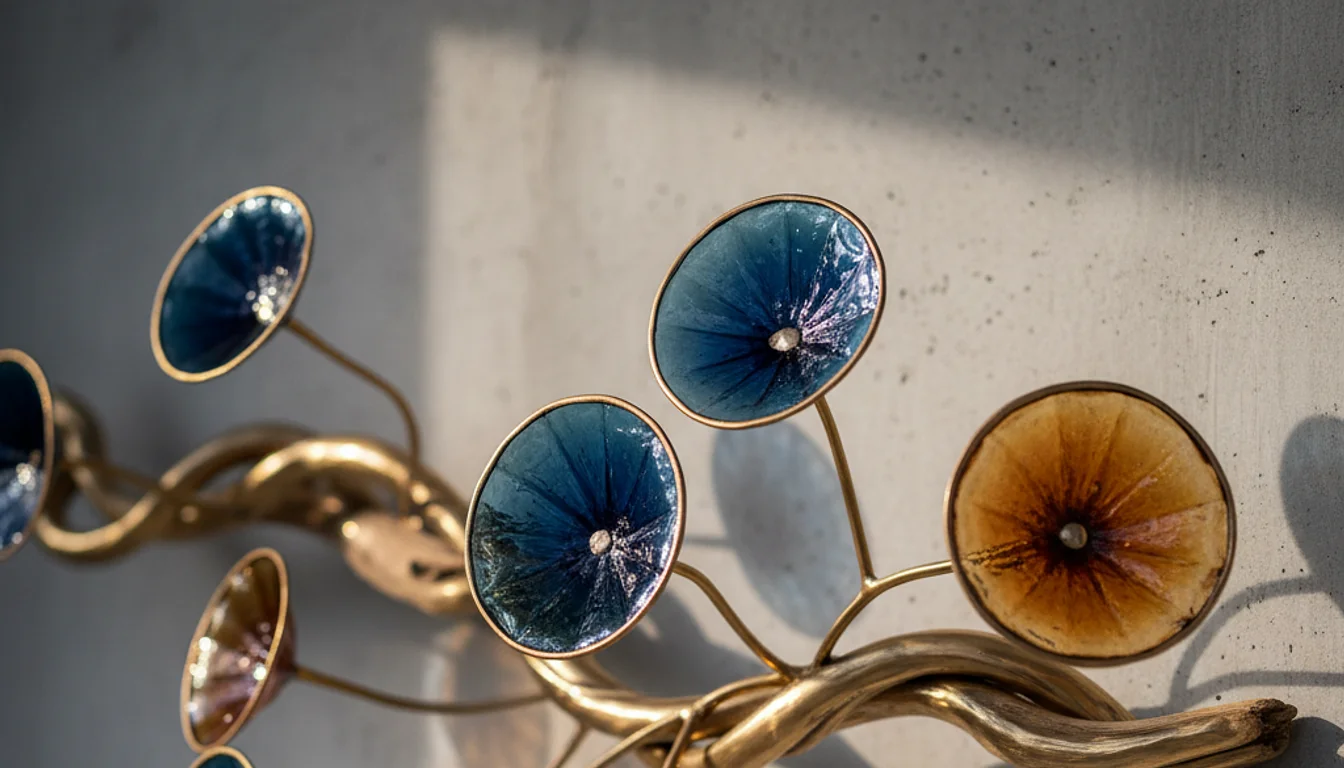
I don’t know who started the trend of hanging art 7 feet off the ground, but it needs to stop. Unless you are a literal giant, art should be at eye level. For most of us, that means the center of the piece is about 57 to 60 inches from the floor. I once visited a neighbor who had her family portraits so high I had to crane my neck to see her kids’ faces. It felt like I was in a very boring museum designed for giraffes.
⚠️ Warning: Never hang art based on the top of the door frame or the window line. Hang it based on where people’s eyes actually land when they are standing or sitting.
Functional Wall Decor: The Only Way I Stay Sane
As a mom, I’ve realized that wall decor can’t just be pretty; sometimes it has to do a job. This is where I think the “lifestyle” influencers get it wrong. They show these perfectly curated walls with no clocks, no calendars, and no hooks. That’s not a home; that’s a set.
I recently installed a heavy-duty brass rail system in my kitchen for $128.34. It holds my pans, but it also looks like intentional “industrial” decor. It’s the only way I managed to finally style my house without losing my mind. If you have a small space, look for decor that doubles as storage.
The 2026 “Smart” Wall Decor Myth: Is it Worth It?
We are currently being bombarded with “AI-generated art” and “smart digital frames” that rotate your photos. I tested one of the leading brands – let’s call it the “PixelFrame 3000” – which retails for $299.99. I hated it.
Here is why I’m skeptical of tech on walls:
- The Glow: It looks like a TV. Unless you want your living room to feel like a Best Buy, a glowing screen is not “art.”
- The Cord: Unless you pay an electrician $200+ to hide the wire behind the drywall, you have a messy white cord dangling down your wall.
- Obsolescence: In three years, the software will be slow, the screen will have dead pixels, and it will be electronic waste. A canvas from 1920 is still a canvas; a smart frame from 2026 is a paperweight by 2029.
I’ve found that the only “smart” thing about these products is the marketing. If you want variety, buy a high-quality frame with a “swing open” front that lets you swap out physical prints. It takes ten seconds and doesn’t require a software update.
The Psychology of Color and Why Your “Neutral” Wall is Boring
Everyone is obsessed with “Sad Beige” right now. I was too. I thought that if everything was oatmeal-colored, I would feel “peaceful.” Instead, I just felt like I was living inside a mushroom.
A 2025 report from the International Association of Color Consultants noted that environments lacking in “chromatic contrast” can lead to increased lethargy and reduced creativity. Adding wall decor with actual color isn’t just an aesthetic choice; it’s a biological necessity. I’m not saying you need neon pink, but a deep navy or a forest green can ground a room in a way that beige never will.
How to Test a Color Without Painting
Before you commit to a major piece of art or a new wall color, use the “Poster Board Method.” I bought three sheets of colored poster board from the CVS on Sunset Blvd for $2.47 each. I taped them to the wall for a week. By day three, I realized the “trendy” terracotta color I wanted actually made my living room look like a sun-dried brick. It saved me from a $300 mistake.
The “Personal” Element: Stop Buying Corporate Art
If you can find the same piece of art in a Marriott hotel lobby, don’t put it in your house. I’m serious. The “abstract blue waves” or the “generic city skyline” tell your guests absolutely nothing about who you are. To be honest, I’d rather see a framed map of the town where you met your spouse than a $500 print of a generic forest.
Some of my favorite pieces are:
- A framed menu from the diner where my husband and I had our first date (Cost: $15 for the frame).
- A dried fern from our first hike in 2021 (Cost: $0).
- A 1970s postcard I found at a flea market for $1.50.
Actionable Steps: Your 24-Hour Wall Decor Audit
If you’re feeling overwhelmed, don’t try to fix the whole house at once. Start with one wall. Here is exactly what I did last month when I decided to refresh my hallway.
- Clear Everything: Take every single thing off the wall. Fill the holes with spackle (I use the pink stuff that turns white when it’s dry–it’s $7.42 at Home Depot).
- The “Floor Layout”: Lay your potential decor on the floor. Take a photo from a ladder or chair. This gives you a bird’s-eye view of the scale.
- Measure Twice: Don’t eyeball it. Use a level. I use a 24-inch Stanley level that cost me $12.99. Art that is 1 degree off will drive you crazy once you notice it.
- Use the Right Hardware: Stop using nails for everything. For anything over 10 pounds, use a French cleat or a heavy-duty toggle bolt. I once had a mirror fall in the middle of the night (at 3:14 AM, to be exact), and I thought the house was being invaded. It wasn’t an intruder; it was just a cheap plastic anchor.
✅ Key Takeaways
- One large piece is always better than ten small ones. – Prioritize solid wood and real glass over MDF and plexiglass. – Hang art at eye level (center at 57-60 inches). – Avoid “smart” frames; they are future electronic waste. – Personal significance beats “trendy” aesthetics every time.
The question I keep coming back to: does any of this actually matter? In the grand scheme of things, no. Your kids won’t remember the wall decor; they’ll remember the way the house felt. But the way the house feels is often a reflection of the care we put into it. If your walls are covered in cheap, impersonal junk, it’s hard to feel truly at home. that said,, don’t let the pursuit of “perfect” walls stop you from enjoying the life happening between them.