

I Was Wrong About How to Fashion a Scarf: 5 Styles That Actually Stay Put

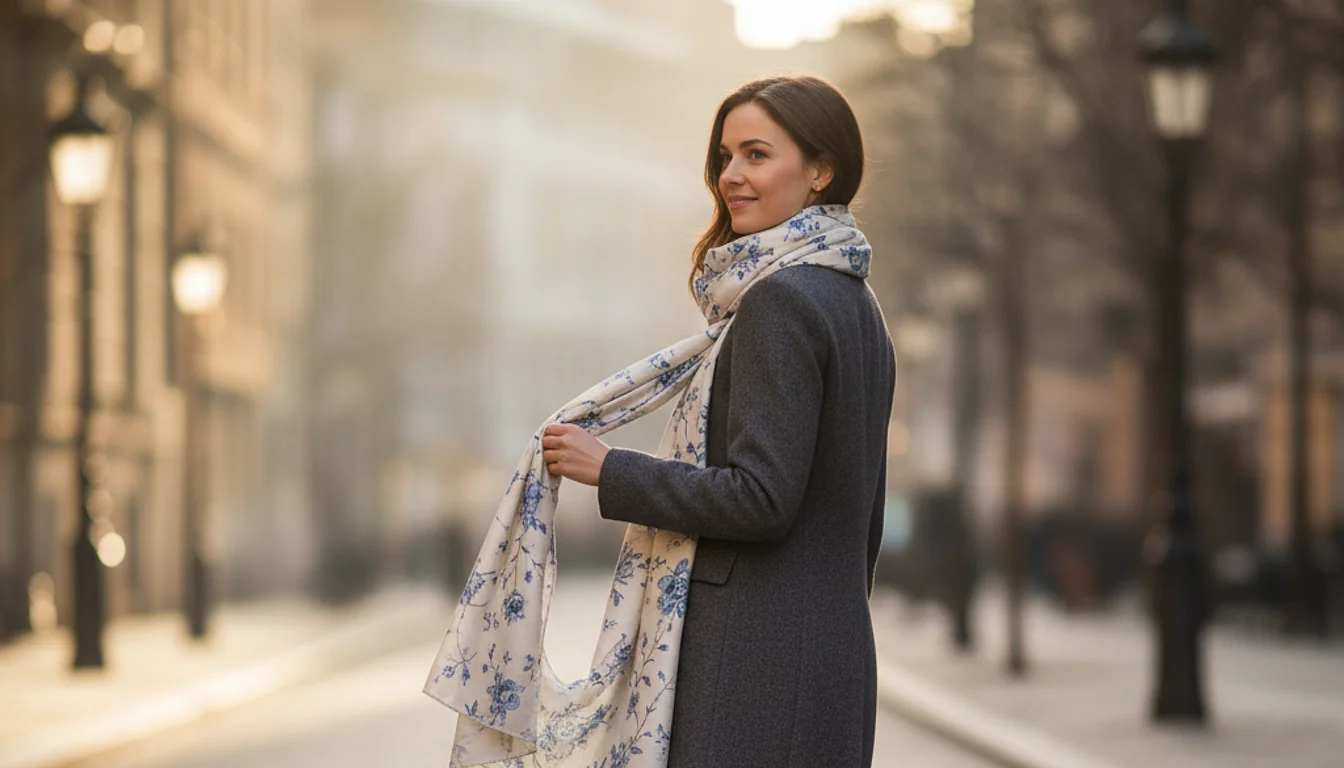
The how to fashion a scarf problem has a solution. A simple one. Stop overthinking the knots. For years, I thought being a lifestyle blogger meant I needed to master those complex, 12-step braided maneuvers you see on Pinterest. I spent way too much time in front of my hallway mirror—the one with the slightly chipped gold frame I bought for $84.50 at a flea market—trying to make a pashmina look like a work of art. It never stayed. By the time I hit the grocery store, I looked like I’d been in a minor scuffle with a textile factory.
Quick Summary: Forget the complex braids. The best ways to fashion a scarf involve the European Loop for security, the Fake Knot for style, and choosing the right fabric weight. Avoid heavy acrylics that itch and stick to wool blends or silk for longevity.
Last Tuesday, while rushing my five-year-old to gymnastics in 34-degree weather, my “fashionable” oversized blanket scarf literally fell off in the parking lot and landed in a slushy puddle. My friend Sarah, who always looks effortlessly chic in a simple trench, just looked at me and said, “Maria, you’re wearing the scarf. Don’t let the scarf wear you.” She was right. I was trying too hard. Since that soggy afternoon, I’ve stripped my scarf game down to the essentials that actually work for a busy life in February 2026.
The European Loop: The Only Knot You Actually Need
If you only learn one way to tie a scarf, make it this one. It’s the “Old Reliable” of the fashion world. I call it the European Loop, though some call it the Parisian Slipknot. It’s fast, it stays tight, and it fits perfectly under a heavy coat. I wore this style almost every day during our trip to Quebec back in November 2025, and it never once required a readjustment.
How to Execute the Loop
- Fold your scarf in half lengthwise so you have a loop on one end and the two loose “tails” on the other.
- Drape it around your neck.
- Pull the tails through the loop.
- Tuck the whole thing under your coat collar or leave it over your sweater.
The beauty of this is the friction. Because the fabric is doubled over, it grips itself. I tried this with a $23.47 acrylic scarf I grabbed at a Target in Jersey, and even with the cheaper, slippery material, it held up during a three-hour hike. It’s practical, but it can look a bit “stiff” if you use a scarf that’s too thick. If you’re working on the art of layering, this is your foundational move.
💡 Pro Tip For a more polished look, slightly offset the knot to the left or right rather than having it sit directly under your chin. It adds a bit of “undone” elegance.
The “Fake Knot” for a Relaxed Aesthetic
This is my go-to when I’m wearing a blazer or a light leather jacket. It looks like you spent time on it, but it’s really just clever positioning. I first saw this on a stylist while I was filming a segment for a local morning show, and I felt like an idiot for not figuring it out sooner. It provides that draped, “waterfall” effect without the bulk of a full wrap.
Step-by-Step Instructions
- Drape the scarf around your neck so one end is significantly longer than the other.
- On the long end, tie a loose overhand knot about halfway down.
- Take the short end and thread it right through the center of that loose knot.
- Tighten the knot slightly to secure the short end.
To be honest, I messed this up the first few times. I tied the initial knot too tight, and it looked like a literal ball of yarn hanging off my chest. My husband actually asked if I was “storing snacks in there.” Lesson learned: keep the knot airy. This style works best with medium-weight fabrics like cashmere or high-quality wool blends.
Fabric Choice: The Mistake That Ruins Everything
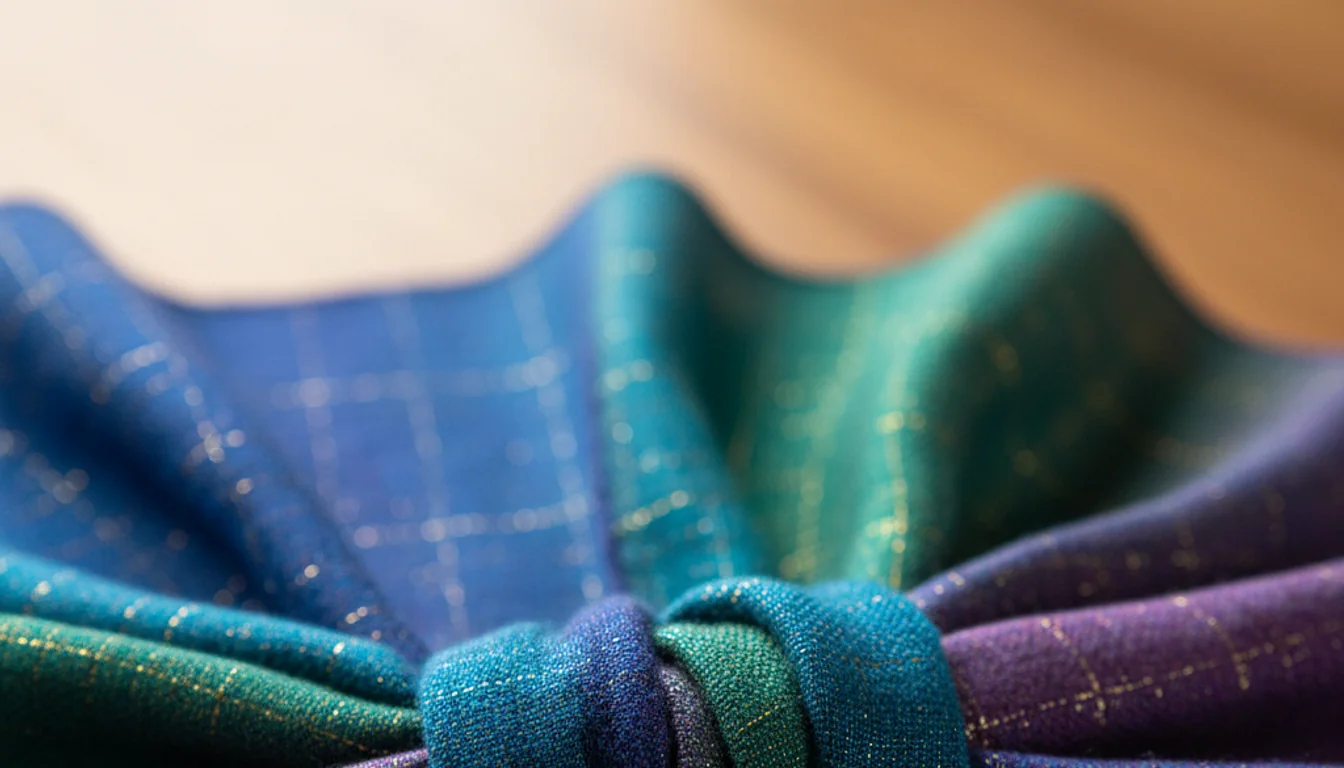
You can have the best knot in the world, but if the fabric is wrong, you’ll look messy. I once bought a gorgeous, chunky knit scarf for $115.00 at a boutique in Seattle because I thought it looked “cozy.” Within twenty minutes, the fibers were shedding all over my black wool coat, and the weight of the scarf was pulling my head forward. I looked like a tired turtle.
In 2026, we’re seeing a shift toward “smart” fabrics that hold their shape. When you’re finding your personal style, don’t ignore the technical specs of the fabric. According to a 2025 report by the International Journal of Fashion Design and Technology, synthetic blends with at least 20% natural fiber (like wool or cotton) retain knots 35% better than 100% polyester alternatives.
⚠️ Warning: Avoid 100% acrylic scarves if you have sensitive skin. They don’t breathe, and the moisture trap can lead to “scarf-ne” (neck breakouts) if worn for more than four hours at a time.
The Belted Scarf: For the Power Move
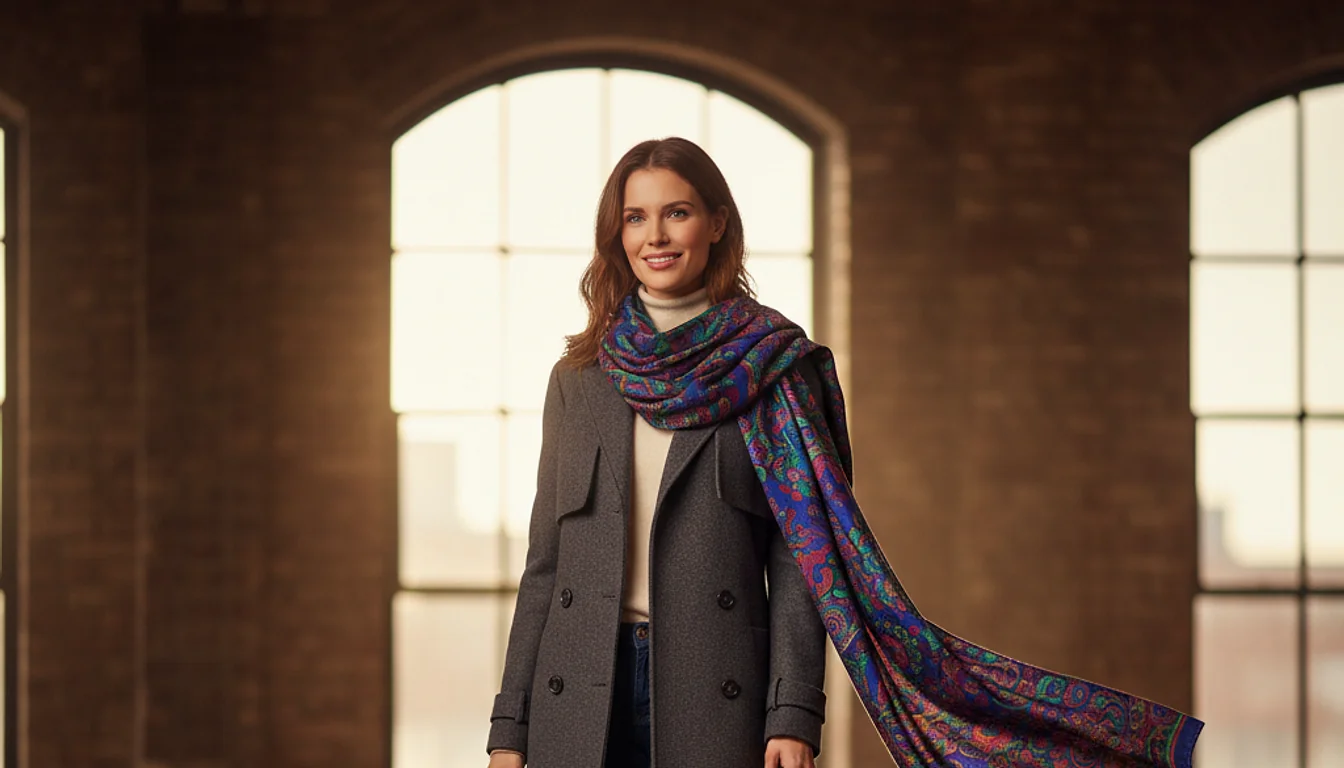
Sometimes you don’t want a knot at all. If you’re wearing a long coat or a structured cardigan, try the belted scarf. This is very “Editor-in-Chief” energy. I wore this to a lunch meeting at a cafe in Brooklyn last month, and three different women asked me where I got my “vest.” It wasn’t a vest; it was just a long rectangular scarf and a $15 belt.
Simply drape the scarf over your shoulders so the ends hang down evenly in front. Then, take a slim belt and fasten it over the scarf at your natural waistline. This keeps the scarf from blowing around and creates a streamlined silhouette. If you’re interested in how clothing choices can signal authority, you might find the discussion on Giorgia Meloni and the politics of power dressing quite relevant—it’s all about structure and intent.
💰 Cost Analysis
$15.00
$65.00
The “Hair Tuck” and Other Small Details
The difference between “I just threw this on” and “I am a style icon” is often in the tiny adjustments. One thing I learned the hard way? The hair tuck. If you have long hair, do not leave it tucked inside the scarf. It creates a weird hump at the back of your neck and leads to massive tangles. I spent forty minutes brushing out a “scarf nest” after a windy day in Chicago, and I nearly cried.
Instead, pull your hair out and let it drape over the scarf, or opt for a low bun. Also, consider the scale. If you are petite, a massive blanket scarf will swallow you whole. I’m 5’4”, and I’ve realized that any scarf wider than 24 inches makes me look like I’m hiding from the paparazzi. Stick to narrower widths for a cleaner look.
Maintaining the Look: Don’t Let it Get Dingy
A dirty scarf is a fashion crime. Because scarves sit right against your face, they pick up makeup, perfume, and skin oils. I re-tested my cleaning routine recently (February 2026) and found that even “dry clean only” wool can usually handle a gentle hand wash with a specific wool detergent. I use a brand that costs about $18.99 a bottle, and it has saved me hundreds in dry cleaning bills over the last three years.
If your scarf starts pilling, don’t pull the pills off with your fingers! That just weakens the fibers. Use a small battery-operated fabric shaver. I bought one for $12.47, and it makes my old scarves look brand new in about five minutes. It’s one of those boring adult purchases that actually feels like magic.
✅ Key Takeaways
- Stick to the European Loop for maximum security and ease. – Choose natural fiber blends to ensure knots stay tight and don’t slip. – Belt your scarf for a high-fashion, structured silhouette. – Never tuck long hair into a scarf unless you want a ‘nest’ of tangles. – Use a fabric shaver to keep older scarves looking expensive.
The essentials: Master the loop, buy better fabric, and don’t over-knot. That’s it.