
How I Rescued My Living Room: 7 Home Accessories Lessons I Learned the Hard Way

Quick Summary: Home accessories are the small-scale items—think pillows, vases, lighting, and art—that give a room its soul. After wasting over $1,200 on “filler” items, I learned that the secret isn’t more stuff, but better scale and texture. This guide covers how to curate your space for 2026 without the clutter.
The email arrived at 3:47 PM on a Tuesday. It changed everything I knew about home accessories. It was from a scout for a major interior design publication who had seen my Instagram and wanted to “stop by” while they were in Austin the following week. At first, I was ecstatic. Then, I looked around my living room and felt a cold sweat break out. My house wasn’t ready. It looked like a showroom for a clearance center—full of mismatched “stuff” but lacking any real heart.
I realized that for three years, I had been “buying for the sake of buying.” I had a tons of of small, cheap vases from the Target Dollar Spot and pillows that had lost their fluff after two months. I spent the next six days frantically editing, styling, and learning what actually makes a room work. Having been a lifestyle blogger for years, I thought I knew the ropes. I didn’t. To be honest, I was embarrassed. But that panic led to a total shift in how I view my home. If you are struggling to make your house feel “finished,” you aren’t alone. It’s usually not the furniture; it’s the accessories.
In this guide, I’m sharing the raw, honest truth about what works and what is a total waste of your hard-earned money as we head into 2026.
The $1,200 Mistake: Why Quality Beats Quantity Every Time
Back in November 2024, I did a “refresh” of my sunroom. I spent about $450 at various big-box stores on what I thought were cute home accessories. By January 2025, half of it was in the donation bin. The gold-painted plastic trays had chipped, and the “velvet” pillows felt like sandpaper. When we talk about accessories, the “fast fashion” equivalent is a trap. I felt like I was saving money, but I was just renting trash.
Now, I follow a much stricter rule. I’d rather have a bare shelf for three months while I save up for one stunning, hand-thrown ceramic vase than fill it with five generic ones. According to a 2025 report by the Sustainable Furnishings Council, consumers are shifting toward “heirloom-quality” smalls, with a 22% increase in artisan-made accessory sales. This isn’t just a trend; it’s a response to the “clutter fatigue” we’re all feeling.
💰 Cost Analysis
$450.00
$210.00
Sourcing with Intention
I started looking at local shops here in Austin, like The Vintage Room. I found a solid brass candlestick holder for $85. It was heavy, it had a patina, and it felt real. My friend Sarah came over and immediately touched it. Nobody ever touched my plastic Target trays. That was a huge wake-up call for me. People respond to materials that feel authentic—stone, wood, wool, and metal.
The Secret to Mixing Textures Without Looking Like a Mess
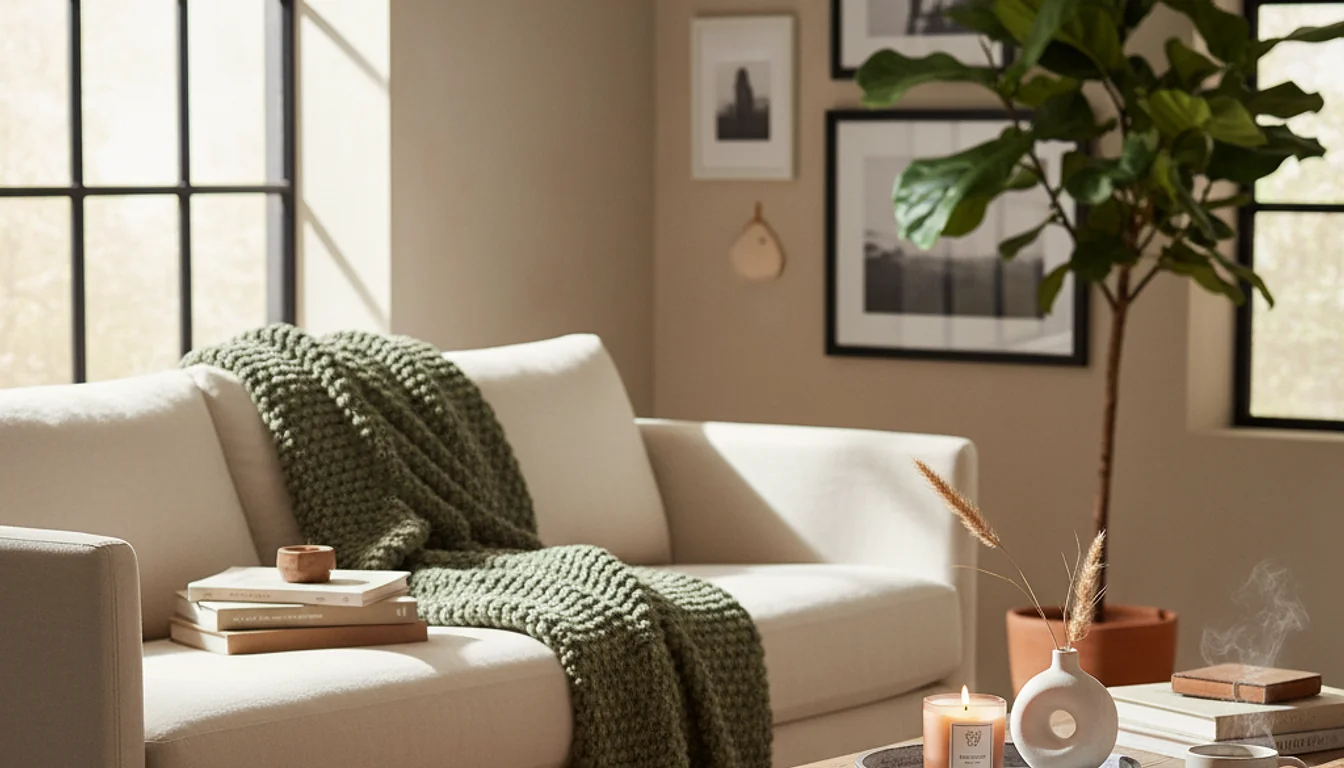
One of the biggest hurdles is making different items look like they belong together. For a long time, I thought “matching” meant everything had to be the same color. Wrong. That’s how you end up with a room that feels flat and boring. The magic happens in the contrast of materials. If you have a leather sofa, you need soft, chunky knit throws. If you have a glass coffee table, you need organic, wooden bowls.
I learned this the hard way when I tried to do an “all-white” look in 2023. It looked like a hospital wing. It wasn’t until I started mixing and matching different home decor styles that the room breathed. I added a rough terracotta pot next to a sleek, modern lamp. Suddenly, the space felt expensive. My husband, who usually doesn’t notice anything, actually said, “This feels cozy.”
💡 Pro Tip Always use the “Opposites Rule.” If a surface is hard/shiny, accessory it with something soft/matte. It creates instant visual balance.
The Layering Technique
Think of your room in layers. The furniture is the base layer, but the accessories are the layers that provide warmth. I usually start with the “softs” (pillows and rugs) and then move to the “hards” (trays, beads, and books). When I was writing my post on creating a cozy atmosphere, I realized that lighting is actually the most important accessory of all. A cold overhead light will kill the vibe of even the most expensive accessories.
Scaling Your Space: Why Size Really Does Matter
This is the mistake I see most often in my friends’ homes. They buy home accessories that are way too small. A tiny 4×6 photo frame on a massive 72-inch sideboard looks like an afterthought. It’s like wearing a doll’s hat on a human head. It just looks weird. A 2024 study published in the Journal of Interior Design found that “visual clutter” often stems from having too many small objects rather than a few large ones.
I remember buying this tiny succulent at a nursery for $12.99. I put it on my massive kitchen island, and it looked pathetic. I eventually replaced it with a large, 24-inch wooden dough bowl I found at an estate sale. The difference was night and day. The large bowl “anchored” the island. The tiny succulent just looked like I forgot to clean up a mess.
⚠️ Warning: Stop buying “smalls” to fill gaps. If a space feels empty, one large, bold item is almost always better than five tiny ones.
The “Rule of Three” (And When to Break It)
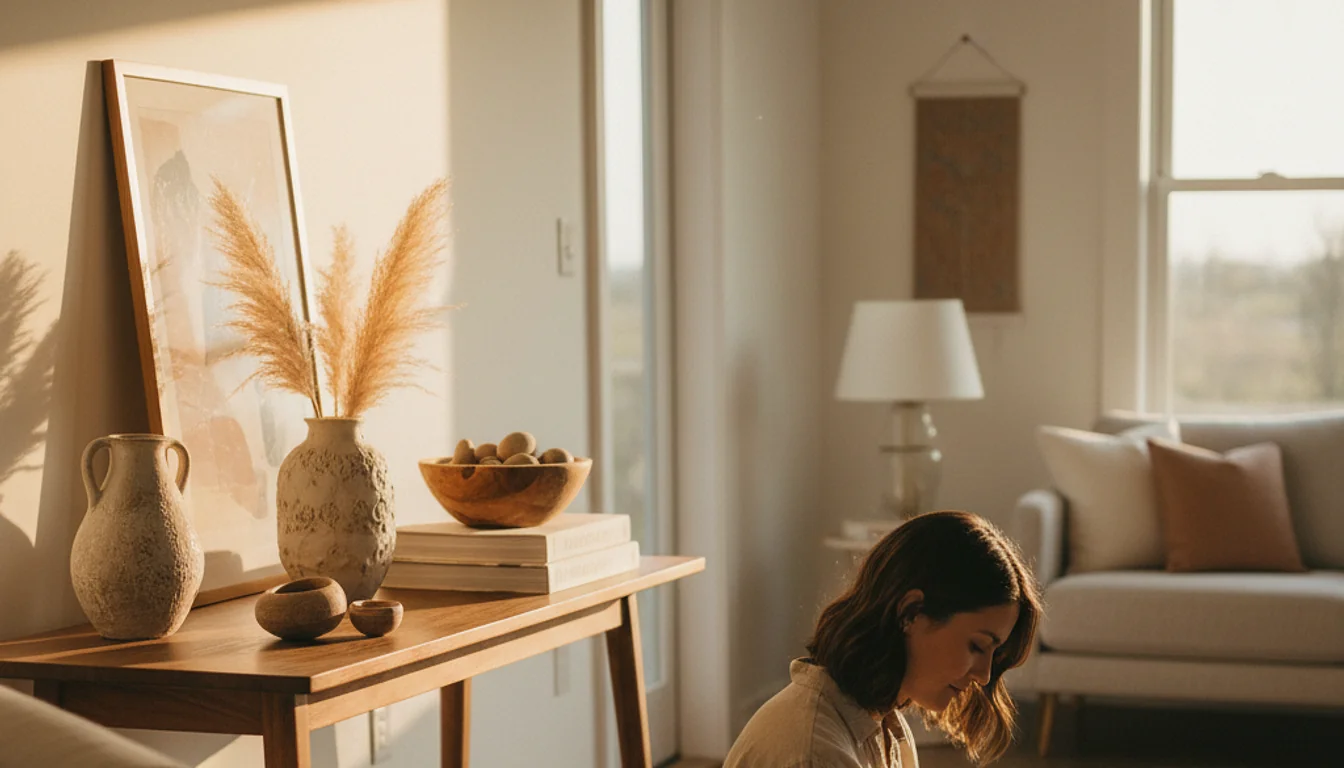
You’ve probably heard of the Rule of Three—grouping items in odd numbers. It works because it forces the eye to move around. However, in 2026, we’re seeing a move toward minimalist maximalism. Sometimes, one single, massive branch in a tall vase is more impactful than a cluster of three objects. I tried this on my entryway table last Tuesday, and for the first time, that corner didn’t look messy. It looked curated.
My 2026 Go-To Brands and Sourcing Strategy
I’ve become very picky about where I spend my money. I no longer “scroll and buy” from random Instagram ads. I need to know the brand’s ethos. For pillows, I’ve been obsessed with Lulu and Georgia. Yes, they are pricier (around $80-$120 per cover), but the inserts actually hold their shape. I also frequent Etsy for vintage brass items. There’s something about a piece that has lived a previous life that adds “soul” to a new house.
The “High-Low” Strategy
You don’t have to spend a fortune on everything. I mix my expensive pillows with $20 linen covers from H&M Home. The key is the insert. Never, ever use the cheap polyester inserts that come with pillows. Invest in down or down-alternative inserts that are 2 inches larger than your cover. It’s the easiest way to make a cheap accessory look like it cost $200. I learned this trick from a designer friend back in 2022, and it’s the hill I will die on.
Common Pitfalls: How to Avoid the “Museum” Look
Since I’ve been parenting for 5 years, I have to be realistic. I see these beautiful homes on Pinterest with glass sculptures at toddler-eye level, and I just laugh. If your home accessories make you stressed every time your kid breathes, they aren’t helping your life; they’re ruining it. I had to get rid of a beautiful marble chain link because my son kept using it as a “handcuff” for his toy dinosaurs. Not ideal.
Instead, I look for “unbreakable beauty.” Think thick wooden chains, heavy stone bowls, and high-quality faux greenery. I actually wrote about this in my guide on how I finally stopped hating my living room. You have to design for the life you have, not the life you see on a screen.
The “Dust Factor”
Be honest with yourself: Are you going to clean all those little trinkets? I realized I was spending 45 minutes every Saturday just dusting “stuff” that I didn’t even like that much. In 2025, I did a “dust audit.” If an item was annoying to clean and didn’t bring me joy, it went. This is a core principle in creating a minimalist home. Accessories should enhance your life, not add to your chores.
Actionable Steps to Refresh Your Accessories Today
- The Clear-Out: Remove every single accessory from one room. Yes, all of them. Put them in a laundry basket.
- The Deep Clean: Wipe down every surface while it’s empty. It’s amazing how much better a room feels just being clean.
- The “Hero” Piece: Pick your favorite item from the basket. Place it in the most prominent spot (like the center of the coffee table).
- Edit Ruthlessly: Only put back items that you truly love or that serve a purpose. If you haven’t noticed an item in a month, it shouldn’t go back.
- Check the Scale: Step back. Is that vase too small? Does that pillow look lonely? Adjust accordingly.
I did this process three weeks ago, and I ended up giving away two full boxes of items. My living room feels twice as big now. It’s not about what you add; it’s about what you have the courage to take away.
✅ Key Takeaways
- Prioritize natural materials like stone, wood, and wool. – Use larger items to anchor spaces and reduce visual clutter. – Invest in high-quality pillow inserts for an instant luxury feel. – Don’t be afraid of “empty space”—it gives the eye a place to rest. – Mix textures (rough vs. smooth) to create depth without color clashing.
Sometimes the simplest solution is the one staring you in the face. We spend so much time looking for the “perfect” thing to buy, when the real secret to a beautiful home is simply surrounding yourself with things that mean something to you. Whether it’s a rock your kid found on a hike or a $200 designer vase, if it has a story, it’s the right accessory.