



I Almost Quit After 3 Months: 7 Food and Beverage Manager Lessons I Learned the Hard Way


Warning: Undefined variable $ex_word in /www/wwwroot/www.gostyleluxe.com/wp-content/themes/color-newsmagazine/functions.php on line 259
Warning: Undefined variable $case in /www/wwwroot/www.gostyleluxe.com/wp-content/themes/color-newsmagazine/functions.php on line 259
Warning: Undefined variable $ex_word in /www/wwwroot/www.gostyleluxe.com/wp-content/themes/color-newsmagazine/functions.php on line 260
Warning: Undefined variable $case in /www/wwwroot/www.gostyleluxe.com/wp-content/themes/color-newsmagazine/functions.php on line 260
Warning: Undefined variable $case in /www/wwwroot/www.gostyleluxe.com/wp-content/themes/color-newsmagazine/functions.php on line 262
Warning: Undefined variable $ex_word in /www/wwwroot/www.gostyleluxe.com/wp-content/themes/color-newsmagazine/functions.php on line 264
Warning: Undefined variable $ex_word in /www/wwwroot/www.gostyleluxe.com/wp-content/themes/color-newsmagazine/functions.php on line 259
Warning: Undefined variable $case in /www/wwwroot/www.gostyleluxe.com/wp-content/themes/color-newsmagazine/functions.php on line 259
Warning: Undefined variable $ex_word in /www/wwwroot/www.gostyleluxe.com/wp-content/themes/color-newsmagazine/functions.php on line 260
Warning: Undefined variable $case in /www/wwwroot/www.gostyleluxe.com/wp-content/themes/color-newsmagazine/functions.php on line 260
Warning: Undefined variable $case in /www/wwwroot/www.gostyleluxe.com/wp-content/themes/color-newsmagazine/functions.php on line 262
Warning: Undefined variable $ex_word in /www/wwwroot/www.gostyleluxe.com/wp-content/themes/color-newsmagazine/functions.php on line 264
Warning: Undefined variable $ex_word in /www/wwwroot/www.gostyleluxe.com/wp-content/themes/color-newsmagazine/functions.php on line 259
Warning: Undefined variable $case in /www/wwwroot/www.gostyleluxe.com/wp-content/themes/color-newsmagazine/functions.php on line 259
Warning: Undefined variable $ex_word in /www/wwwroot/www.gostyleluxe.com/wp-content/themes/color-newsmagazine/functions.php on line 260
Warning: Undefined variable $case in /www/wwwroot/www.gostyleluxe.com/wp-content/themes/color-newsmagazine/functions.php on line 260
Warning: Undefined variable $case in /www/wwwroot/www.gostyleluxe.com/wp-content/themes/color-newsmagazine/functions.php on line 262
Warning: Undefined variable $ex_word in /www/wwwroot/www.gostyleluxe.com/wp-content/themes/color-newsmagazine/functions.php on line 264
Warning: Undefined variable $ex_word in /www/wwwroot/www.gostyleluxe.com/wp-content/themes/color-newsmagazine/functions.php on line 259
Warning: Undefined variable $case in /www/wwwroot/www.gostyleluxe.com/wp-content/themes/color-newsmagazine/functions.php on line 259
Warning: Undefined variable $ex_word in /www/wwwroot/www.gostyleluxe.com/wp-content/themes/color-newsmagazine/functions.php on line 260
Warning: Undefined variable $case in /www/wwwroot/www.gostyleluxe.com/wp-content/themes/color-newsmagazine/functions.php on line 260
Warning: Undefined variable $case in /www/wwwroot/www.gostyleluxe.com/wp-content/themes/color-newsmagazine/functions.php on line 262
Warning: Undefined variable $ex_word in /www/wwwroot/www.gostyleluxe.com/wp-content/themes/color-newsmagazine/functions.php on line 264
Warning: Undefined variable $ex_word in /www/wwwroot/www.gostyleluxe.com/wp-content/themes/color-newsmagazine/functions.php on line 259
Warning: Undefined variable $case in /www/wwwroot/www.gostyleluxe.com/wp-content/themes/color-newsmagazine/functions.php on line 259
Warning: Undefined variable $ex_word in /www/wwwroot/www.gostyleluxe.com/wp-content/themes/color-newsmagazine/functions.php on line 260
Warning: Undefined variable $case in /www/wwwroot/www.gostyleluxe.com/wp-content/themes/color-newsmagazine/functions.php on line 260
Warning: Undefined variable $case in /www/wwwroot/www.gostyleluxe.com/wp-content/themes/color-newsmagazine/functions.php on line 262
Warning: Undefined variable $ex_word in /www/wwwroot/www.gostyleluxe.com/wp-content/themes/color-newsmagazine/functions.php on line 264
Warning: Undefined variable $ex_word in /www/wwwroot/www.gostyleluxe.com/wp-content/themes/color-newsmagazine/functions.php on line 259
Warning: Undefined variable $case in /www/wwwroot/www.gostyleluxe.com/wp-content/themes/color-newsmagazine/functions.php on line 259
Warning: Undefined variable $ex_word in /www/wwwroot/www.gostyleluxe.com/wp-content/themes/color-newsmagazine/functions.php on line 260
Warning: Undefined variable $case in /www/wwwroot/www.gostyleluxe.com/wp-content/themes/color-newsmagazine/functions.php on line 260
Warning: Undefined variable $case in /www/wwwroot/www.gostyleluxe.com/wp-content/themes/color-newsmagazine/functions.php on line 262
Warning: Undefined variable $ex_word in /www/wwwroot/www.gostyleluxe.com/wp-content/themes/color-newsmagazine/functions.php on line 264
Quick Summary: Becoming a Food and Beverage (F&B) Manager requires a mix of “boots on the ground” experience (usually 3-5 years) and specific certifications like ServSafe. While a degree in hospitality helps, the industry is shifting toward valuing technical skills—like mastering Toast or 7shifts—over fancy diplomas. Expect long hours, a starting salary around $58,000-$65,000, and a lot of “putting out fires.”
The Truth About the Shift: Why I Hesitated to Write This
I hesitated to write this because who am I to talk about how to be food and beverage manager? But here goes. Before I was a mom of two and spent my days blogging about lifestyle tips, I was deep in the trenches of hotel management. Specifically, I spent three years at a boutique hotel in Austin, and let me tell you, it wasn’t all wine tastings and menu planning. It was mostly wondering why the walk-in freezer decided to die at 11 PM on a Saturday in July.
To be honest, my first few months were a total train wreck. I remember it was around November 12th, 2018, and I had just ordered $2,400.50 worth of premium gin for a wedding, only to realize I’d forgotten to order the tonic. The actual tonic. I ended up driving to three different grocery stores in my Honda Civic at midnight, sweating through my blazer. It was an expensive, embarrassing lesson in logistics. But that’s the reality of this job. It’s messy, it’s loud, and it requires a level of patience I didn’t know I had until I had kids.
If you’re looking for a “get rich quick” path or a clean 9-to-5, stop reading now. This isn’t that. But if you love the chaos of hospitality and want to know how to actually lead a team without losing your mind, I’ve got some thoughts. that said,, things have changed a lot as we head into 2026, so let’s dig into what actually works today.
1. Start Where the Floors Are Sticky
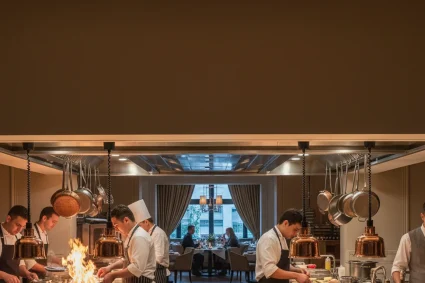
You cannot manage a floor you haven’t swept. I feel now, looking back, that the best managers I ever worked with started as servers, bartenders, or even dishwashers. There’s a certain respect you earn from a kitchen crew when they know you’ve actually “been there.”
The “Experience First” Strategy
In 2025, employers are looking for people who understand the workflow. Last year, I was chatting with my friend Dave, who runs a high-end bistro. He told me he’d hire a server with five years of experience over a fresh Ivy League hospitality grad any day of the week. Why? Because the server knows what to do when the POS system goes down during a rush.
- Server/Bartender (1-2 years): Learn the flow of service and how to handle “hangry” customers.
- Shift Lead (1 year): Start taking on small responsibilities like opening or closing the cash drawers.
- Assistant F&B Manager: This is where you learn the “boring” stuff like inventory and labor costs.
While you’re working your way up, it helps to understand the basics of the food itself. I actually wrote a guide on cooking tips lessons I learned the hard way that covers some of the kitchen logic I wish I knew before I started managing chefs. It’s a different world back there.
💡 Pro Tip Don’t skip the “dirty” jobs. Spend a week cross-training in the kitchen. Understanding how long it actually takes to prep a steak will make you a much better manager when a table is complaining about a 20-minute wait.
2. The Education Debate: Degree vs. Certifications
Is a four-year degree necessary? Actually… maybe not. Don’t get me wrong, a degree in Hospitality Management is great, but it’s expensive. I’ve seen people spend $80,000 on a degree only to start at the same $45,000 salary as someone who just worked their way up.
What You Actually Need to Know
According to a 2024 report by the National Restaurant Association, 65% of restaurant managers do not have a four-year college degree. Instead, they focus on specialized certifications that actually mean something in the real world. If you’re going to spend money, spend it here.
I remember taking my ServSafe exam in a cramped office on a Tuesday morning. I was so nervous I’d fail the temperature control section. It’s not glamorous, but having those credentials on your resume is what gets you past the initial screening. It shows you aren’t just a “people person”—you actually know how to keep people from getting sick.
3. Mastering the “Invisible” Skills: Tech and Numbers
Being an F&B Manager in 2026 is about 30% hospitality and 70% data management. If you hate spreadsheets, you’re going to have a hard time. You need to be able to look at a P&L (Profit and Loss) statement and understand why your liquor cost jumped by 4% last month.
The Tech Stack You’ll Use Daily
Last Tuesday, I was helping my cousin Sofia update her resume for a management role at a hotel. We realized that “proficient in Microsoft Office” doesn’t cut it anymore. You need to know the specific platforms that run the industry. Most modern spots are using Toast for their POS, 7shifts for scheduling, and maybe MarketMan for inventory.
Common Mistakes to Avoid:
⚠️ Warning: Never “eyeball” your inventory. I once lost $600 in one week because I assumed we had enough avocados. We didn’t. We had to buy them at retail prices from a local grocery store, which killed our margin on the guacamole.

Speaking of margins, managing a menu is an art form. You have to balance what people want to eat with what actually makes money. It’s similar to how I had to learn to simplify how I eat and drink in my personal life—less is often more. A smaller, focused menu is always easier to manage than a 10-page book of options.
4. Managing People Without Losing Your Soul
This is the hardest part. How should I put it? Managing a restaurant team is like being a therapist, a coach, and a drill sergeant all at once. You’re dealing with diverse personalities—from the temperamental executive chef to the college student who calls out every other Friday.
Building a Culture
To be honest, I used to be a “rule follower” manager. I thought if I just enforced the handbook, everything would be fine. I was wrong. People don’t work for handbooks; they work for people. I learned that the hard way when my best bartender quit because I wouldn’t give her a Saturday off for her sister’s wedding.
Specific Steps for Better Management:
- The 5-Minute Pre-Shift: Every single day. Check in with the team. Mention the specials. Mention that one table that’s always a problem.
- Be the “Gopher”: During a rush, don’t just stand there with a clipboard. Run food. Bus a table. Show them you’re in it with them.
- Radical Transparency: If the restaurant is having a slow month, tell them. Explain how labor costs affect their hours.

I saw a thread on r/Restaurateurs recently where someone asked if they should be friends with their staff. The consensus? Be friendly, but not “friends.” You have to be able to give a performance review without it being weird. It’s a fine line to walk, especially when you’re all grabbing a drink after a 12-hour shift.
5. The Financial Reality: What’s the Payoff?
Let’s talk money. Because ultimately, you have bills to pay. In late 2025, the salary for an F&B Manager can vary wildly based on your location and the type of establishment. A manager at a local Applebee’s isn’t making the same as a Director of F&B at a Ritz-Carlton.
💰 Cost Analysis
$55.00
$110.00
From my personal perspective, the “hidden” cost of this job is your time. You will work holidays. You will work weekends. You will work when your friends are at brunch. When I was working at the hotel, I missed three Thanksgiving dinners in a row. That’s something I didn’t fully grasp when I started. If you have a family, you have to be very intentional about your boundaries.
Finding the Right Fit
If you love the hospitality vibe but want more structure, look into corporate dining or university F&B roles. They often have better hours and more “normal” benefits. If you’re a “parks” person, you might even look into the policies at places like Disney or Universal—I actually did a deep dive on Disneyland food policy lessons that shows just how complex those massive operations can be.
“The customer is not always right, but the customer is always the customer. Your job is to make sure they leave feeling better than when they walked in.” – My first GM, back in 2015.
6. Navigating the 2026 Industry Trends
The industry is changing. We’re seeing more automation, higher labor costs, and a huge focus on sustainability. As a manager, you need to stay ahead of these things. If you aren’t looking at your waste management or your “ghost kitchen” potential, you’re already behind.
Sustainability as a Metric
It’s no longer just about being “green” to look good. It’s about the bottom line. Reducing food waste by 10% can add thousands of dollars back into your profit margins. Last month, a 2024 Harvard study in the Journal of Business Research found that restaurants with clear sustainability practices saw a 12% increase in customer loyalty. People care where their food comes from now.
Actionable Steps for 2026:
- Audit your trash: Sounds gross, but spend an hour looking at what’s being thrown away. Is it prep waste? Plate waste? Adjust your portions accordingly.
- Master AI Scheduling: Use tools that predict busy times based on weather and local events. Don’t overstaff on a rainy Tuesday.
- Wellness Matters: The “burnout” culture of the 2010s is dying. Offering mental health days or flexible scheduling is how you keep your best talent in 2026.
✅ Key Takeaways
- Get hands-on experience in every role before moving to management. – Focus on certifications (ServSafe, Somm) over expensive degrees. – Master the tech (Toast, 7shifts) and the numbers (P&L statements). – Lead with empathy but maintain professional boundaries. – Stay updated on 2026 trends like sustainability and AI-driven logistics.
This is just my take. I’m sure there are career veterans who would disagree with me, and honestly, I’m happy to be wrong. Every restaurant is a different beast. But if you can master the balance of keeping your staff happy, your guests fed, and your owners profitable, you’ll be ahead of 90% of the people in this industry. Good luck—and maybe buy a comfortable pair of shoes. I recommend the Dansko clogs ($135.00); my back still thanks me for that purchase.