

Is a Career in the Food and Beverage Department Actually Worth It? My Skeptical 2026 Analysis

Warning: Undefined variable $ex_word in /www/wwwroot/www.gostyleluxe.com/wp-content/themes/color-newsmagazine/functions.php on line 259
Warning: Undefined variable $case in /www/wwwroot/www.gostyleluxe.com/wp-content/themes/color-newsmagazine/functions.php on line 259
Warning: Undefined variable $ex_word in /www/wwwroot/www.gostyleluxe.com/wp-content/themes/color-newsmagazine/functions.php on line 260
Warning: Undefined variable $case in /www/wwwroot/www.gostyleluxe.com/wp-content/themes/color-newsmagazine/functions.php on line 260
Warning: Undefined variable $case in /www/wwwroot/www.gostyleluxe.com/wp-content/themes/color-newsmagazine/functions.php on line 262
Warning: Undefined variable $ex_word in /www/wwwroot/www.gostyleluxe.com/wp-content/themes/color-newsmagazine/functions.php on line 264
Warning: Undefined variable $ex_word in /www/wwwroot/www.gostyleluxe.com/wp-content/themes/color-newsmagazine/functions.php on line 259
Warning: Undefined variable $case in /www/wwwroot/www.gostyleluxe.com/wp-content/themes/color-newsmagazine/functions.php on line 259
Warning: Undefined variable $ex_word in /www/wwwroot/www.gostyleluxe.com/wp-content/themes/color-newsmagazine/functions.php on line 260
Warning: Undefined variable $case in /www/wwwroot/www.gostyleluxe.com/wp-content/themes/color-newsmagazine/functions.php on line 260
Warning: Undefined variable $case in /www/wwwroot/www.gostyleluxe.com/wp-content/themes/color-newsmagazine/functions.php on line 262
Warning: Undefined variable $ex_word in /www/wwwroot/www.gostyleluxe.com/wp-content/themes/color-newsmagazine/functions.php on line 264
Warning: Undefined variable $ex_word in /www/wwwroot/www.gostyleluxe.com/wp-content/themes/color-newsmagazine/functions.php on line 259
Warning: Undefined variable $case in /www/wwwroot/www.gostyleluxe.com/wp-content/themes/color-newsmagazine/functions.php on line 259
Warning: Undefined variable $ex_word in /www/wwwroot/www.gostyleluxe.com/wp-content/themes/color-newsmagazine/functions.php on line 260
Warning: Undefined variable $case in /www/wwwroot/www.gostyleluxe.com/wp-content/themes/color-newsmagazine/functions.php on line 260
Warning: Undefined variable $case in /www/wwwroot/www.gostyleluxe.com/wp-content/themes/color-newsmagazine/functions.php on line 262
Warning: Undefined variable $ex_word in /www/wwwroot/www.gostyleluxe.com/wp-content/themes/color-newsmagazine/functions.php on line 264
Warning: Undefined variable $ex_word in /www/wwwroot/www.gostyleluxe.com/wp-content/themes/color-newsmagazine/functions.php on line 259
Warning: Undefined variable $case in /www/wwwroot/www.gostyleluxe.com/wp-content/themes/color-newsmagazine/functions.php on line 259
Warning: Undefined variable $ex_word in /www/wwwroot/www.gostyleluxe.com/wp-content/themes/color-newsmagazine/functions.php on line 260
Warning: Undefined variable $case in /www/wwwroot/www.gostyleluxe.com/wp-content/themes/color-newsmagazine/functions.php on line 260
Warning: Undefined variable $case in /www/wwwroot/www.gostyleluxe.com/wp-content/themes/color-newsmagazine/functions.php on line 262
Warning: Undefined variable $ex_word in /www/wwwroot/www.gostyleluxe.com/wp-content/themes/color-newsmagazine/functions.php on line 264
Warning: Undefined variable $ex_word in /www/wwwroot/www.gostyleluxe.com/wp-content/themes/color-newsmagazine/functions.php on line 259
Warning: Undefined variable $case in /www/wwwroot/www.gostyleluxe.com/wp-content/themes/color-newsmagazine/functions.php on line 259
Warning: Undefined variable $ex_word in /www/wwwroot/www.gostyleluxe.com/wp-content/themes/color-newsmagazine/functions.php on line 260
Warning: Undefined variable $case in /www/wwwroot/www.gostyleluxe.com/wp-content/themes/color-newsmagazine/functions.php on line 260
Warning: Undefined variable $case in /www/wwwroot/www.gostyleluxe.com/wp-content/themes/color-newsmagazine/functions.php on line 262
Warning: Undefined variable $ex_word in /www/wwwroot/www.gostyleluxe.com/wp-content/themes/color-newsmagazine/functions.php on line 264
Warning: Undefined variable $ex_word in /www/wwwroot/www.gostyleluxe.com/wp-content/themes/color-newsmagazine/functions.php on line 259
Warning: Undefined variable $case in /www/wwwroot/www.gostyleluxe.com/wp-content/themes/color-newsmagazine/functions.php on line 259
Warning: Undefined variable $ex_word in /www/wwwroot/www.gostyleluxe.com/wp-content/themes/color-newsmagazine/functions.php on line 260
Warning: Undefined variable $case in /www/wwwroot/www.gostyleluxe.com/wp-content/themes/color-newsmagazine/functions.php on line 260
Warning: Undefined variable $case in /www/wwwroot/www.gostyleluxe.com/wp-content/themes/color-newsmagazine/functions.php on line 262
Warning: Undefined variable $ex_word in /www/wwwroot/www.gostyleluxe.com/wp-content/themes/color-newsmagazine/functions.php on line 264
Quick Summary: The food and beverage department is the heart of any hospitality business, managing everything from kitchen operations to bar service and events. While it offers fast-paced growth and high “people energy,” it is plagued by thin margins, high burnout, and a 2026 labor market that values flexibility over traditional service “grind.” It’s a great place to learn, but a hard place to stay.
The conventional wisdom on why food and beverage department is backwards. Here’s why. Most people think it’s about the food. It’s not. Most people think it’s about “hospitality.” It’s mostly about logistics and psychology. I’ve spent the last three years running my blog and talking to hundreds of service industry pros, and the reality in February 2026 is a lot grittier than the glossy Instagram reels of latte art and plated wagyu make it look.
I remember sitting in a Marriott lobby in Scottsdale last January—around the 14th, I think—watching the F&B manager scramble. I had just paid $84.22 for a breakfast for two that honestly tasted like it came out of a microwave. I wasn’t even mad at the server; I was fascinated by the chaos behind the swinging doors. Why do we keep doing this? Why does this department exist in this state of perpetual “almost-crisis”?
To be honest, the “why” behind the food and beverage department has shifted. It used to be about profit. Now, for many hotels and resorts, it’s just about keeping the doors open so they can call themselves “full service.” that said,, if you’re looking at this as a career or a business move, you need to see the cracks in the foundation first.
The Hidden Reality of the “Heart of the House”
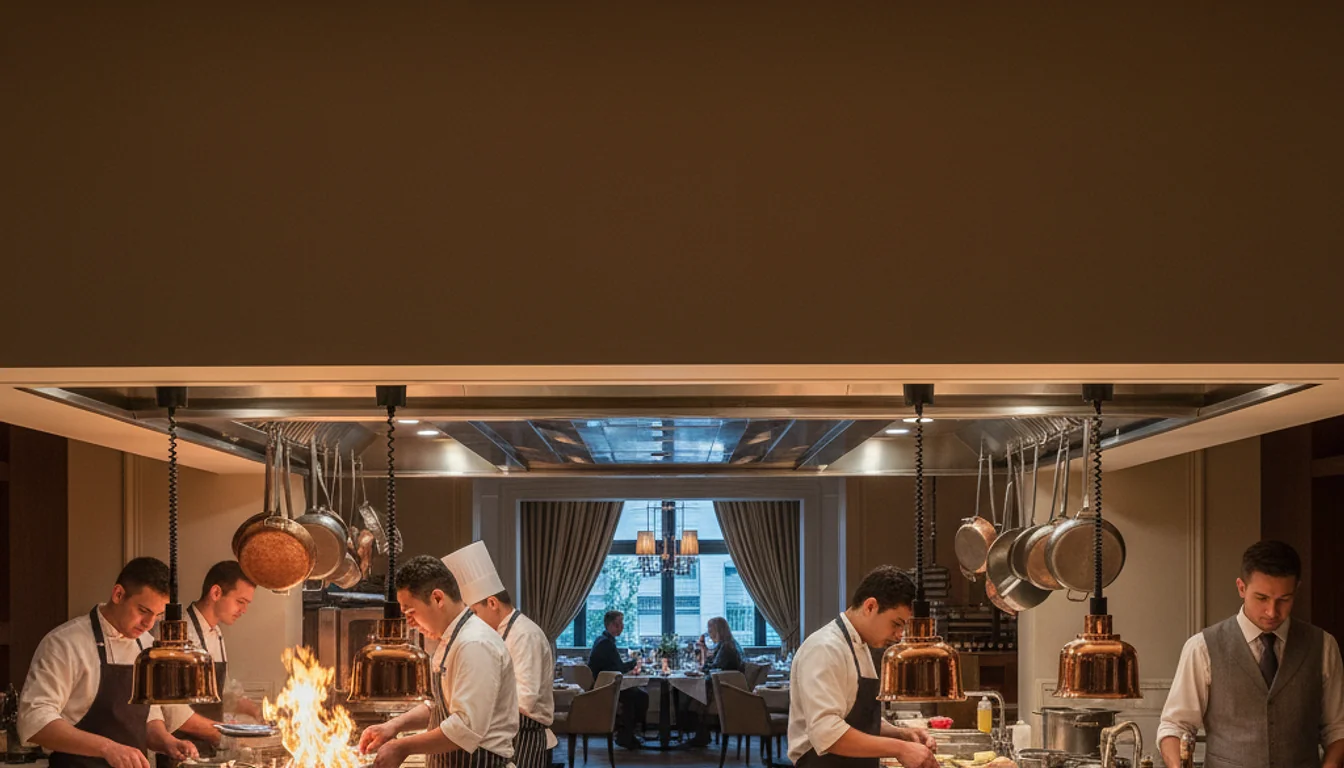
Industry veterans love to call F&B the “heart” of a hotel. But if it’s the heart, it’s one that’s currently running a marathon with no water. The food and beverage department is responsible for every edible and drinkable item on a property. This includes the fine dining restaurant, the grab-and-go kiosk, room service (which is dying a slow death), and the massive banquet halls where people have awkward corporate retreats.
From my personal perspective, the “why” is often misunderstood. Businesses don’t run these departments because they love cooking. They do it because, without it, a hotel is just a building with beds. But the math is getting harder. In 2024, a study by the Cornell School of Hotel Administration showed that while room revenue often sees 70-80% profit margins, F&B struggles to hit 20-30%. And that was before the 2025 inflation spike on poultry and dairy.
The Profit Illusion
I was talking to my friend Sarah—she’s been a Director of F&B for a decade—and she told me that last Tuesday, her department did $15,000 in sales. Sounds great, right? After labor, food waste, and the “oat milk tax” (yes, that’s what she calls the rising cost of alternatives), she cleared about $900. Just like that. One broken dishwasher or a spoiled shipment of seafood and the whole week is a wash.
This is why you see so many places cutting corners. Have you noticed how many “luxury” hotels now have QR codes instead of real menus? Or why your “complimentary” breakfast now looks like a high school cafeteria? It’s a desperate attempt to fix the department’s broken economics. I wrote about some of these struggles in my piece on 7 food and beverage manager lessons I learned from people like Sarah who are actually in the trenches.

💡 Pro Tip If you are dining at a hotel, skip the “signature” burger. It’s usually the highest-margin, lowest-quality item designed to recoup losses from the expensive steakhouse menu.
Why People Still Flock to F&B Careers (And Why They Quit)
If the margins are bad and the hours are worse, why do people do it? Actually… it’s the adrenaline. There is a specific type of person—usually young, energetic, and slightly masochistic—who thrives in the 7 PM dinner rush. I used to think I was that person until I realized I prefer my 9 PMs with a glass of wine and my kids tucked in bed.
But there’s a serious side. The food and beverage department is one of the few places where you can go from washing dishes to managing a $5 million budget in five years if you have the grit. It’s a meritocracy. Mostly. that said,, the “why” often fails when the reality of 60-hour weeks hits. You start missing birthdays. You start living on cold fries and espresso. I’ve seen it happen to the best people.
The 2026 Labor Shift
Last month, I read a report from the 2025 Hospitality Trends Summit that mentioned a “Great Re-evaluation” in service roles. Workers are no longer willing to trade their mental health for a “prestigious” title at a big-name hotel. This has forced the food and beverage department to change. If they don’t offer better pay and actual schedules, they simply can’t find staff. I saw this firsthand at a resort in Ojai back in November—half the menu was unavailable because they only had two line cooks.
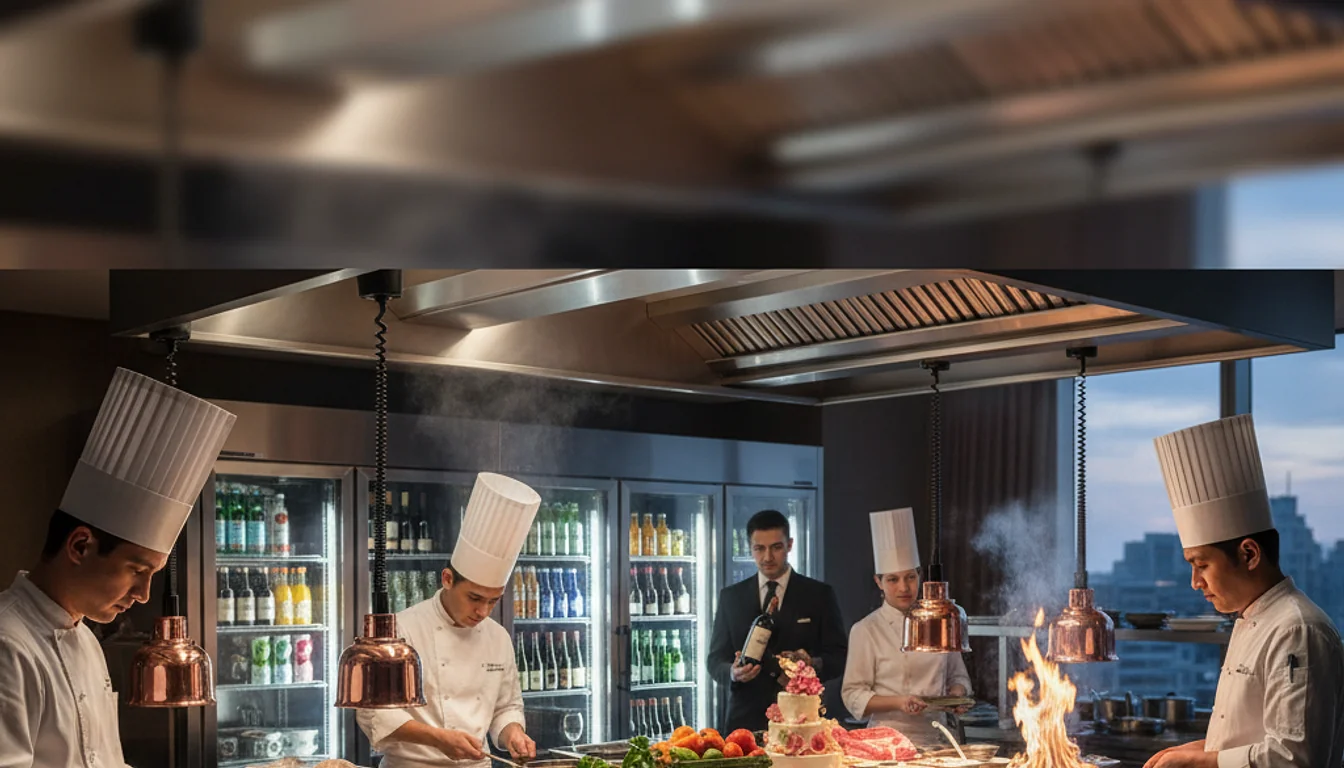
If you’re looking for a way to navigate this world without losing your mind, you might want to check out these why food and beverage lessons that I’ve gathered from experts who survived the transition into the 2026 world.
The Consumer’s Perspective: Why Everything Costs More
Let’s be real for a second. We’ve all seen it. The $18 cocktail. The $6 “service fee” that isn’t a tip. The $12.50 bottle of water in the mini-bar. You might ask, “Why is the food and beverage department scamming me?” I thought about it later, after paying $24 for a salad in LA, and realized it’s not a scam—it’s a survival tactic.
The supply chain is still a mess. I was at a Target in Echo Park recently, and even there, the prices of basic staples are up. Now imagine a hotel that has to source 500 lbs of organic spinach every week while maintaining a “luxury” image. They are passing those costs directly to us because they have no other choice. It’s a delicate balance. If they charge too much, we stop coming. If they charge too little, they go out of business.
⚠️ Warning: Beware of “Sustainability Fees” on your bill. Often, these are just fluff charges that don’t actually go to environmental causes but help cover the department’s overhead.
Is it Still Worth the Splurge?
Honestly? Sometimes. I still love a good hotel bar. There’s something about the dim lighting and the clinking of ice that makes me feel like a “real” adult, even if I have toddler crumbs on my sweater. But I’m much more skeptical now. I look at the staff-to-guest ratio. I look at the menu—is it too big? If a menu has 50 items, 40 of them are probably frozen. That’s a red flag for any F&B department.
Speaking of things that are actually worth your money, I’ve been trying to simplify my own life lately. If you’re tired of the restaurant grind and want to focus on what actually works at home, I’ve got a guide on how to simplify how to eat and drink that might save you some of that “luxury hotel” money.
The Technology Trap: Why QR Codes Didn’t Save Us
Back in 2022, everyone thought technology would “disrupt” the food and beverage department. We were promised robot servers and automated kitchens. It’s 2026 now. Where are the robots? Mostly in the trash or stuck in a corner because they couldn’t handle a spilled glass of orange juice. Really.
The human element of F&B is the one thing you can’t automate. I saw this attempt at a tech-heavy cafe in San Francisco last June. The “simple” app experience took 15 minutes to recognize my credit card, and the “automated” coffee machine broke down while I was watching. I ended up getting a lukewarm latte from a very stressed human who had to override the whole system. It was a mess.
The Real Tech That Works
The tech that actually matters in F&B is invisible. It’s the inventory software that tells the chef they have too much kale before it rots. It’s the scheduling app that lets a single mom trade her shift without calling ten people. That’s where the “why” of the department gets its strength—by making the hard parts of the job slightly less miserable for the people doing it.

The Future of Food and Beverage: A Skeptic’s Hope
Despite all my complaining (and believe me, I can complain), I don’t think the food and beverage department is going anywhere. It’s evolving. We are seeing a move toward smaller, more focused menus and “ghost kitchens” that handle room service so the main restaurant can focus on quality.
I feel now that the industry is finally admitting it can’t be everything to everyone. The days of the 24-hour club sandwich are mostly over, and honestly? Good riddance. I’d rather have a department that does three things perfectly than twenty things poorly. It’s about being honest with the guest. “We don’t have a 5-page menu, but the 5 things we have are incredible.” That’s the 2026 vibe I can get behind.
What You Can Do
If you’re a consumer, be patient. If you’re a worker, be picky. The power dynamic has shifted. Don’t take a job in an F&B department that treats you like a replaceable gear. And don’t eat at a place that clearly doesn’t care about its staff—you can taste the resentment in the soup. Trust me on that one.
✅ Key Takeaways
- F&B is a low-margin, high-stress department that relies on “people energy” to survive. – Labor shortages in 2026 are forcing a long-overdue shift in how workers are treated and paid. – Technology has mostly failed to replace the human touch, but invisible tech is improving efficiency. – Consumers should expect higher prices and smaller menus as the industry stabilizes.
💬 Frequently Asked Questions
I’ve spent a lot of time thinking about the “why” behind these systems, and honestly, it’s a miracle they work at all. It’s a fragile, beautiful, chaotic mess. I’d love to hear if your experience was different—maybe you’ve found a hotel restaurant that actually feels like home, or a job in the department that doesn’t feel like a treadmill. Let’s talk about it.