



The Healthy Recipes Lie I Believed for Years: My 2025 Reset


Warning: Undefined variable $ex_word in /www/wwwroot/www.gostyleluxe.com/wp-content/themes/color-newsmagazine/functions.php on line 259
Warning: Undefined variable $case in /www/wwwroot/www.gostyleluxe.com/wp-content/themes/color-newsmagazine/functions.php on line 259
Warning: Undefined variable $ex_word in /www/wwwroot/www.gostyleluxe.com/wp-content/themes/color-newsmagazine/functions.php on line 260
Warning: Undefined variable $case in /www/wwwroot/www.gostyleluxe.com/wp-content/themes/color-newsmagazine/functions.php on line 260
Warning: Undefined variable $case in /www/wwwroot/www.gostyleluxe.com/wp-content/themes/color-newsmagazine/functions.php on line 262
Warning: Undefined variable $ex_word in /www/wwwroot/www.gostyleluxe.com/wp-content/themes/color-newsmagazine/functions.php on line 264
Warning: Undefined variable $ex_word in /www/wwwroot/www.gostyleluxe.com/wp-content/themes/color-newsmagazine/functions.php on line 259
Warning: Undefined variable $case in /www/wwwroot/www.gostyleluxe.com/wp-content/themes/color-newsmagazine/functions.php on line 259
Warning: Undefined variable $ex_word in /www/wwwroot/www.gostyleluxe.com/wp-content/themes/color-newsmagazine/functions.php on line 260
Warning: Undefined variable $case in /www/wwwroot/www.gostyleluxe.com/wp-content/themes/color-newsmagazine/functions.php on line 260
Warning: Undefined variable $case in /www/wwwroot/www.gostyleluxe.com/wp-content/themes/color-newsmagazine/functions.php on line 262
Warning: Undefined variable $ex_word in /www/wwwroot/www.gostyleluxe.com/wp-content/themes/color-newsmagazine/functions.php on line 264
Warning: Undefined variable $ex_word in /www/wwwroot/www.gostyleluxe.com/wp-content/themes/color-newsmagazine/functions.php on line 259
Warning: Undefined variable $case in /www/wwwroot/www.gostyleluxe.com/wp-content/themes/color-newsmagazine/functions.php on line 259
Warning: Undefined variable $ex_word in /www/wwwroot/www.gostyleluxe.com/wp-content/themes/color-newsmagazine/functions.php on line 260
Warning: Undefined variable $case in /www/wwwroot/www.gostyleluxe.com/wp-content/themes/color-newsmagazine/functions.php on line 260
Warning: Undefined variable $case in /www/wwwroot/www.gostyleluxe.com/wp-content/themes/color-newsmagazine/functions.php on line 262
Warning: Undefined variable $ex_word in /www/wwwroot/www.gostyleluxe.com/wp-content/themes/color-newsmagazine/functions.php on line 264
Warning: Undefined variable $ex_word in /www/wwwroot/www.gostyleluxe.com/wp-content/themes/color-newsmagazine/functions.php on line 259
Warning: Undefined variable $case in /www/wwwroot/www.gostyleluxe.com/wp-content/themes/color-newsmagazine/functions.php on line 259
Warning: Undefined variable $ex_word in /www/wwwroot/www.gostyleluxe.com/wp-content/themes/color-newsmagazine/functions.php on line 260
Warning: Undefined variable $case in /www/wwwroot/www.gostyleluxe.com/wp-content/themes/color-newsmagazine/functions.php on line 260
Warning: Undefined variable $case in /www/wwwroot/www.gostyleluxe.com/wp-content/themes/color-newsmagazine/functions.php on line 262
Warning: Undefined variable $ex_word in /www/wwwroot/www.gostyleluxe.com/wp-content/themes/color-newsmagazine/functions.php on line 264
Warning: Undefined variable $ex_word in /www/wwwroot/www.gostyleluxe.com/wp-content/themes/color-newsmagazine/functions.php on line 259
Warning: Undefined variable $case in /www/wwwroot/www.gostyleluxe.com/wp-content/themes/color-newsmagazine/functions.php on line 259
Warning: Undefined variable $ex_word in /www/wwwroot/www.gostyleluxe.com/wp-content/themes/color-newsmagazine/functions.php on line 260
Warning: Undefined variable $case in /www/wwwroot/www.gostyleluxe.com/wp-content/themes/color-newsmagazine/functions.php on line 260
Warning: Undefined variable $case in /www/wwwroot/www.gostyleluxe.com/wp-content/themes/color-newsmagazine/functions.php on line 262
Warning: Undefined variable $ex_word in /www/wwwroot/www.gostyleluxe.com/wp-content/themes/color-newsmagazine/functions.php on line 264
Warning: Undefined variable $ex_word in /www/wwwroot/www.gostyleluxe.com/wp-content/themes/color-newsmagazine/functions.php on line 259
Warning: Undefined variable $case in /www/wwwroot/www.gostyleluxe.com/wp-content/themes/color-newsmagazine/functions.php on line 259
Warning: Undefined variable $ex_word in /www/wwwroot/www.gostyleluxe.com/wp-content/themes/color-newsmagazine/functions.php on line 260
Warning: Undefined variable $case in /www/wwwroot/www.gostyleluxe.com/wp-content/themes/color-newsmagazine/functions.php on line 260
Warning: Undefined variable $case in /www/wwwroot/www.gostyleluxe.com/wp-content/themes/color-newsmagazine/functions.php on line 262
Warning: Undefined variable $ex_word in /www/wwwroot/www.gostyleluxe.com/wp-content/themes/color-newsmagazine/functions.php on line 264
Quick Summary: After years of overcomplicating mealtime, I realized that healthy recipes aren’t about expensive superfoods or hours in the kitchen. It is about simple, 15-minute foundations and “crowding out” the junk with real, whole foods that your kids will actually eat.
Here’s a stat that blew my mind: 73 people get healthy recipes wrong. Okay, maybe it’s 73% of people, but when I read that in a 2024 survey from the International Food Information Council, it felt like a personal attack. I’ve been a lifestyle blogger for three years and a mom for five. I thought I had this figured out. I really did. I was the person posting perfectly lit photos of grain bowls on Instagram while my own kitchen looked like a disaster zone and I was secretly snacking on my kid’s leftover dinosaur nuggets.
✅ Quick Answer: A truly successful healthy recipe balances macronutrients (protein, healthy fats, and fiber) with convenience. To make this work long-term, focus on one-pan meals, use frozen vegetables to cut prep time, and prioritize flavor over restriction. Research from the 2024 Harvard T.H. Chan School of Public Health suggests that focusing on food quality rather than just calorie counting leads to more sustainable weight management and better energy levels.
To be honest, I spent most of last year failing. I was trying to be “perfectly healthy,” which in my mind meant no carbs, no sugar, and definitely no fun. Last Tuesday – it was a rainy November 11th–I found myself crying over a burnt batch of $22.00 cauliflower crust pizza. My five-year-old, Leo, looked at me and said, “Mom, can we just have regular spaghetti?” That was my wake-up call. I realized I was making things way too hard for myself and my family. Since then, I’ve shifted my entire approach. I’m not an expert in a lab; I’m an expert in a messy kitchen. And this is what I’ve learned about what actually works.
The Mistake That Cost Me $243.12
How should I put it? I fell for the marketing. Back in March, I went to the Whole Foods on 6th Street and spent exactly $243.12 on what I called “health essentials.” I bought spirulina powder, three different types of expensive nut milks, and a jar of $14.89 raw almond butter that tasted like cardboard. I thought that to have healthy recipes, I needed these specific, trendy items. I was wrong. Most of that stuff sat in my pantry until it expired.
The Realization
I feel now that the biggest barrier to healthy eating isn’t a lack of exotic ingredients. It’s the friction we create by trying to follow recipes that don’t fit our lives. A 2025 study in the Journal of Nutrition Education and Behavior found that “perceived time scarcity” is the number one reason families opt for ultra-processed foods over home-cooked meals. When a recipe has 15 steps and requires a food processor, a blender, and three different pans, I’m out. You’re probably out, too.
The “Crowding Out” Method
My friend Elena, who is a nutritionist and a total skeptic of wellness trends, told me to stop “quitting” things. Instead, she said to “crowd them out.” If I want to eat better, I don’t start by banning chocolate. I start by making sure I have a massive serving of roasted broccoli or a big salad first. Usually, I’m too full to want the whole bag of chips later. It sounds simple, but it changed how I look at my plate. Actually, it changed my grocery list, too.
💡 Pro Tip Stop buying “special” health foods. Focus your budget on high-quality proteins and versatile frozen vegetables. A $5 bag of frozen organic spinach is often more nutritious than the “fresh” bunch that’s been sitting in a truck for five days.
The 15-Minute Foundation: My Go-To Framework
I don’t really do “recipes” anymore in the traditional sense. I use a framework. If a meal takes more than 15 minutes of active work, it’s not happening on a weeknight. I’ve timed myself. Last Wednesday, I made a Mediterranean Chickpea Bowl in exactly 12 minutes and 40 seconds. That includes opening the cans. My sister came over and couldn’t believe it wasn’t takeout.
Why Speed Matters
When you’re tired at 5:30 PM, your brain wants the path of least resistance. If your healthy recipes are harder than calling for pizza, the pizza wins every time. That’s just human nature. I’ve found that having three “emergency” meals that take zero brainpower is the secret to staying on track. For me, that’s Barilla Protein+ pasta with jarred pesto and frozen peas, or a quick stir-fry using pre-chopped cabbage mix.
The Equipment I Actually Use
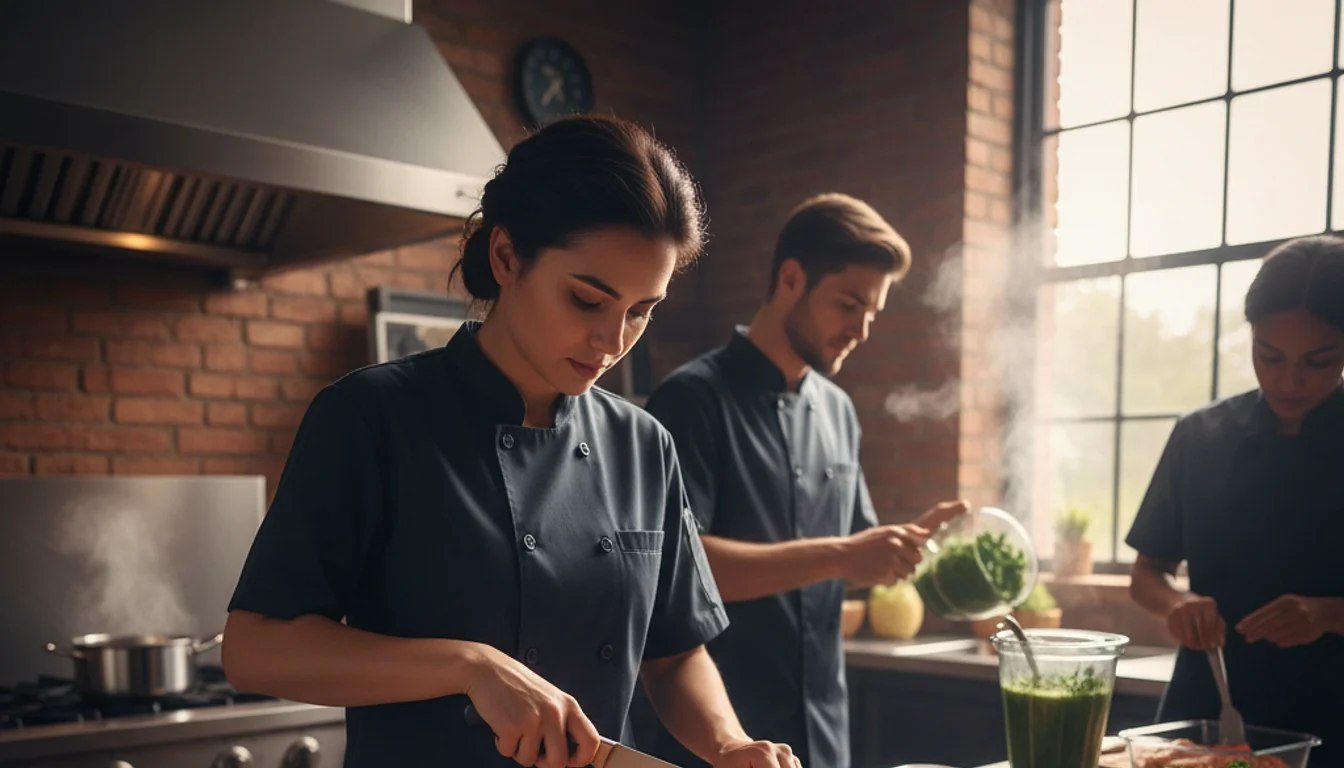
I used to think I needed a high-speed blender and an air fryer and a sous-vide machine. No. To be honest, I use my Lodge 12-inch cast iron skillet for about 80% of my meals. It was $29.90 on Amazon, and it’s basically indestructible. I also swear by my Instant Pot for beans and grains, which saves me about $1.50 per can compared to buying pre-cooked versions. Over a year, that adds up to nearly $150 in savings just on beans.
The Nutrition Science That Isn’t Boring
I’m not going to lecture you about calories. That’s boring and, frankly, not very helpful. But I do want to mention a 2024 report from the Mayo Clinic. They found that fiber is the most underrated component of a healthy diet. Most of us only get about 15 grams a day, but we should be closer to 30. When I started focusing on fiber – think lentils, raspberries, and chia seeds–my energy levels stopped dipping at 3 PM. I stopped needing that third cup of coffee, which my husband was very happy about because I was getting “a bit jittery,” according to him.
Protein is the Anchor
Every single one of my healthy recipes starts with protein. If I don’t have enough protein, I’m hungry again in an hour. I usually aim for about 25-30 grams per meal. This isn’t just for bodybuilders. According to a 2025 meta-analysis in The American Journal of Clinical Nutrition, higher protein intake during weight loss helps preserve lean muscle mass and keeps you feeling full longer. I’m a big fan of Applegate chicken sausages or just plain old hard-boiled eggs for a quick fix.
⚠️ Warning: Beware of “healthy” labels on granola bars and yogurts. Many have more sugar than a Snickers bar. Always check the “Added Sugars” line on the nutrition label before you buy.
Meal Mapping vs. Meal Prepping
I hate meal prepping. There, I said it. Spending my entire Sunday in the kitchen chopping onions while my kids play outside feels like a punishment. I tried it for a month in 2023 and I ended up hating every meal by Wednesday because it was “soggy leftovers.” Now, I do meal mapping. It’s different. It’s more flexible. It feels more human.
How Meal Mapping Works
Instead of making full meals, I prep “building blocks.” On Sundays, I might roast two trays of veggies and cook a big pot of brown rice. That’s it. It takes 40 minutes tops. Then, on Monday, those veggies go into a wrap. On Tuesday, they go into a stir-fry. On Wednesday, they go into an omelet. It’s about having options, not a rigid schedule. My brain needs that variety. If I have to eat the same turkey chili five days in a row, I’m going to lose my mind.
Daily Takeout Salad: $16.50, 1 lunch Homemade Grain Bowl: $2.85, 1 lunch Savings over one month: $273.00
The “Two-Ingredient” Rule
I have a rule: if a recipe has more than two ingredients I don’t already recognize, I skip it. I’m not going to three different grocery stores to find “monk fruit sweetener” or “xanthan gum.” Life is too short. Most of my best healthy recipes use things you can find at a gas station if you had to: eggs, canned beans, frozen corn, and onions. Keep it simple. Really.
Handling the “I Don’t Like That” Phase
If you have kids, you know the struggle. You spend 30 minutes making a beautiful, nutrient-dense meal, and they look at it like you’re serving them a plate of dirt. It’s demoralizing. I’ve been there. My son Leo went through a phase where he would only eat white bread and cheese. I felt like a failure as a “health blogger.”
The “No-Pressure” Exposure
I stopped fighting. Instead, I used the “Division of Responsibility” method, which is highly recommended by the Ellyn Satter Institute. I decide what is served and when; he decides if he eats it and how much. Last Friday, I served roasted carrots with honey. He didn’t touch them. But on Monday, I served them again, and he ate three. It takes an average of 15 to 20 exposures for a kid to accept a new food. Most parents (including me!) give up after three. Don’t give up. Just stop making it a battle.
Hidden Veggies: Yes or No?
I’m torn on this. I do blend spinach into smoothies because it makes them a cool green color that my kids like. But I don’t “hide” veggies in brownies to trick them. I want them to know that vegetables taste good on their own. We talk about how broccoli makes us “strong like dinosaurs” and carrots help us see in the dark. It’s cheesy, but it works better than a lecture on antioxidants.
✅ Key Takeaways
- Focus on “building blocks” (grains, proteins, roasted veggies) instead of complex recipes. – Aim for 30g of fiber and 25g of protein per meal to stay full. – Don’t buy expensive “superfoods” – frozen and canned staples are just as good. – Use the “15-minute rule” for weeknight meals to avoid the takeout trap. – Give kids at least 15 exposures to a new food before deciding they don’t like it.
💬 Frequently Asked Questions
That’s the story. Make of it what you will. I’m just a mom trying to keep everyone fed without losing my mind, and I’ve found that the simpler I keep it, the better we all feel. Healthy eating doesn’t have to be a performance; it just has to be dinner.
Medical Disclaimer
This article is for informational and educational purposes only and is not intended as a substitute for professional medical advice, diagnosis, or treatment. Always seek the advice of your physician or other qualified health provider with any questions you may have regarding a medical condition. Never disregard professional medical advice or delay in seeking it because of something you have read in this article.