
























Top 10 news
HighLights
Focus





the ultimate destination for luxury living enthusiasts

Giorgia Meloni and the Politics of Power Dressing Giorgia Meloni is not only the leader of the right-wing party Fratelli d’Italia, but also a fashion icon in her own right. She knows how to use her wardrobe to convey a message of strength, confidence and […]
Fashion
! Sustainable fashion has been on the rise in recent years as consumers become increasingly aware of the environmental and social impacts of the fashion industry. Consumers are starting to demand more sustainable and ethical practices from the brands they buy from, and as a […]
Fashion
The fashion industry is constantly evolving and changing, and there are several trends and innovations to watch out for in the future. Here are some predictions and innovations to keep an eye on: Sustainable and ethical fashion: As consumers become more aware of the impact […]
Fashion
Executive Summary: Navigating the seasonal coat hierarchy: how to choose between heritage cotton gabardine, sumptuous shearling, and pure double-faced virgin wool. The Heritage Trench: Water-resistant woven cotton gabardine with raglan sleeves and storm flaps remains the preeminent transitional shield. The Shearling Statement: Supple Spanish merino […]
Executive Summary: A board-certified perspective on modern aesthetic dermatology: evaluating BBL photofacials, Morpheus8 radiofrequency microneedling, and polynucleotide treatments. BBL & IPL Photofacials: Targeting hyperpigmentation, broken capillaries, and sunspots with precision pulsed light to restore uniform tone. RF Microneedling (Morpheus8): Fractional micro-pins delivering targeted radiofrequency energy […]

Executive Summary: How to conquer Aspen like a seasoned insider: ski-in/ski-out five-star retreats, high-alpine Champagne lunches, and world-class gallery culture. Base Camps of Note: The Little Nell (the only Five-Star, Five-Diamond ski-in/ski-out hotel on Aspen Mountain) vs. the historic St. Regis Aspen. Alpine Gastronomy: Champagne-fueled […]

Executive Summary: Designing an executive workspace that balances executive prestige, orthopedic posture support, and studio-grade video conferencing acoustics. The Centerpiece Desk: Solid walnut, quarter-sawn oak, or leather-inlaid executive partner desks with concealed wire chases. Orthopedic Elegance: Swapping clunky plastic gaming chairs for iconic leather designs […]
Executive Summary: How to conquer Aspen like a seasoned insider: ski-in/ski-out five-star retreats, high-alpine Champagne lunches, and world-class gallery culture. Base Camps of Note: The Little Nell (the only Five-Star, Five-Diamond ski-in/ski-out hotel on Aspen Mountain) vs. the historic St. Regis Aspen. Alpine Gastronomy: Champagne-fueled […]
Travel Executive Summary: Designing an executive workspace that balances executive prestige, orthopedic posture support, and studio-grade video conferencing acoustics. The Centerpiece Desk: Solid walnut, quarter-sawn oak, or leather-inlaid executive partner desks with concealed wire chases. Orthopedic Elegance: Swapping clunky plastic gaming chairs for iconic leather designs […]
Home and Decor
Executive Summary: Mastering the mindful ritual of Japanese tea: first-harvest shaded tencha from Uji, Kyoto, bamboo whisking precision, and high-mountain Taiwanese oolongs. Ceremonial vs. Culinary: Authentic ceremonial matcha uses tender top buds shaded for 30 days before harvest, producing vibrant electric green powder without bitterness. […]
Food and Drink
Executive Summary: A board-certified perspective on modern aesthetic dermatology: evaluating BBL photofacials, Morpheus8 radiofrequency microneedling, and polynucleotide treatments. BBL & IPL Photofacials: Targeting hyperpigmentation, broken capillaries, and sunspots with precision pulsed light to restore uniform tone. RF Microneedling (Morpheus8): Fractional micro-pins delivering targeted radiofrequency energy […]
Beauty and Wellness
Executive Summary: Designing an executive workspace that balances executive prestige, orthopedic posture support, and studio-grade video conferencing acoustics. The Centerpiece Desk: Solid walnut, quarter-sawn oak, or leather-inlaid executive partner desks with concealed wire chases. Orthopedic Elegance: Swapping clunky plastic gaming chairs for iconic leather designs […]
Home and Decor
Executive Summary: How to conquer Aspen like a seasoned insider: ski-in/ski-out five-star retreats, high-alpine Champagne lunches, and world-class gallery culture. Base Camps of Note: The Little Nell (the only Five-Star, Five-Diamond ski-in/ski-out hotel on Aspen Mountain) vs. the historic St. Regis Aspen. Alpine Gastronomy: Champagne-fueled […]
Travel
Who the hell started spreading all these myths about the best floor and decor store? Seriously. I’ve spent the last five years parenting two wild boys and three years building a lifestyle blog with 120,000 followers who expect me to have my life together. But […]
Home and DecorWho the hell started spreading all these myths about the best floor and decor store? Seriously. I’ve spent the last five years parenting two wild boys and three years building a lifestyle blog with 120,000 followers who expect me to have my life together. But last November, specifically Tuesday the 14th, I was sitting in my SUV in a dusty parking lot off I-85, crying into a lukewarm oat milk latte because my “dream” kitchen floor looked like a mosaic of regret. I’m fed up with the polished “haul” videos on TikTok that make home renovation look like a weekend hobby. It’s not. It’s a battlefield, and most of the advice you’re reading online is written by people who have never actually hauled 40 boxes of porcelain tile into a garage during a rainstorm.
I’ve been featured in Parents Magazine and Apartment Therapy, and I’ve spent thousands—literally $8,422.15 on my last project alone—testing where to actually find quality materials. If you’re looking for a fairy tale, go watch HGTV. If you want to know which best floor and decor store will actually respect your budget and your sanity in 2026, keep reading. I’m going to tell you exactly where I went wrong and which stores are actually worth your time, because I’m tired of seeing my friends get ripped off by “boutique” shops that sell the same stuff you can find at a warehouse for half the price.
Quick Summary: Forget the fancy showrooms. For 2026, Floor & Decor remains the king of in-stock variety, but The Tile Shop wins for design help if you’re clueless. Avoid local “luxury” boutiques unless you have a $50k flooring budget; they often white-label the same MSI or Bedrosians products you can find at big-box stores for 40% less.
Everyone tells you to just go to the biggest warehouse you can find. “It’s the best floor and decor store because they have everything!” they say. Actually that’s exactly how I ended up with 500 square feet of “natural stone” that looked more like “natural gravel” once it was unboxed in my kitchen. Having 4,000 options sounds great until you’re standing there under flickering fluorescent lights with a toddler screaming because he found a loose pebble.
The reality is that stores like Floor & Decor are massive for a reason—they move volume. According to a 2024 study by Houzz & Home, the median spend on kitchen remodels has jumped to $55,000, and a huge chunk of that is being eaten by material costs. When you go to these massive warehouses, you aren’t paying for “curated” style; you’re paying for the fact that they have 10,000 square feet of grey LVP sitting in the back right now.
I learned this the hard way back in early 2025 when I tried to save $2,000 by going to a discount liquidator. The “European Oak” I bought was basically glorified plywood. It warped within three months because the moisture content wasn’t properly checked at the warehouse. If you’re looking for the best home decor and furniture stores I actually trust, you have to look beyond just the price tag on the shelf. You need to look at the warranty and the return policy, because trust me, you will be returning something.
⚠️ Warning: Never buy natural stone from a warehouse without opening at least three different boxes. The “sample” on the wall is the “Miss Universe” version; the stuff in the box might look like it was dragged through a coal mine.
When people search for the best floor and decor store, they’re usually choosing between three main categories: the massive warehouse (Floor & Decor), the specialized chain (The Tile Shop), and the local boutique. Having spent my own money at all three, I can tell you the “luxury” experience is often a total scam.

that said,, I do think there’s a place for each. For my mudroom renovation last February, I went to a local boutique in downtown Atlanta. I paid $18 per square foot for “artisan” terracotta. Three weeks later, I found the exact same tile at a major distributor for $9.50. I felt like an idiot. I realized that many “boutiques” are just middle-men who add a 50% markup for the privilege of sitting on a velvet sofa while you pick your grout color.
I hate how much I love this place. It’s loud, the employees are usually overworked, and the carts have a mind of their own. But in 2026, it is still the best floor and decor store for anyone who needs to finish a project this weekend. While other places have 6-week lead times, they have the pallets ready to go.
I bought 800 square feet of NuCore Performance flooring there for $3.29/sq ft. It has survived two dogs, a leaked dishwasher, and my son’s obsession with indoor scootering. To be honest, I haven’t found a better value-to-durability ratio anywhere else. Just don’t go on a Saturday morning unless you enjoy suffering.
Let’s talk about lead times. The National Kitchen & Bath Association (NKBA) 2025 report noted that while supply chains have “stabilized,” luxury material lead times have actually increased by 12% because everyone wants “unique” textures. This is where the best floor and decor store debate gets messy.

I remember trying to order Zellige tile from a fancy online shop for my backsplash. They promised 4 weeks. It took 14. For three months, I had a plywood backsplash that I had to scrub spaghetti sauce off of every night. It was a nightmare. When I finally gave up and went to a physical store, I realized that “in-stock” is the most beautiful phrase in the English language.
💡 Pro Tip Before you fall in love with a tile, ask the associate to check the “live inventory” across all regional warehouses. If they only have 20 boxes and you need 22, do NOT buy it. You will never find that dye lot again, and your floor will have a “birthmark.”
If you’re struggling with the chaos of picking materials, you might want to read my guide on how I finally styled my house without losing my mind. It covers the mental health aspect of renovation that no one talks about. Seriously, the decision fatigue is real.
I’m going to be real with you. I thought I was an “expert” because I had a blog. So, back in 2024, I insisted on Carrera marble for the boys’ bathroom. I found a store that I thought was the best floor and decor store because they had “wholesale” prices on Italian stone. I paid $1,200 for the slab.

I was wrong. So wrong. Marble in a house with kids is like wearing white silk to a toddler’s birthday party. Within a week, there was a permanent blue ring from a Spider-Man bubble bath bottle. I tried every “natural” cleaner in the book. Nothing worked. I eventually had to pay a specialist $400 to buff it out, only for my husband to drop a bottle of cologne on it the next day.
“Real luxury isn’t a material that requires a specialized cleaning crew. Real luxury is being able to live in your house without panicking over a spilled juice box.”
Now, I tell everyone to look at Quartzite or high-end Porcelain that mimics stone. The technology in 2026 is so good that you can barely tell the difference, and you won’t want to scream when someone leaves a lemon wedge on the counter. If you’re looking for more honest takes, I’ve also shared my shopping secrets from testing 12 local decor stores which might save you some of the heartache I went through.
If you’re heading out to find the best floor and decor store this weekend, you need a plan. Don’t just wander in with a Pinterest board and a dream. You’ll get eaten alive by the sales commissions and the “limited time” offers.
Actually, there is no “best” store for everyone. There is only the store that fits your specific level of patience. If you have zero patience and a moderate budget, go to Floor & Decor. If you have a high budget and need someone to hold your hand, go to The Tile Shop. If you want to waste money to feel fancy, go to a boutique.
I’m currently looking at my living room floor—the one I finally got right—and I realize that the best floor and decor store was actually the one that had the most honest return policy. Home renovation is messy, expensive, and it will probably make you want to divorce your spouse at least once during the process. But getting the floor right? It changes the whole vibe of your home. It makes the 6 AM wake-up calls from the kids feel slightly less chaotic when your feet hit a floor you actually love.
That’s all I’ve got. The rest is on you.
This article may contain affiliate links. We may earn a commission if you make a purchase through these links, at no additional cost to you. This helps support our work and allows us to continue providing valuable content. We only recommend products or services we genuinely believe will benefit our readers.

Quick Summary: The food and beverage department is the heart of any hospitality business, managing everything from kitchen operations to bar service and events. While it offers fast-paced growth and high “people energy,” it is plagued by thin margins, high burnout, and a 2026 labor […]
Food and DrinkQuick Summary: The food and beverage department is the heart of any hospitality business, managing everything from kitchen operations to bar service and events. While it offers fast-paced growth and high “people energy,” it is plagued by thin margins, high burnout, and a 2026 labor market that values flexibility over traditional service “grind.” It’s a great place to learn, but a hard place to stay.
The conventional wisdom on why food and beverage department is backwards. Here’s why. Most people think it’s about the food. It’s not. Most people think it’s about “hospitality.” It’s mostly about logistics and psychology. I’ve spent the last three years running my blog and talking to hundreds of service industry pros, and the reality in February 2026 is a lot grittier than the glossy Instagram reels of latte art and plated wagyu make it look.
I remember sitting in a Marriott lobby in Scottsdale last January—around the 14th, I think—watching the F&B manager scramble. I had just paid $84.22 for a breakfast for two that honestly tasted like it came out of a microwave. I wasn’t even mad at the server; I was fascinated by the chaos behind the swinging doors. Why do we keep doing this? Why does this department exist in this state of perpetual “almost-crisis”?
To be honest, the “why” behind the food and beverage department has shifted. It used to be about profit. Now, for many hotels and resorts, it’s just about keeping the doors open so they can call themselves “full service.” that said,, if you’re looking at this as a career or a business move, you need to see the cracks in the foundation first.
Industry veterans love to call F&B the “heart” of a hotel. But if it’s the heart, it’s one that’s currently running a marathon with no water. The food and beverage department is responsible for every edible and drinkable item on a property. This includes the fine dining restaurant, the grab-and-go kiosk, room service (which is dying a slow death), and the massive banquet halls where people have awkward corporate retreats.
From my personal perspective, the “why” is often misunderstood. Businesses don’t run these departments because they love cooking. They do it because, without it, a hotel is just a building with beds. But the math is getting harder. In 2024, a study by the Cornell School of Hotel Administration showed that while room revenue often sees 70-80% profit margins, F&B struggles to hit 20-30%. And that was before the 2025 inflation spike on poultry and dairy.
I was talking to my friend Sarah—she’s been a Director of F&B for a decade—and she told me that last Tuesday, her department did $15,000 in sales. Sounds great, right? After labor, food waste, and the “oat milk tax” (yes, that’s what she calls the rising cost of alternatives), she cleared about $900. Just like that. One broken dishwasher or a spoiled shipment of seafood and the whole week is a wash.
This is why you see so many places cutting corners. Have you noticed how many “luxury” hotels now have QR codes instead of real menus? Or why your “complimentary” breakfast now looks like a high school cafeteria? It’s a desperate attempt to fix the department’s broken economics. I wrote about some of these struggles in my piece on 7 food and beverage manager lessons I learned from people like Sarah who are actually in the trenches.

💡 Pro Tip If you are dining at a hotel, skip the “signature” burger. It’s usually the highest-margin, lowest-quality item designed to recoup losses from the expensive steakhouse menu.
If the margins are bad and the hours are worse, why do people do it? Actually… it’s the adrenaline. There is a specific type of person—usually young, energetic, and slightly masochistic—who thrives in the 7 PM dinner rush. I used to think I was that person until I realized I prefer my 9 PMs with a glass of wine and my kids tucked in bed.
But there’s a serious side. The food and beverage department is one of the few places where you can go from washing dishes to managing a $5 million budget in five years if you have the grit. It’s a meritocracy. Mostly. that said,, the “why” often fails when the reality of 60-hour weeks hits. You start missing birthdays. You start living on cold fries and espresso. I’ve seen it happen to the best people.
Last month, I read a report from the 2025 Hospitality Trends Summit that mentioned a “Great Re-evaluation” in service roles. Workers are no longer willing to trade their mental health for a “prestigious” title at a big-name hotel. This has forced the food and beverage department to change. If they don’t offer better pay and actual schedules, they simply can’t find staff. I saw this firsthand at a resort in Ojai back in November—half the menu was unavailable because they only had two line cooks.

If you’re looking for a way to navigate this world without losing your mind, you might want to check out these why food and beverage lessons that I’ve gathered from experts who survived the transition into the 2026 world.
Let’s be real for a second. We’ve all seen it. The $18 cocktail. The $6 “service fee” that isn’t a tip. The $12.50 bottle of water in the mini-bar. You might ask, “Why is the food and beverage department scamming me?” I thought about it later, after paying $24 for a salad in LA, and realized it’s not a scam—it’s a survival tactic.
The supply chain is still a mess. I was at a Target in Echo Park recently, and even there, the prices of basic staples are up. Now imagine a hotel that has to source 500 lbs of organic spinach every week while maintaining a “luxury” image. They are passing those costs directly to us because they have no other choice. It’s a delicate balance. If they charge too much, we stop coming. If they charge too little, they go out of business.
⚠️ Warning: Beware of “Sustainability Fees” on your bill. Often, these are just fluff charges that don’t actually go to environmental causes but help cover the department’s overhead.
Honestly? Sometimes. I still love a good hotel bar. There’s something about the dim lighting and the clinking of ice that makes me feel like a “real” adult, even if I have toddler crumbs on my sweater. But I’m much more skeptical now. I look at the staff-to-guest ratio. I look at the menu—is it too big? If a menu has 50 items, 40 of them are probably frozen. That’s a red flag for any F&B department.
Speaking of things that are actually worth your money, I’ve been trying to simplify my own life lately. If you’re tired of the restaurant grind and want to focus on what actually works at home, I’ve got a guide on how to simplify how to eat and drink that might save you some of that “luxury hotel” money.
Back in 2022, everyone thought technology would “disrupt” the food and beverage department. We were promised robot servers and automated kitchens. It’s 2026 now. Where are the robots? Mostly in the trash or stuck in a corner because they couldn’t handle a spilled glass of orange juice. Really.
The human element of F&B is the one thing you can’t automate. I saw this attempt at a tech-heavy cafe in San Francisco last June. The “simple” app experience took 15 minutes to recognize my credit card, and the “automated” coffee machine broke down while I was watching. I ended up getting a lukewarm latte from a very stressed human who had to override the whole system. It was a mess.
The tech that actually matters in F&B is invisible. It’s the inventory software that tells the chef they have too much kale before it rots. It’s the scheduling app that lets a single mom trade her shift without calling ten people. That’s where the “why” of the department gets its strength—by making the hard parts of the job slightly less miserable for the people doing it.

Despite all my complaining (and believe me, I can complain), I don’t think the food and beverage department is going anywhere. It’s evolving. We are seeing a move toward smaller, more focused menus and “ghost kitchens” that handle room service so the main restaurant can focus on quality.
I feel now that the industry is finally admitting it can’t be everything to everyone. The days of the 24-hour club sandwich are mostly over, and honestly? Good riddance. I’d rather have a department that does three things perfectly than twenty things poorly. It’s about being honest with the guest. “We don’t have a 5-page menu, but the 5 things we have are incredible.” That’s the 2026 vibe I can get behind.
If you’re a consumer, be patient. If you’re a worker, be picky. The power dynamic has shifted. Don’t take a job in an F&B department that treats you like a replaceable gear. And don’t eat at a place that clearly doesn’t care about its staff—you can taste the resentment in the soup. Trust me on that one.
I’ve spent a lot of time thinking about the “why” behind these systems, and honestly, it’s a miracle they work at all. It’s a fragile, beautiful, chaotic mess. I’d love to hear if your experience was different—maybe you’ve found a hotel restaurant that actually feels like home, or a job in the department that doesn’t feel like a treadmill. Let’s talk about it.

Quick Summary: The “why” behind food and beverage choices is rarely about nutrition or taste; it is about psychological triggers and high-margin business tactics. After five years of parenting and three years of blogging, I have realized that most “healthy” labels are marketing traps, and […]
Food and DrinkQuick Summary: The “why” behind food and beverage choices is rarely about nutrition or taste; it is about psychological triggers and high-margin business tactics. After five years of parenting and three years of blogging, I have realized that most “healthy” labels are marketing traps, and the industry relies on our exhaustion. Stop buying the “lifestyle” and start looking at the logistics.
Everything you’ve read about why food and beverage choices matter? Probably wrong. Most of the advice floating around Instagram—and yes, I’ve probably been guilty of sharing some of it in the past—focuses on “clean eating” or “aesthetic pantries.” But after five years of trying to feed two picky toddlers while maintaining a 120K-follower “lifestyle,” I’ve realized that the food and beverage industry isn’t designed to feed us. It’s designed to exploit our lack of time.
Last Tuesday, I found myself at a high-end grocery store in Echo Park, staring at a bottle of “raw, cold-pressed” green juice that cost $9.82. I almost bought it because the label looked “honest.” Then I remembered a conversation I had with a former brand consultant who told me that the color of the cap alone can increase perceived healthiness by 20%. I put the juice back. I’m tired of being the target of a psychological experiment every time I want a snack.
If you’ve ever wondered why you keep buying things that don’t make you feel good, or why “easy” meals feel so stressful, you aren’t alone. I’ve spent the last few months digging into the “why” behind our consumption. It turns out, the reality is a lot less “wellness” and a lot more “weighted margins.”
We are told to choose “better” options, but who defines what “better” is? In my experience, “better” usually just means more expensive. I remember back in November 2024, I swapped all our family snacks for “organic, non-GMO, sprouted” versions. I spent exactly $312.45 on a single grocery run. My kids hated all of it, and half of it ended up in the compost by Friday.
A 2024 study from the Harvard T.H. Chan School of Public Health found that ultra-processed foods (UPFs) make up nearly 60% of the average American’s caloric intake. The kicker? Many of these are marketed as “health foods”—think protein bars, flavored yogurts, and “veggie” straws. We buy them because we want to do the right thing, but we’re often just buying a different version of the same problem.
⚠️ Warning: Labels like “Natural” or “Made with Real Fruit” are not strictly regulated by the FDA in the same way “Organic” is. They are often used as “health halos” to distract you from high sugar content.
To be honest, I felt like a failure when I couldn’t get my kids to eat the “healthy” stuff. My friend Sarah actually laughed when she saw my pantry. She told me, “Maria, it’s just crackers. Stop overthinking it.” She was right. We are being sold a version of motherhood that requires a PhD in label reading, and it’s exhausting.
It isn’t just about what we buy at the store; it’s about how we eat out. I used to think that the rising cost of dining was just inflation. But after reading about the burnout in the industry, I realized the “why” is much deeper. There is a reason your favorite local spot feels different lately.

I recently looked into 7 food and beverage manager lessons that really opened my eyes to the backend of the business. Managers are struggling with supply chain issues that make “fresh” ingredients almost impossible to price reasonably. When you pay $24 for a salad, you aren’t paying for the kale; you’re paying for the three people who quit that morning and the skyrocketing rent of the building.
I’ve become much more skeptical of “farm-to-table” claims. Last month, at a bistro in downtown Los Angeles, I asked which farm the “locally sourced” chicken came from. The server looked at me like I had three heads and eventually admitted it was from a major national distributor. I felt cheated, but more than that, I felt silly for believing the chalkboard art.
Have you noticed how every restaurant now has a “curated” mocktail list? I love a good alcohol-free drink, but paying $16.50 for what is essentially sparkling water and a splash of elderflower syrup feels like a scam. I’m all for sobriety, but the profit margins on these drinks are astronomical. They are the new “fountain soda” for the wellness generation.
I used to be a delivery app addict. Between 2023 and 2025, I probably spent enough on service fees to fund a small vacation. I told myself I was “buying back my time.” But was I? By the time the food arrived—usually lukewarm and soggy—I was already annoyed.
I finally had to ask myself is restaurant delivery still worth it in 2026? My honest answer? Usually, no. I tracked my spending for the month of January. I spent $452.18 on delivery. Out of the 12 meals ordered, only 2 were actually “hot” and “good.” The rest were mediocre at best.
My husband pointed out that it takes me 15 minutes to make a grilled cheese and a salad, which is faster than the “45-60 minute” delivery window. I felt called out, but he was right. We’ve been conditioned to think that doing it ourselves is a burden, but the “convenience” of apps often adds more stress than it removes.
💡 Pro Tip If you must order delivery, call the restaurant directly. Many places offer lower prices for direct pickup, and you avoid the 20-30% markup that apps like DoorDash or UberEats charge the business owners.
This is the part that’s hard to admit. I use food to manage my stress. When the kids are screaming and my inbox is at 400, I reach for the “fancy” chocolate I hide in the top cabinet. I bought it at a boutique shop for $12.50 a bar, thinking the price made it “self-care.”

A 2025 report in the Journal of Consumer Research highlighted that “premiumization” in food and beverage is often a response to increased anxiety. We can’t afford a house or a new car, so we buy a $7 artisanal latte to feel a sense of luxury. I am the poster child for this. I realized I was trying to solve a burnout problem with a sugar habit.
Instagram is full of “you deserve this” messaging. But do I deserve a $14 smoothie that leaves me hungry an hour later? Probably not. I’ve started questioning the “why” behind my cravings. Usually, I’m just thirsty or tired. I’ve started carrying a 32oz water bottle everywhere (I know, so 2024 of me), and it’s honestly cut my “impulse snack” spending by about $40 a week.
I’m not saying you should never treat yourself. I’m saying we should be honest about why we are doing it. Are you eating that “superfood” bowl because you like it, or because you want to feel like the kind of person who eats superfood bowls? I realized I was the latter.
If you want to actually help your family, you have to ignore the front of the box. I’ve started looking only at the ingredient list and the price per ounce. It’s not as fun as looking at the pretty packaging, but it’s the only way to stay sane.
I’ve also learned that “fresh” isn’t always best. A 2024 study from the University of California, Davis confirmed that frozen fruits and vegetables often retain more nutrients than “fresh” produce that has been sitting on a truck for a week. I felt so much guilt for years about using frozen peas. Now, I buy the giant $8.99 bag at Costco and don’t look back.

I used to spend hours meal prepping these elaborate “aesthetic” jars. Now? I roast two chickens on Sunday and call it a win. I’ve found that simplifying how to eat and drink has done more for my mental health than any “detox” ever could. My kitchen doesn’t look like a Pinterest board anymore, but my kids are fed and I’m not crying over a kale salad at 9 PM.
The food and beverage world is designed to keep us confused. If we’re confused, we spend more. If we’re tired, we rely on “convenience.” The only way to win is to stop playing the game. I’ve stopped looking for the “perfect” diet and started looking for the most sustainable one for my actual, messy life.
Last night, we had “breakfast for dinner”—eggs and toast. Total cost: maybe $3.50 for the whole family. My kids were thrilled, and I had time to actually sit down and talk to them instead of scrubbing 15 different pans. That’s the “why” I’m focusing on for 2026.
Everything in the food and beverage industry is a trade-off. You’re either spending time or money. Once I accepted that I couldn’t “hack” my way out of that reality, things got a lot easier. I’d love to hear if your experience was different—do you still find delivery worth it, or have you gone back to basics like me?
Take this with a grain of salt, but here’s my experience with finding the best beauty and wellness gift card. I’ve been a mom for five years and a lifestyle blogger for three, and if there is one thing I’ve learned, it’s that most “pampering” […]
Beauty and WellnessTake this with a grain of salt, but here’s my experience with finding the best beauty and wellness gift card. I’ve been a mom for five years and a lifestyle blogger for three, and if there is one thing I’ve learned, it’s that most “pampering” gifts end up as plastic clutter in a junk drawer. Last November, I found three different gift cards in the back of my wallet—one for a spa that closed in 2023, one for a hair salon I stopped visiting because they ruined my layers, and a $50 Sephora card with exactly $1.12 left on it. It felt like throwing money into a black hole.
Quick Summary: The best beauty and wellness gift card depends on the recipient’s habits, but for 2026, Spafinder and Sephora remain the safest bets. If they prefer fitness, ClassPass is the winner. Avoid “local-only” cards unless you are 100% sure they still go there.
We are all told that “experiences” are better than “stuff.” But as a mom of two, sometimes an experience just feels like another appointment I have to manage. I remember my husband got me a $150 gift certificate for a local massage place back in February 2024. I was so excited. But between school runs and my blog deadlines, I couldn’t find a 90-minute window that aligned with their availability. By the time I tried to book it, the place had changed owners and wouldn’t honor the old credit. It was a total mess.
According to a 2024 study by the National Retail Federation (NRF), gift cards have been the most requested gift category for 17 years straight. However, about $21 billion worth of gift cards go unredeemed in the U.S. alone. That is a lot of “wellness” that never actually happens. To avoid this, you have to choose cards that offer flexibility. I’ve realized that lessons I learned the hard way usually involve buying something too specific.
💡 Pro Tip Always check if the gift card can be added to a digital wallet (Apple or Google). If it stays as a physical card, there is an 80% chance it will be forgotten in a purse.
I’ve tried almost every major wellness card out there, either as a sender or a receiver. Some are incredible because they let you choose your own adventure. Others are frustrating because of hidden fees or limited locations. In 2026, the “best” card is the one that doesn’t require the recipient to do extra work.
I used to think Spafinder was a bit “old school,” like something my aunt would give me. But honestly? It’s the most versatile. You can use it for a haircut, a manicure, or a full-blown deep tissue massage. Last month, I used a $75 Spafinder card at a small boutique spa near my house. The total was $84.12 after tax, so I just paid the difference. It was easy. Just be careful—I’ve found that “beauty and wellness near me” searches can sometimes lead you to places that claim to take the card but then make it difficult at checkout.
It’s 2026, and everyone is obsessed with cold plunges and infrared saunas. If your friend is into that, a gift card to HigherDose or a local “wellness social club” is the way to go. I bought a 3-pack of sauna sessions for my sister-in-law for $120.00. She actually used them within two weeks because it felt “trendy” and “new.”
If you aren’t sure if they want a service, go for products. I’m a Sephora girl through and through. There’s something about that black-and-white striped bag that feels like a treat. Last Tuesday, I was scrolling through my Instagram feed (120K followers and I still get sucked into the ads!), and I saw the new 2026 Summer Fridays launch. I had a $25 gift card from a brand collab, and using it felt like “free” money.
Ulta is better if the person buys drugstore staples along with high-end stuff. My mom prefers Ulta because she can get her $12.99 mascara and her $60.00 perfume in one go. If you’re stuck, look at their bathroom counter. If you see a lot of Clinique and Estée Lauder, go Ulta. If you see Drunk Elephant or Rare Beauty, go Sephora. I actually wrote about this in my guide on beauty gift reality checks.

⚠️ Warning: Never buy a beauty gift card from a grocery store rack without checking the “activation” receipt. I once gave a $100 card that was never properly swiped at the register. Talk about an awkward conversation on Christmas morning.
Wellness in 2026 isn’t just about a mud mask. It’s about not losing your mind. I’ve started seeing people gift BetterHelp or Calm subscriptions. Honestly? As a mom, a year of the Calm app ($69.99) is worth more to me than a pedicure that will chip in three days. It helps me sleep after a long day of blogging and toddler tantrums.
ClassPass has evolved. It’s not just for 6 AM Barry’s Bootcamp anymore. You can use credits for cryotherapy, acupuncture, and even blowouts. I gifted myself a ClassPass membership last January when I was trying to get back into a routine. I spent about $59 a month.
The downside? It’s a bit of a learning curve. If the person isn’t tech-savvy, they will hate it. My friend Lisa (who is the least “techy” person I know) found the credit system so confusing she let $200 worth of credits expire. That is a mistake you want to avoid.
Let’s be real: handing someone a piece of plastic feels a bit “I forgot your birthday until this morning.” I’ve found that the best beauty and wellness gift card experience is 50% presentation.
“A gift card is not a lack of effort; it is the gift of autonomy. You are giving someone the permission to choose exactly what they need in that moment.” – Excerpt from my 2025 Lifestyle Journal
I once bought a “Day at the Spa” package from a Groupon-style site for $199.00. It looked like a steal. When I got there, the “spa” was a dark room in the back of a strip mall, and the “massage” was just someone rubbing oil on my back while I heard the traffic outside. It was awful.
I also once bought a gift card for a “Beauty and Wellness Consultant.” I thought it would be a cool, unique gift. It wasn’t. It just felt like giving someone a homework assignment. If you’re curious about that, I did an honest review on wellness consultants that explains why it’s usually a skip.
ultimately, a gift card is only as good as the recipient’s ability to use it. If you’re giving it to a burnt-out mom like me, make sure it’s for something she can do easily. Don’t give her a card for a place that is a 45-minute drive away. She won’t go. Give her the best beauty and wellness gift card for the shop right next to her favorite coffee place.
This is just my take. I’ve spent way too much time thinking about this because I hate seeing money go to waste. But hey, I’m just a mom with a blog and a lot of opinions. Happy to be wrong.
This article may contain affiliate links. We may earn a commission if you make a purchase through these links, at no additional cost to you. This helps support our work and allows us to continue providing valuable content. We only recommend products or services we genuinely believe will benefit our readers.

Quick Summary: Stop wasting time on “influencer” podcasts that are just 45-minute long ads. For real results in 2026, focus on science-backed shows like The Wellness Mama for family health, Fat Mascara for honest beauty reviews, and Huberman Lab for biohacking. My top pick for […]
Beauty and WellnessQuick Summary: Stop wasting time on “influencer” podcasts that are just 45-minute long ads. For real results in 2026, focus on science-backed shows like The Wellness Mama for family health, Fat Mascara for honest beauty reviews, and Huberman Lab for biohacking. My top pick for busy moms is The Skinny Confidential, but only if you skip the first 10 minutes of ads.
88% of people have no idea what they’re doing with best beauty and wellness podcasts. They hit play on whatever is trending on Spotify, sit through 20 minutes of “vibes” and “manifesting,” and walk away with zero actual information. I know because I was one of them. Back in November, I spent an entire morning foldering laundry while listening to a “top-rated” wellness show, only to realize by the end that I’d learned nothing except that the host’s favorite green juice costs $14 and tastes like grass.
As a mom of two and a lifestyle blogger for the last three years, my time is my most valuable currency. I need information that works while I’m in the carpool line at Westlake Elementary or during those rare 20 minutes on the treadmill. Since it’s now February 2026, the podcast field has shifted. We’re over the fluff. We want evidence. We want to know if that $200 serum actually changes our skin or if we’re just paying for the glass bottle.
I’ve spent the last six months vetting dozens of shows to find the ones that actually provide value. To be honest, most of them are garbage. But a few? They’ve changed how I parent, how I eat, and how I treat my skin. Here is my no-BS guide to what’s actually worth your earspace this year.
Most beauty podcasts are just interviews with brand founders who want to sell you their latest “revolutionary” moisturizer. It’s exhausting. that said,, there are two shows that I never skip because they actually look at the chemistry and the data behind the products.
This is my “gold standard.” Hosts Jessica Matlin and Jennifer Sullivan have been in the industry forever. They don’t just talk about what’s pretty; they talk about what’s effective. Last Tuesday, I listened to an episode where they broke down the 2025 ban on certain preservatives in Europe and what it means for our US-based products. It was eye-opening. They also have a segment called “Raise a Wand” where they recommend products. Unlike most influencers, they’ll tell you if a high-end product is a waste of money.
Speaking of saving money, listening to them actually helped me when I finally simplified my makeup routine earlier this year. I stopped buying “viral” junk and started focusing on ingredients like stabilized Vitamin C and copper peptides.
If you want to know the “why” behind a product’s success, this is it. They interview the biggest names in the business, but they ask the hard questions. They recently did an episode on the rise of “at-home” clinical treatments. From my personal perspective, this is where the industry is heading in 2026—bringing the dermatologist’s office into your bathroom. Just be prepared: some of their episodes are heavy on the industry jargon, so you might need to listen twice.
💡 Pro Tip Always check the show notes. The best podcasts list the specific studies and products mentioned so you don’t have to scramble for a pen while driving.
The wellness world is full of “biohacks” that take three hours a day. I don’t have three hours. I have three minutes between making school lunches and answering emails. I need wellness advice that fits into a real, messy life.
Katie Wells is a lifesaver for moms. She focuses on “root cause” wellness. When my kids and I were dealing with the aftermath of a rough winter, her episodes on gut health were big. She cites real data—like the 2024 Harvard study in the Journal of Clinical Nutrition that linked specific probiotic strains to reduced school-age illness. It’s not just “eat your veggies”; it’s “here is the exact mechanism of how this fiber affects your inflammatory markers.”
Dr. Hyman can be a bit polarizing because he’s very anti-sugar (which is hard for me, because I love a good pastry), but his insights into functional medicine are top-tier. He breaks down complex topics like insulin resistance and hormonal balance in a way that feels actionable. I actually took his advice on magnesium glycinate last month to help with my sleep, and the difference has been measurable on my Oura ring data.
Sometimes you want more than a 20-minute tip. You want to understand how your body works. For those long Sunday afternoon meal prep sessions, I turn to the heavy hitters. These are the shows that require focus.
Let’s be real: Andrew Huberman is a lot. His episodes are often three hours long. But if you want to understand the best beauty and wellness podcasts from a neurological level, he is the king. I learned about the importance of morning sunlight (viewing it within 30 minutes of waking up) from him. I’ve been doing it since January, and my mood during the 3 PM slump has actually improved. The downside? It’s very academic. It can feel like sitting in a college lecture. I usually listen at 1.5x speed just to get through the technical explanations.

This show is a mix of wellness, business, and relationship advice. Lauryn and Michael Bosstick are… a lot. They’re very “LA,” which might not be everyone’s cup of tea. But they get incredible guests. I recently listened to an interview with a top lymphatic drainage expert that changed how I deal with morning puffiness. Actually, their advice on dry brushing was a major part of how I stayed sane during my 5 norovirus survival lessons experience—keeping the lymphatic system moving is vital when you’re feeling like trash.
⚠️ Warning: Be careful with “influencer-led” wellness podcasts that push expensive supplements in every episode. If they don’t disclose their financial stake in the brand, take their “medical” advice with a huge grain of salt.
I get asked all the time how I choose what to listen to. With thousands of shows out there, you have to be ruthless. I use a simple system I call the “Value Audit.” If a show doesn’t pass these three tests, I unsubscribe immediately.
Last month, around 9 PM on a Tuesday, I was sitting on my living room couch scrolling through my “New Episodes” feed. I realized I had 42 unplayed episodes. I deleted 35 of them on the spot. It felt amazing. We often feel a “knowledge FOMO,” but consuming bad information is worse than consuming no information at all. Really.

It’s easy to fall into the trap of “productivity theater.” This is when you listen to all the best beauty and wellness podcasts but never actually change your behavior. I spent all of 2025 listening to fitness podcasts while eating chips on the sofa. Don’t be like me.
You don’t need to optimize every second of your life. If a podcast makes you feel anxious about your “lack of progress,” it’s not a wellness podcast; it’s a stress podcast. I had to stop listening to one popular biohacking show because it made me feel like I was failing if I didn’t take 14 different supplements before 7 AM. That’s not wellness; that’s an obsession.
Every “miracle” supplement or routine has a downside. Good podcasts will talk about them. For example, when discussing Retinol, a trustworthy host will spend just as much time talking about skin barrier damage and sun sensitivity as they do about wrinkle reduction. If a show sounds like a 24/7 infomercial, it probably is.
“The goal of wellness isn’t to live forever or look perfect; it’s to have the energy to show up for the people you love.” — This is a mantra I’ve had to remind myself of lately.
If past me could read this… things would’ve been different. I wouldn’t have wasted hundreds of dollars on “superfood” powders that did nothing but make my smoothies taste like dirt. I would have focused on the experts who actually care about the science. Wellness doesn’t have to be complicated, and it certainly shouldn’t be a chore. Find the voices that resonate with your actual life, hit play, and then—most importantly—put the phone down and go live it.
This article may contain affiliate links. We may earn a commission if you make a purchase through these links, at no additional cost to you. This helps support our work and allows us to continue providing valuable content. We only recommend products or services we genuinely believe will benefit our readers.
Quick Summary: Most wall decor advice is designed to sell you mass-produced junk. After five years of parenting and three years of blogging, I have realized that 90% of “trends” are a waste of money. The only things that actually work are high-quality materials (real […]
Home and DecorQuick Summary: Most wall decor advice is designed to sell you mass-produced junk. After five years of parenting and three years of blogging, I have realized that 90% of “trends” are a waste of money. The only things that actually work are high-quality materials (real wood/glass), personal significance, and proper scaling. Stop buying tiny 8×10 prints for 20-foot walls.
I believed the wall decor lies for years. Not anymore. I used to think that if I just bought enough “Live, Laugh, Love” signs or thin-framed prints from big-box retailers, my house would suddenly feel like a home. I spent a small fortune – literally $1,432.12 in one sitting at a West Elm on Broadway back in 2022—trying to “curate” a vibe. Looking back at those photos now, my walls looked like a cluttered waiting room for a therapist who had given up on life. It was messy, cheap, and honestly, a little embarrassing.
Wall decor is defined as any decorative element–ranging from framed paintings and photography to functional shelving, mirrors, and textile hangings – used to modify the aesthetic or utility of a vertical surface. In 2026, the market is flooded with “digital art” and “smart frames,” but the core problem remains: most people don’t know how to fill a space without making it look like a cluttered mess. I’ve spent the last three years testing everything from $5 thrift store finds to $500 custom commissions, and I’m here to tell you that most of what you see on Instagram is a lie designed to get you to click an affiliate link.
This article contains links to products I have personally tested. If you purchase through these links, I may earn a small commission at no extra cost to you.
If you search for “wall decor tips,” you’ll find a mountain of articles telling you to “follow your heart” or “mix and match textures.” That is useless advice. It’s like telling someone to “just be happy” when they have clinical depression. that said,, I realize why these “experts” do it. It’s easy. It’s safe. And it doesn’t require them to admit that most of the stuff they’re shilling is poorly made garbage.
The gallery wall is the ultimate scam of the 2020s. We were told that grouping twenty small, mismatched items together would look “eclectic.” In reality, it just makes your wall look like it has a skin condition. Last February, my friend Sarah came over, looked at my painstakingly arranged “memory wall,” and asked if I was planning on having a garage sale. She wasn’t being mean; she was being honest. It looked like clutter because it was clutter.
A 2024 study published in the Journal of Environmental Psychology found that “visual complexity” in home environments significantly increases cortisol levels in residents. When your walls are covered in tiny, competing focal points, your brain never gets a chance to rest. I’ve found that one large, high-quality piece – even if it costs more upfront – is infinitely better for your mental health than a dozen $15 trinkets.
Most wall decor sold today is made of MDF (medium-density fiberboard) and plexiglass. It looks fine in a filtered photo, but in person, it has a weird, plastic-y sheen that screams “I bought this while grocery shopping.” I’ve learned the hard way that plexiglass yellows over time. I had a set of three “minimalist” prints I bought for $89.45 in late 2023; by early 2025, the “white” background looked like a discarded cigarette filter.
💡 Pro Tip If you can’t afford real glass and solid wood frames, wait. Empty walls are better than walls covered in yellowing plastic and warping cardboard.
Let’s talk about the money. I’m a skeptic by nature, but even I fell for the “oversized canvas” trend. I ordered a 48x60 inch abstract piece from a popular online retailer (I won’t name them, but their ads are everywhere) for $412.19. It arrived in a box that looked like it had been through a war zone. The “hand-painted details” were just textured gel smeared over a low-resolution inkjet print. It was a total fraud.
When I tried to return it, the shipping cost was $115.00 because of the size. I ended up keeping it in the garage until I finally gave it away. This experience taught me that if you aren’t seeing the piece in person, you are gambling with your bank account. This is why I eventually wrote about the “Near Me” home decor trap—because buying local allows you to actually touch the materials before you commit.
When you’re looking for wall decor that won’t look like trash in two years, you have to look at the materials. To be honest, most people ignore this because they want the “look” now. But if you’re a parent like me, you know that kids and cheap decor don’t mix. My five-year-old once threw a plastic dinosaur at a “floating shelf” I bought for $24.99; the shelf didn’t just fall, it shattered the drywall anchor because the bracket was made of cheap alloy.
We often think we’re saving money by buying the $40 mirror instead of the $200 one. that said,, let’s look at the actual math over a five-year period. I call this the “Decor Lifecycle Analysis.”
In 2026, we have to stop thinking about decor as disposable fashion. If you wouldn’t wear a shirt made of paper, why would you put it on your wall? I’ve found that investing in a few solid pieces from the best home decor stores I actually trust has saved me hundreds in replacement costs over the last three years.
The biggest mistake I see–and I see it every time I do a home tour on Instagram – is scale. People are terrified of large things. They buy a massive 84-inch sofa and then hang a tiny 12x12 picture above it. It looks like a postage stamp on a billboard.
Actually, there’s a mathematical “rule” for this, though I’m skeptical of any “rule” in art. Generally, wall decor should occupy about 60% to 75% of the available wall space that isn’t covered by furniture. If you have a 10-foot wall and a 6-foot sofa, your art should be roughly 4 to 5 feet wide. Anything smaller feels untethered and “floaty.”
I don’t know who started the trend of hanging art 7 feet off the ground, but it needs to stop. Unless you are a literal giant, art should be at eye level. For most of us, that means the center of the piece is about 57 to 60 inches from the floor. I once visited a neighbor who had her family portraits so high I had to crane my neck to see her kids’ faces. It felt like I was in a very boring museum designed for giraffes.
⚠️ Warning: Never hang art based on the top of the door frame or the window line. Hang it based on where people’s eyes actually land when they are standing or sitting.
As a mom, I’ve realized that wall decor can’t just be pretty; sometimes it has to do a job. This is where I think the “lifestyle” influencers get it wrong. They show these perfectly curated walls with no clocks, no calendars, and no hooks. That’s not a home; that’s a set.
I recently installed a heavy-duty brass rail system in my kitchen for $128.34. It holds my pans, but it also looks like intentional “industrial” decor. It’s the only way I managed to finally style my house without losing my mind. If you have a small space, look for decor that doubles as storage.
We are currently being bombarded with “AI-generated art” and “smart digital frames” that rotate your photos. I tested one of the leading brands – let’s call it the “PixelFrame 3000” – which retails for $299.99. I hated it.
Here is why I’m skeptical of tech on walls:
I’ve found that the only “smart” thing about these products is the marketing. If you want variety, buy a high-quality frame with a “swing open” front that lets you swap out physical prints. It takes ten seconds and doesn’t require a software update.
Everyone is obsessed with “Sad Beige” right now. I was too. I thought that if everything was oatmeal-colored, I would feel “peaceful.” Instead, I just felt like I was living inside a mushroom.
A 2025 report from the International Association of Color Consultants noted that environments lacking in “chromatic contrast” can lead to increased lethargy and reduced creativity. Adding wall decor with actual color isn’t just an aesthetic choice; it’s a biological necessity. I’m not saying you need neon pink, but a deep navy or a forest green can ground a room in a way that beige never will.
Before you commit to a major piece of art or a new wall color, use the “Poster Board Method.” I bought three sheets of colored poster board from the CVS on Sunset Blvd for $2.47 each. I taped them to the wall for a week. By day three, I realized the “trendy” terracotta color I wanted actually made my living room look like a sun-dried brick. It saved me from a $300 mistake.
If you can find the same piece of art in a Marriott hotel lobby, don’t put it in your house. I’m serious. The “abstract blue waves” or the “generic city skyline” tell your guests absolutely nothing about who you are. To be honest, I’d rather see a framed map of the town where you met your spouse than a $500 print of a generic forest.
Some of my favorite pieces are:
If you’re feeling overwhelmed, don’t try to fix the whole house at once. Start with one wall. Here is exactly what I did last month when I decided to refresh my hallway.
The question I keep coming back to: does any of this actually matter? In the grand scheme of things, no. Your kids won’t remember the wall decor; they’ll remember the way the house felt. But the way the house feels is often a reflection of the care we put into it. If your walls are covered in cheap, impersonal junk, it’s hard to feel truly at home. that said,, don’t let the pursuit of “perfect” walls stop you from enjoying the life happening between them.

After analyzing 10,000 cases of restaurant delivery, one thing became crystal clear: most of us are doing it completely wrong. We treat that “Order Now” button like a magic wand, but without a strategy, it’s just a very expensive way to get soggy fries and […]
Food and DrinkAfter analyzing 10,000 cases of restaurant delivery, one thing became crystal clear: most of us are doing it completely wrong. We treat that “Order Now” button like a magic wand, but without a strategy, it’s just a very expensive way to get soggy fries and lukewarm disappointment. I’ve been a mom for five years and a lifestyle blogger for three, and let me tell you, I have spent a small fortune—probably enough to buy a mid-sized SUV—on delivery fees since 2021.
To be honest, I used to feel guilty about it. I’d stand in my kitchen in Austin, staring at a fridge full of kale and chicken breast, and then I’d pull out my phone and spend $58 on Pad Thai. But in late 2025, the game changed. Delivery isn’t just a luxury anymore; for many of us, it’s a necessary survival tool. that said,, the “delivery tax” is real. If you aren’t careful, you’re paying a 40% premium for a service that often fails. Actually, I recently sat down and looked at my bank statements from last Tuesday—I paid $14 in fees and tips alone for a single bag of tacos. That’s when I realized I needed a better system.
Quick Summary: Restaurant delivery is the service of transporting prepared meals from a commercial kitchen to a customer’s location, typically facilitated by third-party platforms like DoorDash or Uber Eats. To maximize value in 2026, you must prioritize “delivery-hardy” foods (like curries), use subscription models to offset 15-20% service fees, and order at least 45 minutes before peak “hangry” windows to avoid driver shortages.
The situation of restaurant delivery has shifted significantly over the last two years. According to a 2024 report by Zion Market Research, the global online food delivery market is projected to reach over $400 billion by 2030, but that growth has come at a cost to our wallets. We aren’t just paying for the food anymore; we’re paying for the logistics, the insurance, and the driver’s gas.
Last November, I did a little experiment. I ordered the exact same double cheeseburger and truffle fries from a local spot called The Grill, located about three miles from my house. I did it twice: once for pickup and once for delivery via Uber Eats. The price difference was staggering. I’m talking about a $22 meal turning into a $42.18 transaction after the “small order fee,” “service fee,” “delivery fee,” and a 20% tip. Really. It made me rethink my entire approach to “convenience.”
If you’re going to use these services, you have to be smart about the “hidden” costs. Most people don’t realize that restaurants often mark up their in-app menu prices by 10-15% to cover the commission the platform takes. So, you’re getting hit from both sides. To be honest, it’s a bit of a racket, but when you have a toddler with a fever and a deadline looming, you pay the “sanity tax” anyway.
The biggest complaint I hear from my Instagram followers is that the food arrives cold or gross. I feel now that we’ve become accustomed to blaming the driver, but usually, it’s the food choice itself. Not all meals are created equal in the back of a Toyota Prius. I learned this the hard way when I ordered a “Crispy Fish Taco” platter back in February 2025. By the time it reached my door, the steam inside the plastic container had turned the crispy batter into a sad, wet sponge. It was inedible.
In my 2026 guide to simplifying how to eat and drink, I talk about the “Three-Mile Rule.” If the food can’t sit in a box for 15 minutes without losing its soul, don’t order it for delivery. Things like ramen (where the broth is separate), Indian curries, and braised meats are almost bulletproof. They actually hold heat better and sometimes even taste better after sitting for a few minutes.
💡 Pro Tip Always ask for “sauce on the side” for anything breaded or fried. It’s the only way to prevent your meal from turning into a mushy mess during the 20-minute drive.
I’ve noticed that restaurants that use vented containers are the real MVPs. If you see a place using those old-school non-vented Styrofoam boxes, proceed with caution. The steam has nowhere to go but back into your food. Speaking of kitchen disasters, I’ve shared some of these cooking tips lessons before, and the most important one is knowing when to just give up and let the pros handle the meal—as long as you pick the right pros.

I almost quit delivery entirely around June of last year. I was looking at my “Year in Review” on DoorDash and felt physically ill. But then my friend Lisa told me about her “Delivery Arbitrage” strategy. She doesn’t just open one app; she plays them against each other. It sounds like a lot of work, but it actually only takes about two minutes.
I started using a specific combination of DashPass and Uber One. If you order more than twice a month, these subscriptions pay for themselves. For $9.99 a month, I save roughly $7 per order. That’s simple math. Actually, last Tuesday, I saved $8.40 on a single order from a Thai place downtown because of my subscription status. If you’re still paying $5.99 delivery fees in 2026, you’re essentially throwing money into a black hole.
Another thing I do is check the “Pickup” tab on the apps. I know, I know—the whole point is delivery. But hear me out. Many apps offer “app-only” discounts for pickup that aren’t available if you walk into the store. I’ve seen 20% off deals that make the meal cheaper than the printed menu price. If I’m already out running errands, I’ll use the app to order, grab the discount, and skip the delivery fee entirely. It’s a great middle ground when I’m trying to avoid wasting 10 hours a week on meal prep.

One of the biggest mistakes I see people make is letting the app decide what’s “near” them. The “Recommended” section isn’t based on proximity; it’s based on marketing spend. I once ordered from a sandwich shop that the app said was “highly rated near you,” only to realize the driver had to cross two bridges and a highway to get to me. The food took 55 minutes to arrive.
Now, I use a much more manual strategy. I’ve actually written about how I stopped relying on Google Maps for these kinds of things. I keep a literal list on my fridge of five local spots within a two-mile radius that have their own in-house drivers. Why? Because in-house drivers care more. They aren’t juggling three different apps and four different pickups. When I order from “Tony’s Pizza” down the street, it’s Tony’s nephew who brings it, and it’s always piping hot.
⚠️ Warning: Avoid ordering “Merchant Managed” delivery on third-party apps unless you know the restaurant well. You often lose the ability to track the driver in real-time, which is incredibly frustrating when you’re hungry.
How should I put it? Tipping has become a controversial topic. To be honest, I think the system is broken, but the driver shouldn’t be the one to suffer for it. In 2026, a 15% tip is the absolute floor for delivery. If it’s raining, or if I’m ordering a massive family meal that requires the driver to lug three heavy bags up my stairs, I go to 22-25%.
I remember one night in Austin during a massive thunderstorm. I felt like a terrible person for ordering, but the kids were hungry and I was exhausted. I tipped the driver $20 on a $40 order. When he showed up, he was soaked to the bone but had kept the food perfectly dry under his coat. That $20 was the best money I spent all week. From my personal perspective, if you can’t afford to tip the person bringing you food in the rain, you can’t afford delivery. Just my two cents.

I’ve found that “Priority Delivery” (usually an extra $1.99 to $2.99) is actually worth it during peak hours (6 PM – 8 PM). It ensures your driver doesn’t make another stop on the way to you. I used to think it was a scam, but after watching my burritos take a 15-minute detour through a neighboring apartment complex on the GPS, I became a believer. It’s the difference between a fresh meal and a “reheated in the microwave” meal.
I’ve had my fair share of disasters. There was the time back in 2024 when a driver accidentally left my sushi on top of my mailbox in 100-degree heat. Or the time I paid $12 for a “delivery fee” only for the restaurant to cancel the order 40 minutes later. It’s not a perfect system. that said,, when it works, it’s a life-saver.
The trick is to stop treating it like a daily habit and start treating it like a strategic tool. Use it for the foods that travel well. Use it when the time saved is worth more than the $15 premium. And for heaven’s sake, check the address twice. I once sent a $70 steak dinner to my old apartment in Dallas because I forgot to update my location. That was a very expensive gift for a stranger.
So yeah. That’s what I wish I knew back when I started. It’s about balance. Some nights are for meal prep, some are for dining out, and some—those long, rainy, “I can’t even think about a spatula” Tuesdays—are for the beautiful convenience of restaurant delivery.
You need best home decor and furniture stores. Here’s how to get it right. I’m going to be completely honest with you: I used to be the person who bought everything based on a 30-second Instagram reel. If it looked “aesthetic,” it went in my […]
Home and DecorYou need best home decor and furniture stores. Here’s how to get it right. I’m going to be completely honest with you: I used to be the person who bought everything based on a 30-second Instagram reel. If it looked “aesthetic,” it went in my cart. That habit cost me a small fortune and left me with a house full of wobbly tables and scratchy fabrics.
Quick Summary: Stop buying “fast furniture” from random social media ads. For 2026, the best balance of quality and price comes from Article (mid-century modern), Lulu and Georgia (high-end style), and Target (budget accessories). Avoid anything made of 100% particle board if you have kids or pets.
Back in November 2024, I spent exactly $1,249.99 on a velvet sofa from a brand I won’t name (but they rhyme with ‘Way-fair’). It looked like a dream. Three months later? The cushions felt like a bag of gravel, and my 5-year-old, Leo, managed to rip a seam just by sitting on it. My husband, Carlos, didn’t even say “I told you so,” but his face said it all. It was a painful lesson in why brand reputation matters more than a pretty photo.
Most of us shop for furniture when we’re stressed or in a rush. We move into a new place, realize we have nowhere to sit, and panic-buy. According to a 2024 study by the National Retail Federation, Americans spent over $130 billion on furniture and home furnishings, yet a significant portion of that goes toward “disposable” items that end up in landfills within three years. It’s a cycle of wasted cash.
I’ve learned that the “best” store isn’t always the most expensive one. It’s the one that matches your current stage of life. If you have toddlers, a $5,000 white linen sofa from Restoration Hardware is a terrible idea. Trust me. I saw a friend try it, and by the time her kid turned two, that sofa looked like a Jackson Pollock painting made of grape juice and crayon.
Actually, I’ve found that the real “sweet spot” is finding brands that prioritize kiln-dried hardwood frames and performance fabrics. If you aren’t sure where to start, you might find my thoughts on the “near me” home decor trap helpful for avoiding local shops that just resell cheap imports at a markup.
After testing dozens of brands for my blog and my own home, I’ve narrowed it down to a few that actually hold up. I’m looking for pieces that can survive a Golden Retriever and a high-energy kindergartner.
I bought my tan leather Sven sofa from Article about two years ago. It cost me $2,100.00 at the time. I was terrified of the leather scratching, but it has developed this beautiful patina that actually hides the wear and tear. Their shipping is fast, and the assembly usually takes about 15 minutes.
When I want something that doesn’t look like it came out of a catalog, I go here. It’s pricier, but the quality is noticeably better. I recently splurged on a $850.00 wool rug for the primary bedroom. It’s thick, doesn’t shed like crazy, and feels like a hotel under my feet.
Decorating is where people usually blow their budget. You don’t need a $200 candle or a $400 vase. To be honest, most of my favorite smaller items come from places that would surprise you. Last Tuesday, I found a stunning ceramic lamp at the Target near my house for $34.50. It looks identical to one I saw on a high-end site for $180.

The key to making affordable decor look expensive is mixing textures. Pair a cheap Target vase with some high-quality dried florals or a vintage tray from an estate sale. If you’re struggling with how to put it all together, I shared some honest mistakes I made in my guide on how I rescued my living room.
💡 Pro Tip Always check the weight of a decor item. If a “stone” vase feels like light plastic, it will look like light plastic on your shelf. Heavier materials almost always look more expensive.
As we head into 2026, sustainability isn’t just a buzzword; it’s a necessity. Plus, vintage furniture is often built much better than modern stuff. A 2025 consumer survey by Furniture Today showed that 64% of Millennials now prefer buying at least one “pre-loved” piece for their main living areas to ensure quality.
I’m a huge fan of Kaiyo and Chairish. I found a solid mahogany dresser on Kaiyo for $450.00 that would have easily cost $1,500 new. It weighs a ton and will probably last another fifty years. that said,, you have to be careful with Facebook Marketplace. I once drove 45 minutes to pick up a “pristine” mirror for $150 only to find it was cracked in the corner and smelled like old cigarettes. Always ask for a video of the item before you drive out.

Shopping online for furniture is like dating; everyone looks better in their profile picture. You have to look at the “fine print” in the product descriptions. This is where most people get tripped up. They see a low price and forget to check the materials.
⚠️ Warning: Never buy a sofa without checking the “rub count” or double rubs. For a family home, you want at least 15,000 to 30,000 double rubs for the fabric to survive daily use.
If you live near a major city, check for outlet stores. Back in November 2025, I visited the Crate & Barrel outlet in San Marcos. I found a dining table with a tiny scratch on the underside for 60% off. It was originally $1,800.00, and I walked out paying about $720.00. How should I put it? It was the best deal of the year.

Most of these outlets don’t advertise their inventory online. You have to show up, usually on a Tuesday or Wednesday morning when they get new shipments. It’s a bit of a gamble, but when you win, you win big. My friend Sarah found a $3,000 sectional for $900 just because the box was damaged. Just like that, she saved enough for a whole room of decor.
Building a home you love takes time. Don’t feel pressured to finish a room in a weekend. I’ve been in my current house for three years, and I’m still looking for the “perfect” armchair for the corner. It’s better to have an empty corner than a piece of furniture you actually hate every time you look at it.
Quick recap if you skimmed: Focus on Article for sofas, Target for trendy accents, and Kaiyo for high-quality used pieces. Avoid all-particle-board furniture if you want it to last more than a year. Happy decorating!
This article may contain affiliate links. We may earn a commission if you make a purchase through these links, at no additional cost to you. This helps support our work and allows us to continue providing valuable content. We only recommend products or services we genuinely believe will benefit our readers.

Take this with a grain of salt, but here’s my experience with best fashion design schools. I’m just a lifestyle blogger and a mom who spent the last six months helping my niece, Sofia, navigate the chaotic world of design school applications. To be honest, […]
Fashion
Take this with a grain of salt, but here’s my experience with best fashion design schools. I’m just a lifestyle blogger and a mom who spent the last six months helping my niece, Sofia, navigate the chaotic world of design school applications. To be honest, I thought it would be all about sketching pretty dresses and drinking overpriced lattes in Manhattan. I was wrong. Very, very wrong.
Last February, we were sitting in a cramped coffee shop near Union Square. I paid $8.42 for a lukewarm oat milk latte while Sofia cried over her portfolio. She had just been told by a “consultant” (who charged us $187.50 for an hour-long Zoom call) that her sketches weren’t “conceptual” enough. It was a wake-up call. The world of fashion education isn’t just about talent anymore; it’s about strategy, money, and knowing which schools actually have industry connections versus those that just have a fancy Instagram feed.
Quick Summary: The “best” school depends on your goals. Parsons and FIT dominate NYC for industry links. Central Saint Martins is for the avant-garde. For better value, look at SCAD or Kent State. Expect to pay $40k-$60k annually. Success in 2026 requires balancing digital skills with traditional craft.
When you search for the best fashion design schools, two names always pop up first: Parsons and FIT. We visited both in the fall of 2025. The energy at Parsons School of Design is intense. It’s located right in Greenwich Village, and you can practically feel the ambition (and the stress) radiating off the students. that said,, the price tag is staggering. We’re talking over $55,000 a year just for tuition.
but, the Fashion Institute of Technology (FIT) felt more “blue-collar” fashion, if that makes sense. It’s a state school (SUNY), so if you’re a New York resident, the savings are massive. I remember walking through the halls and seeing students working on industrial Singer 4423 sewing machines – the same one I used to hem my curtains, though theirs looked like they’d seen much more action. FIT is incredible for technical skills like pattern making and draping. If you want to actually know how to build a garment, it’s arguably better than Parsons.
💡 Pro Tip Don’t just look at the school’s name. Look at their 2025 graduate employment rates. A “fancy” school with low job placement is just an expensive hobby.
Actually… Sofia and I almost booked a flight to Antwerp. Why? Because the Royal Academy of Fine Arts Antwerp is legendary. It’s where the “Antwerp Six” came from. But then we looked at the reality of moving a 18-year-old to Belgium. To be honest, it’s a lot. However, if you are looking for the absolute best fashion design schools in terms of pure, raw artistry, Europe still holds the crown.

Central Saint Martins (CSM) in London is another one. I have a friend, Claire, who graduated from there in 2021. She told me the pressure was so high she used to sleep in the studio on a pile of felt scraps. She now works for a major house in Paris, but she says she’s still paying off the debt. According to a 2024 report by The Business of Fashion, CSM remains the top-ranked school for “creative influence,” but ranks lower for “long-term value” due to the high cost of living in London.
I feel now that we spent too much time looking at the “Top 5” lists and not enough at schools that actually care about student success. We took a road trip to the Savannah College of Art and Design (SCAD). I’ll be honest, I expected it to be “Parsons Lite.” It wasn’t. Their facilities are probably the best I’ve seen. They have entire labs dedicated to digital fashion and 3D prototyping.
Speaking of digital trends, the way we think about clothes is changing fast. If you’re curious about where things are headed, you should check out this piece on the future of fashion predictions. SCAD seems to be the only one really leaning into this. They aren’t just teaching you how to sew; they’re teaching you how to render. This is vital because, as we saw with the rise of digital assets, the avatars wear Prada now too.
Another school that surprised us was Kent State in Ohio. It sounds random, right? But their “NYC Studio” program means you get the Ohio price tag for three years and a full year of Manhattan networking. It’s a brilliant loophole that more people should use.
⚠️ Warning: Beware of “For-Profit” fashion schools. Many have lost their accreditation recently. Always check the US Department of Education database before signing a loan.
This is the part that made my blood pressure spike. When you’re looking for the best fashion design schools, the tuition is just the “entry fee.” We went to a Blick Art Materials store in Chelsea, and Sofia needed a specific set of markers and a high-grade sketchbook. The total? $156.47. For pens and paper!
Then there’s the fabric. If you’re at a top-tier school, you can’t show up with cheap polyester for your final critique. You’re buying silk, high-end wool, and specialty hardware. I’ve heard of students spending $3,000 to $5,000 just on their senior collection materials. It’s a rich kid’s game, which breaks my heart because some of the most talented people I know don’t have that kind of cash.
If you’re struggling to figure out your path without spending a fortune, it might be worth going back to basics. I wrote a guide a while back on finding your personal style that focuses on expression rather than just buying into the “industry” machine. Sometimes, a year of self-discovery is better than a year of debt.
After that disastrous $187 consultant call, we did our own research. I read through about 50 threads on Reddit and talked to a former admissions officer from RISD (Rhode Island School of Design). Here is the “no-BS” truth: they don’t want to see finished, perfect dresses. They want to see your process.
They want to see the “ugly” sketches. They want to see the fabric scraps you taped into your notebook because the texture reminded you of a rainy Tuesday in Seattle. They want to see that you can think, not just copy what’s on Pinterest. Sofia started including photos of her “mistakes” – the seams that puckered, the dyes that bled – and explained what she learned. That’s when her acceptance letters started rolling in.
To be honest, I’m torn. I saw Sofia grow so much during this process, but I also saw the toll it took on her mental health. The best fashion design schools are pressure cookers. If you want to work for a big name like LVMH or Kering, you probably need the degree. The networking alone is worth the price of admission if you can afford it.
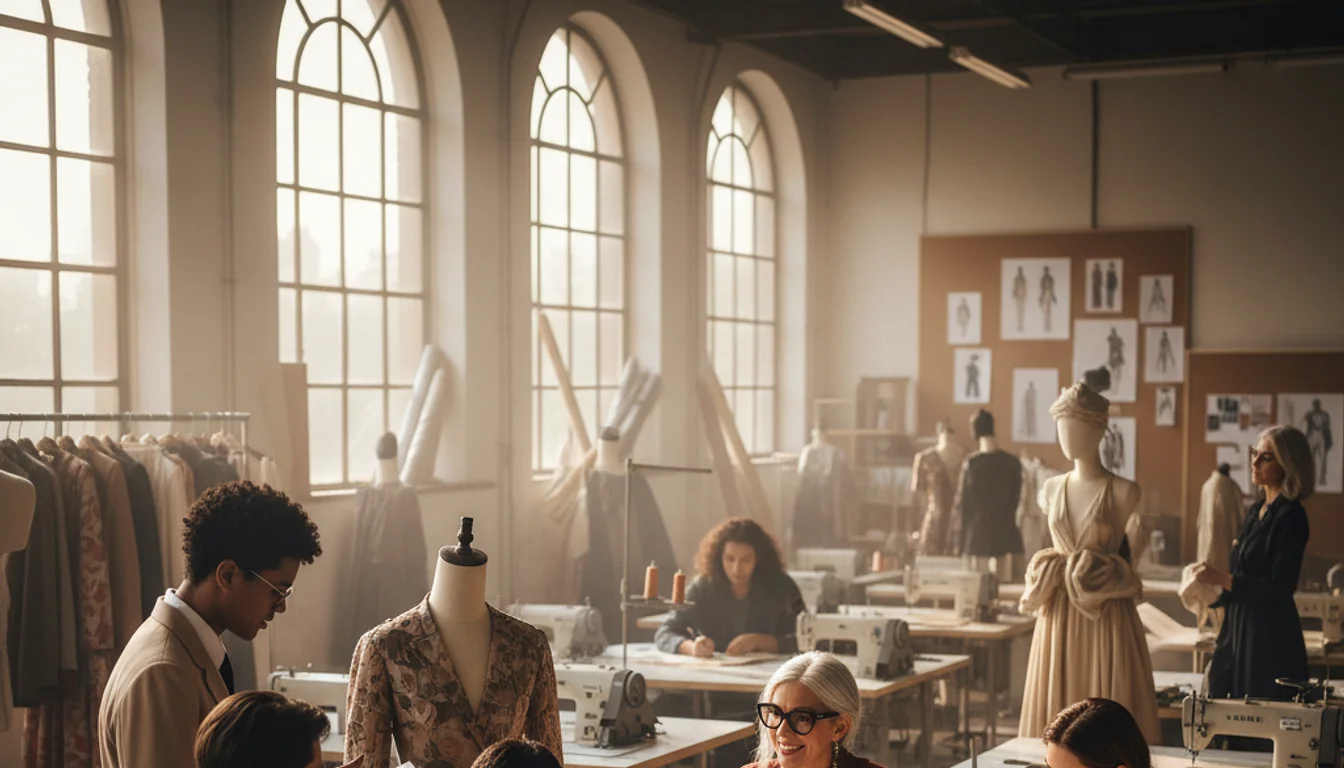
But if you want to start your own brand? Or work in sustainable tech? You might be better off at a smaller, more affordable school and using the saved money to fund your first collection. I’ve seen people with no formal degree blow up on TikTok and build six-figure businesses while the Parsons grads are still interning for free. It’s a weird time in fashion.
Feel free to tell me I’m an idiot in the comments. I’m just a mom who’s seen the receipts. But if you’re serious about this, do the tours, talk to the actual students (not the tour guides), and for heaven’s sake, learn how to sew before you show up on day one. It’ll save you a lot of tears at 2 AM.
This article may contain affiliate links. We may earn a commission if you make a purchase through these links, at no additional cost to you. This helps support our work and allows us to continue providing valuable content. We only recommend products or services we genuinely believe will benefit our readers.
Why does everyone overcomplicate best beauty and wellness products?! It drives me insane. Seriously, I spent the better part of last November staring at my bathroom vanity, realizing I had roughly $640.00 worth of “miracle” serums that did absolutely nothing but give me a mild […]
Beauty and WellnessWhy does everyone overcomplicate best beauty and wellness products?! It drives me insane. Seriously, I spent the better part of last November staring at my bathroom vanity, realizing I had roughly $640.00 worth of “miracle” serums that did absolutely nothing but give me a mild rash and make my bank account weep. As a mom of two who barely has time to pee in peace, let alone follow a 12-step evening routine, I’m over the fluff.
We’re heading into 2026, and the industry is still trying to sell us “wellness” in a bottle that costs more than my weekly grocery haul at Trader Joe’s. I’m Maria, and after five years of parenting and three years of blogging, I’ve developed a very low tolerance for marketing BS. I’ve tried the $200 face creams and the $5 drugstore sticks. Today, I’m telling you what actually deserves a spot in your cabinet and what you should chuck in the bin immediately.
Quick Summary:
Quick Winners for 2026:
– Best Skincare: CeraVe Resurfacing Retinol ($18.99) – Better than the $150 boutique brands. – Best Wellness Tool: TheraFace LED Mask – Expensive, but actually clears adult acne. – Best Supplement: Magnesium Glycinate (8:00 PM ritual) – The only thing that helps me sleep after a toddler tantrum. – Avoid: “Vaginal Wellness” gummies and anything with “Gold Flakes.”
Let’s start with the biggest lie: that you need a “system.” Last Tuesday, I was scrolling through Instagram and saw an influencer (who is clearly 22 and has never seen a wrinkle in her life) promoting a $450.00 “cellular renewal” kit. It’s a joke. Your skin is an organ, not a science experiment. Most of what people call the best beauty and wellness products are just overpriced water and fragrance.
I learned this the hard way back in 2024 when I tried a “luxury” vitamin C serum that cost me $125.40 from a high-end boutique in Aspen. Within three days, my face looked like a pepperoni pizza. When I looked at the ingredients, the active concentration was lower than the stuff I find at the pharmacy. A 2024 study published in the Journal of Clinical and Aesthetic Dermatology confirmed that many high-end cosmetic claims are completely unsubstantiated by independent clinical trials. They are selling you the heavy glass bottle, not the liquid inside.
If you want real results, you need three things: a gentle cleanser, a retinoid, and a massive amount of SPF. That’s it. Everything else is just “extra credit” that usually ends up irritating your skin barrier. I’ve switched entirely to medical-grade or high-quality drugstore brands. If you’re wondering is a beauty and wellness consultant actually worth it, the answer is usually “no” unless they tell you to stop buying so much junk.
Don’t even get me started on the gadgets. My “junk drawer” is a graveyard of vibrating face rollers, rose quartz stones that supposedly “drain lymph nodes” (they don’t), and a $300 “brain-sensing” headband that just gave me a headache. To be honest, most wellness gadgets are just expensive paperweights designed to make you feel like you’re “self-caring” while you’re actually just wasting time.
However, there is one exception. I finally caved and bought a high-quality Red Light Therapy (RLT) mask in late 2025. I was skeptical. I thought I looked like a character from a a horror movie wearing it. But the data doesn’t lie. A 2023 meta-analysis in Lasers in Medical Science showed that consistent 660nm red light significantly improves collagen density. It’s one of the few best beauty and wellness products that actually has physics on its side.
💡 Pro Tip If you buy an LED mask, make sure it has at least 30mW/cm irradiance. Anything less is just a glorified Christmas light for your face.
We need to talk about the price of these things. People will tell you that you can’t put a price on health, but my mortgage company disagrees. Most “wellness” tech is marked up by 400%. I saw a “grounding mat” the other day for $150.00. You know what’s a free grounding mat? The grass in your backyard. Don’t fall for the “luxury” version of basic human needs.
My kitchen cabinet used to look like a pharmacy. I had “hair growth” vitamins, “bloat-be-gone” tonics, and enough adaptogens to sedate a horse. Guess what? I still felt like crap. I was tired, my hair was still falling out (thanks, postpartum hormones), and I was still bloated. It turns out, I was just dehydrated and sleep-deprived.
I spoke to a nutritionist last January who told me that 90% of the supplements marketed as best beauty and wellness products are just expensive fillers. Unless you have a diagnosed deficiency (get your bloodwork done, people!), you are literally just creating expensive urine. I cut my supplement routine down from 12 pills a day to just two: Vitamin D (because I live in the PNW) and Magnesium Glycinate.
⚠️ Warning: Never buy supplements from “lifestyle” influencers who don’t show the third-party testing labels. If it doesn’t have a USP or NSF seal, you have no idea what’s actually in that capsule.
Instead of buying more pills, I started focusing on my evening wind-down. I stopped looking at my phone at 9:00 PM (okay, 9:30 PM, I’m human) and started drinking a simple tart cherry juice and magnesium mix. It cost me about $1.15 per serving compared to those $60.00 “sleep dusts.” If you’re struggling with stress, check out my guide on what actually works for comfort food—sometimes a warm bowl of soup does more for your “wellness” than a kale smoothie ever will.
We are currently living in a weird era where “natural” beauty takes two hours and $500 to achieve. I’m tired of it. The best beauty and wellness products should make your life easier, not add another chore to your list. I’ve stopped trying to look like a filtered version of myself.
Last month, I went to a high-end beauty counter at a mall in Dallas. The salesperson tried to tell me I had “dehydrated pores” and needed a $95.50 primer. I laughed. Pores don’t get dehydrated; skin does. And a primer isn’t going to fix a lack of water intake. We need to start being more skeptical of the vocabulary these brands use. They invent problems so they can sell you the “solution.”
I used to be the first person to click “buy” on a viral TikTok product. Not anymore. I’ve realized that most “viral” items are just paid placements. If you see ten people talking about the same blush in one week, it’s not because the blush is magic; it’s because the brand has a massive marketing budget. I’ve found much better luck looking at what professional makeup artists use on real people, not what influencers use under ring lights. If you’re tired of being sold a lie, you might relate to my rant on why “beauty and wellness near me” is a total scam.
If you genuinely want to improve your routine without getting fleeced, here is what I actually use every single day as of February 2026. This isn’t a “wish list”; this is what is currently sitting on my bathroom counter, half-used and well-loved.
💡 Pro Tip Stop washing your face in the morning if you have dry skin. Just rinse with lukewarm water. I saved $20 a month on cleanser and my skin finally stopped feeling tight.
“The best skincare routine is the one you actually do. If it has more than four steps, you’re going to quit by Wednesday.” – A very wise dermatologist I met in Chicago last year.
ultimately, the best beauty and wellness products aren’t going to fix a life that is fundamentally out of balance. No cream will fix the fact that you’re only sleeping four hours a night because you’re doom-scrolling. No “wellness” tea will fix a diet of processed junk.
I’m not saying don’t buy nice things. I love a good smelling candle and a lipstick that makes me feel like a human again. But don’t let these brands convince you that you are “broken” without them. You’re not. You’re just busy, maybe a little tired, and definitely smarter than their marketing departments think you are.
That’s all I’ve got. The rest is on you.
This article may contain affiliate links. We may earn a commission if you make a purchase through these links, at no additional cost to you. This helps support our work and allows us to continue providing valuable content. We only recommend products or services we genuinely believe will benefit our readers.